


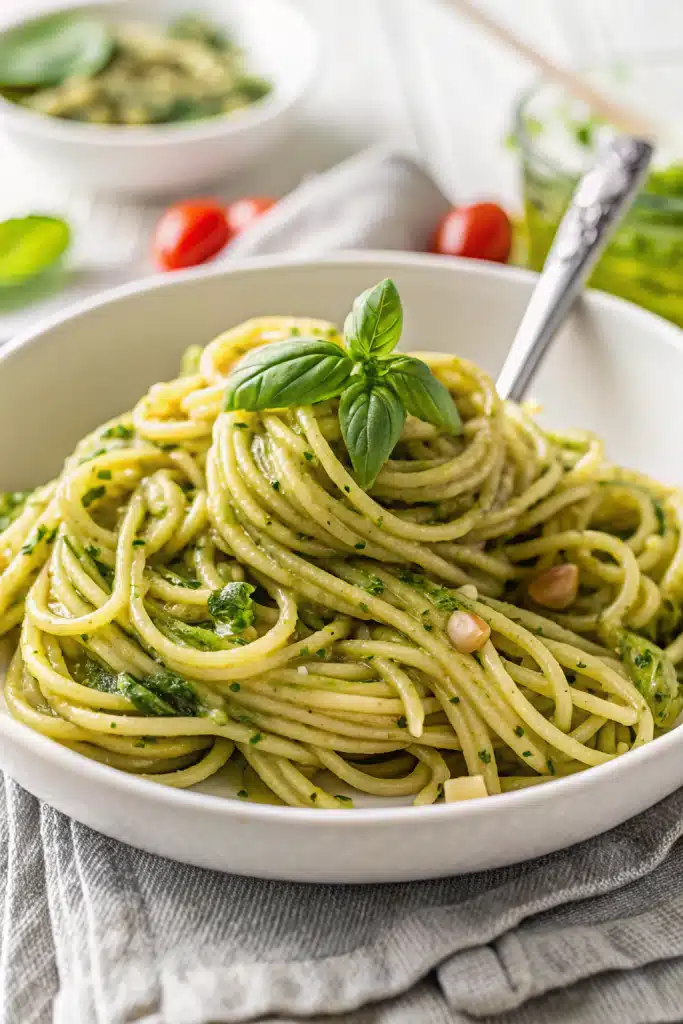
Pesto Pasta with Plenty of Pesto Sauce – Juicy, Glossy & Full of Flavor
You know that feeling when you take your first bite of pasta and it’s just… perfect? Not dry, not greasy—just silky, saucy, and bursting with fresh basil goodness? That’s what this pesto pasta delivers every single time. I’ve made countless versions over the years, but this one? This is the real deal. It’s slick with lush pesto sauce, clings to every twist and turn of your favorite pasta, and doesn’t drown in oil like so many others do. The secret isn’t more olive oil—it’s something far simpler (and way smarter): pasta cooking water. Yes, really! That starchy liquid does magic, emulsifying with the pesto to create a glossy, restaurant-quality coating that makes even store-bought pasta feel luxurious. Whether you’re using up a summer basil haul or just craving something quick and comforting, this recipe never fails. And honestly? Once you try it this way, you’ll never go back.
What Is Pesto Pasta?
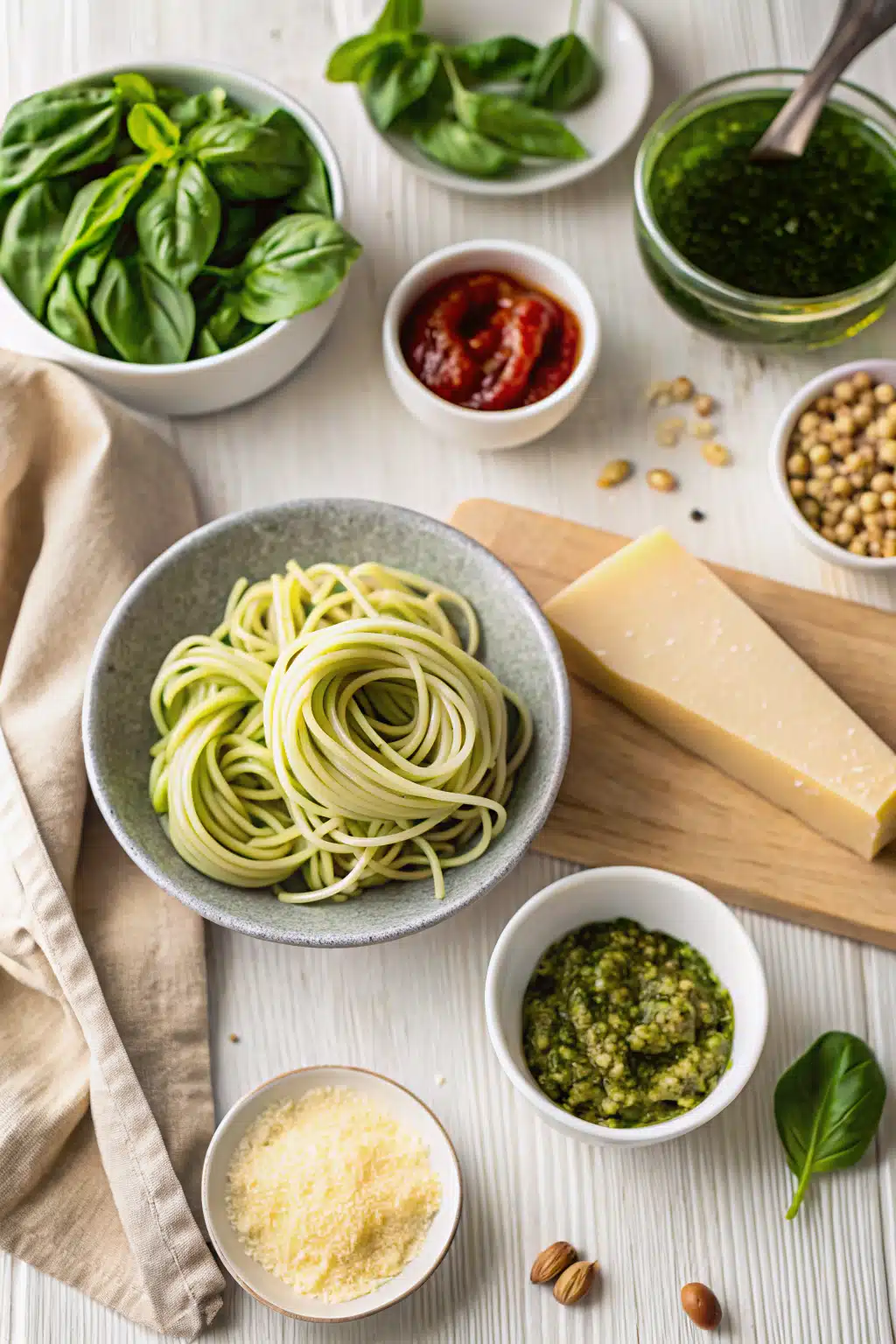
Pesto pasta is one of those humble dishes that somehow feels both effortless and elegant. At its core, it’s simply cooked pasta tossed with vibrant green pesto—a bold blend of fresh basil, garlic, pine nuts (or walnuts!), Parmesan, and olive oil. But here’s the thing: not all pesto pastas are created equal. Too often, it turns out dry and clumpy or swimming in oil, which masks the bright, herbal flavor you’re after. This version solves both problems by using a clever Italian technique: reserving starchy pasta water before draining. That water acts like a natural thickener and binder, helping the pesto cling beautifully to each strand or tube without needing extra oil. The result? A dish that’s deeply flavorful, luxuriously saucy, and balanced from the very first bite to the last. It’s the kind of meal that makes you pause mid-chew and think, “Why don’t I make this more often?”
Why You’ll Love This Recipe
Let me be honest—I used to think pesto pasta was boring. Then I learned the *right* way to make it, and now it’s on regular rotation in my kitchen. What makes this version special isn’t just the technique (though that’s huge), it’s how approachable and forgiving it is. You don’t need fancy equipment or hard-to-find ingredients—just good pasta, great pesto (homemade if you can!), and a little patience with the pasta water step. Plus, it comes together in under 20 minutes, making it ideal for busy weeknights or lazy Sundays when you still want something delicious.
Another reason I’m obsessed? It’s endlessly customizable. Toss in cherry tomatoes, spinach, grilled chicken, or even shrimp—it all works. But even plain, it shines because the pesto flavor is front and center, not buried under grease or blandness. And if you’ve ever been disappointed by jarred pesto turning bitter or dull when heated, this method protects that fresh basil vibrancy. Serve it warm or at room temp (yes, really!), and finish with a generous grating of Parmesan. Trust me—your family will be asking for seconds, and you’ll feel like a total kitchen hero.
How to Make Pesto Pasta with Plenty of Pesto Sauce
Quick Overview
This recipe is all about timing and technique. You’ll cook your pasta, reserve a cup of that golden starchy water, then toss everything together off the heat to preserve the basil’s bright color and flavor. The key is using enough pasta water to loosen the pesto just right—creating a silky, glossy sauce that coats every bite without being oily. It’s simple, but those little details make all the difference.
Ingredients
You only need a handful of quality ingredients:
- 1 batch homemade pesto (or ½–¾ cup store-bought)
- 300–350g (10–12 oz) pasta—penne, ziti, or spaghetti work best
- 2 tsp salt (for the pasta water)
- ¾ cup reserved pasta cooking water
- Freshly grated Parmesan, for serving
Step-by-Step Instructions
Step 1: Boil & Salt the Water
Fill a large pot with water, add the salt, and bring it to a rolling boil. Salting the water properly is crucial—it’s your main chance to season the pasta itself, since pesto isn’t usually salty enough on its own.
Step 2: Cook the Pasta
Add your pasta and cook according to package instructions until al dente. About 1–2 minutes before it’s done, grab a heatproof measuring cup and scoop out 1 cup of the cooking water. This is your magic ingredient!
Step 3: Drain & Transfer
Drain the pasta in a colander, but don’t rinse it—you want that starch! Let it sit for a minute, then transfer it to a large mixing bowl. Important: Don’t use the hot pasta pot—it’s too hot and will wilt or blacken the basil in your pesto.
Step 4: Emulsify with Pesto & Water
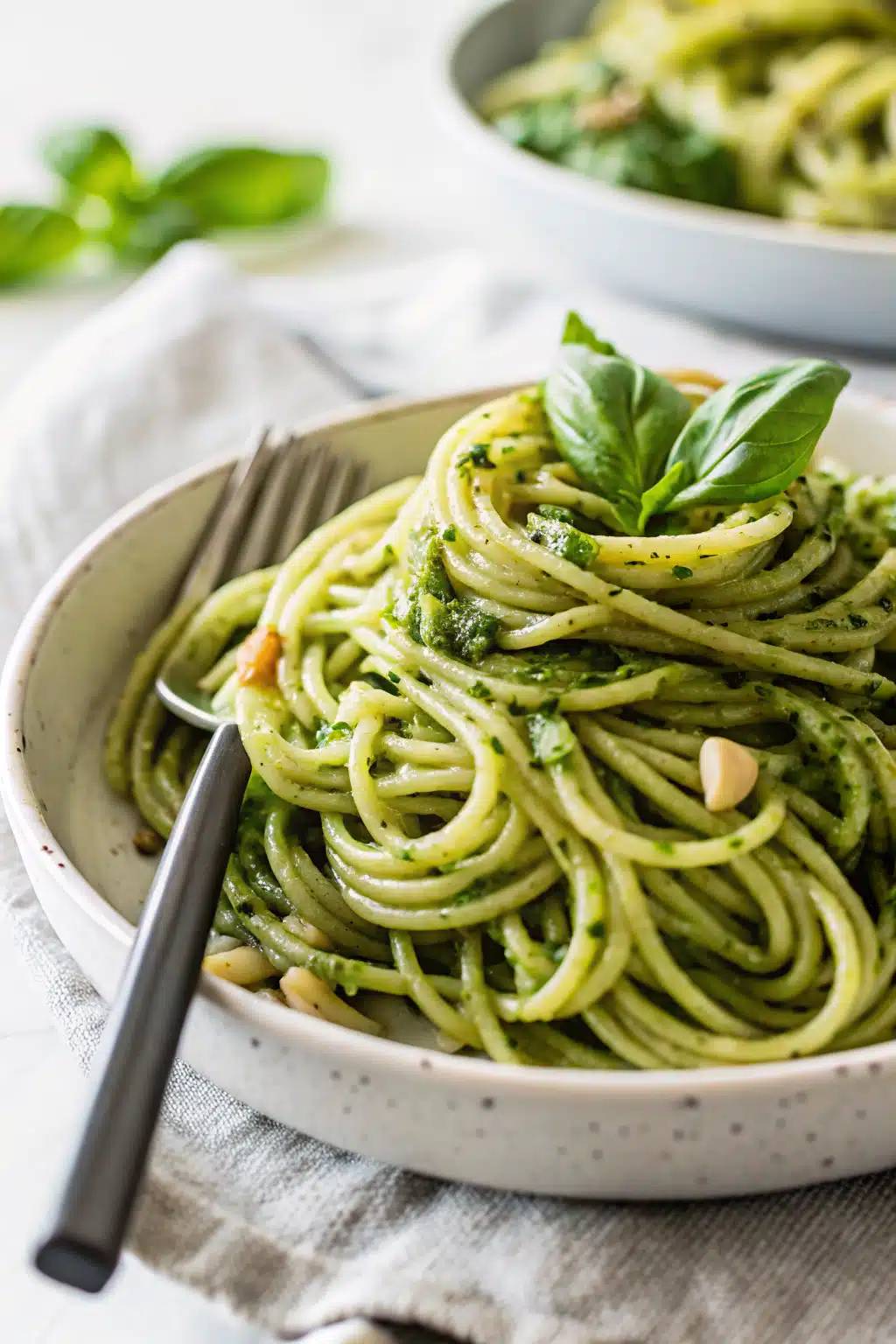
Add the pesto and ¼ cup of the reserved pasta water to the bowl. Toss gently but thoroughly with tongs or a fork. Keep adding more water, a tablespoon at a time, until the pasta looks glossy and saucy—not dry or sticky. You might use up to ¾ cup total.
Step 5: Taste & Serve
Taste and adjust with a pinch more salt or freshly cracked pepper if needed. Serve immediately, topped with a big handful of freshly grated Parmesan. Enjoy warm or at room temperature—both are delicious!
What to Serve It With
This pesto pasta is stellar on its own, but it also plays beautifully with sides. A simple Caprese salad with ripe tomatoes, mozzarella, and balsamic glaze adds juicy contrast. Steamed green beans or a crisp arugula salad with lemon vinaigrette cut through the richness. If you’re feeling fancy, grilled shrimp or pan-seared chicken breast make it a hearty main. And hey—toss in some halved cherry tomatoes or a handful of baby spinach right at the end for extra color and nutrients. Just don’t overcomplicate it; the pesto should steal the show.
Top Tips for Perfecting Your Pesto Pasta
Over the years, I’ve learned a few hard truths about pesto pasta—mostly from mistakes! First: never toss it on the stove. The residual heat will turn your beautiful green pesto brown and bitter. Always mix in a bowl. Second: reserve more pasta water than you think you’ll need. Pasta is thirsty! I often use nearly the full cup. Third: salt your pasta water like the sea. Pesto alone won’t season the dish enough. And finally: if you’re using homemade pesto, blanching the basil briefly before blending (as one reader suggested!) can help prevent browning—especially if you plan to freeze it. But for immediate use, fresh is fine!
Storing and Reheating Tips
Store leftovers in an airtight container in the fridge for up to 3 days. But here’s the golden rule: do not reheat pesto pasta. Heat will destroy the basil’s freshness and turn it black. Instead, let it come to room temperature on the counter for 20–30 minutes before eating. I actually prefer it this way—the flavors meld, and the texture stays perfect. If it seems a bit thick, stir in a splash of olive oil or a teaspoon of water to revive the silkiness.
Frequently Asked Questions
Final Thoughts
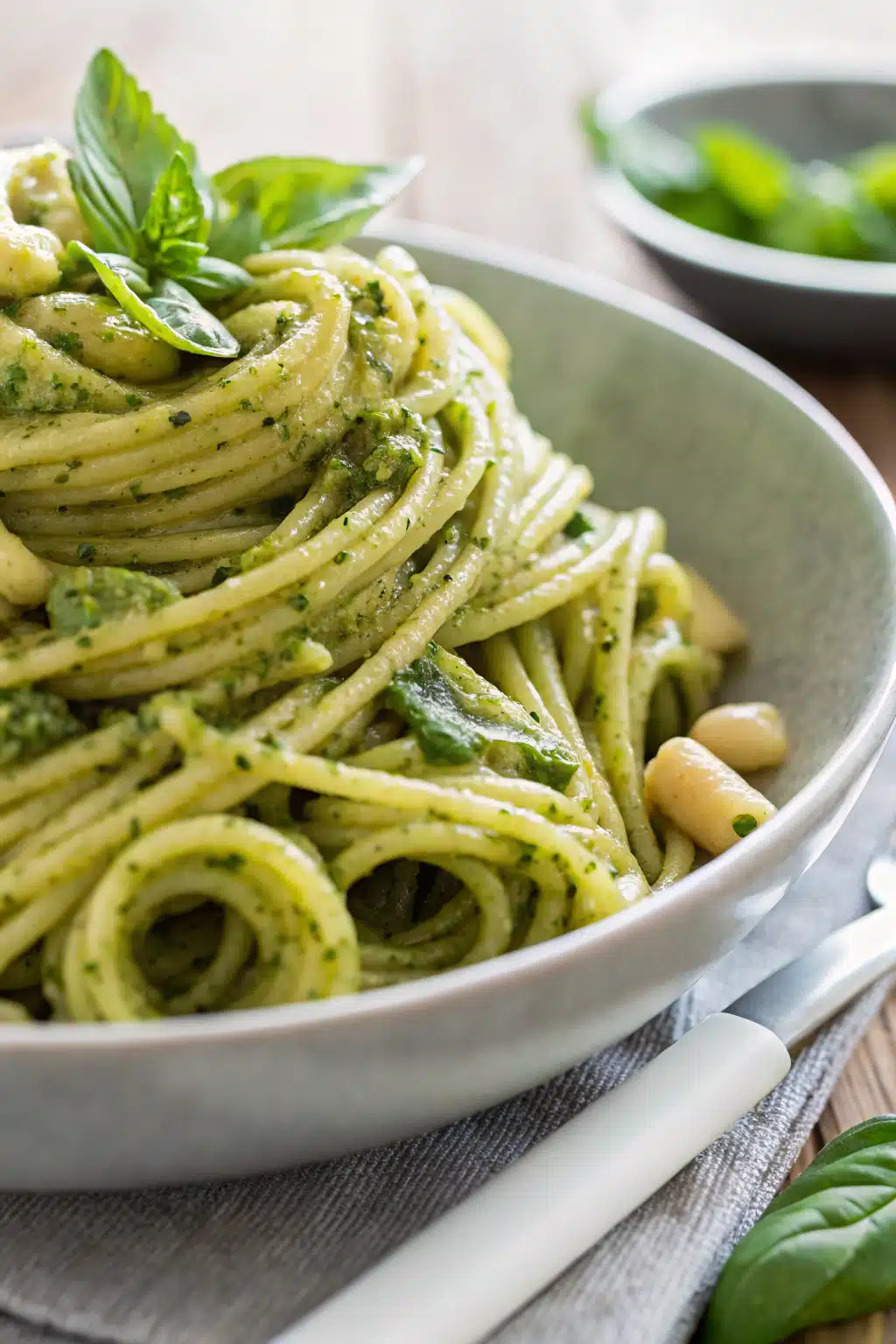
If there’s one pasta recipe you master this year, let it be this one. It’s more than just a meal—it’s a lesson in how small tweaks (like saving pasta water!) can transform something ordinary into something extraordinary. I’ve served this to friends, packed it for lunch, and even made it for picky eaters who suddenly declared it their new favorite. There’s just something so satisfying about twirling up a forkful of glossy, herb-packed pasta that tastes like summer, even in the dead of winter. So grab that basil, boil that water, and give it a try. I promise—you won’t regret it. And if you do make it, tag me @recipe_tin on Instagram! I love seeing your creations. Happy cooking, friends! 💚

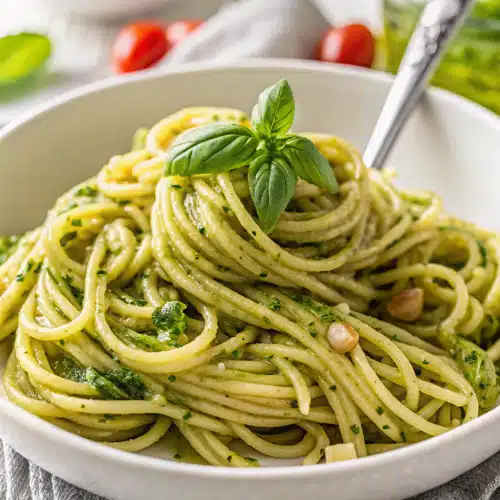
Pesto Pasta with plenty of pesto sauce
Ingredients
Main Ingredients
- 1 quantity homemade pesto See Note 1 for recipe
- 325 g pasta of choice ziti, penne, or spaghetti recommended
- 2 tsp salt for pasta water
- 0.75 cup pasta cooking water reserved before draining
- 0.5 cup grated Parmesan cheese for serving
Instructions
Preparation Steps
- Bring a large pot of water to a boil and add salt.
- Add pasta and cook according to package instructions until al dente.
- Just before draining, use a measuring cup to reserve 1 cup of the starchy pasta cooking water.
- Drain the pasta in a colander and let it sit for about 1 minute to steam off excess moisture.
- Transfer the hot pasta to a large mixing bowl (do not use the hot cooking pot).
- Add the pesto and 0.25 cup of reserved pasta water. Toss vigorously to coat the pasta, adding more water as needed until the sauce is silky and clings to the noodles.
- Taste and adjust seasoning with additional salt and freshly ground black pepper if desired.
- Serve immediately, garnished with extra grated Parmesan cheese.











I love how this dish feels so cozy and homey—definitely one of those comfort foods that just hits different.