

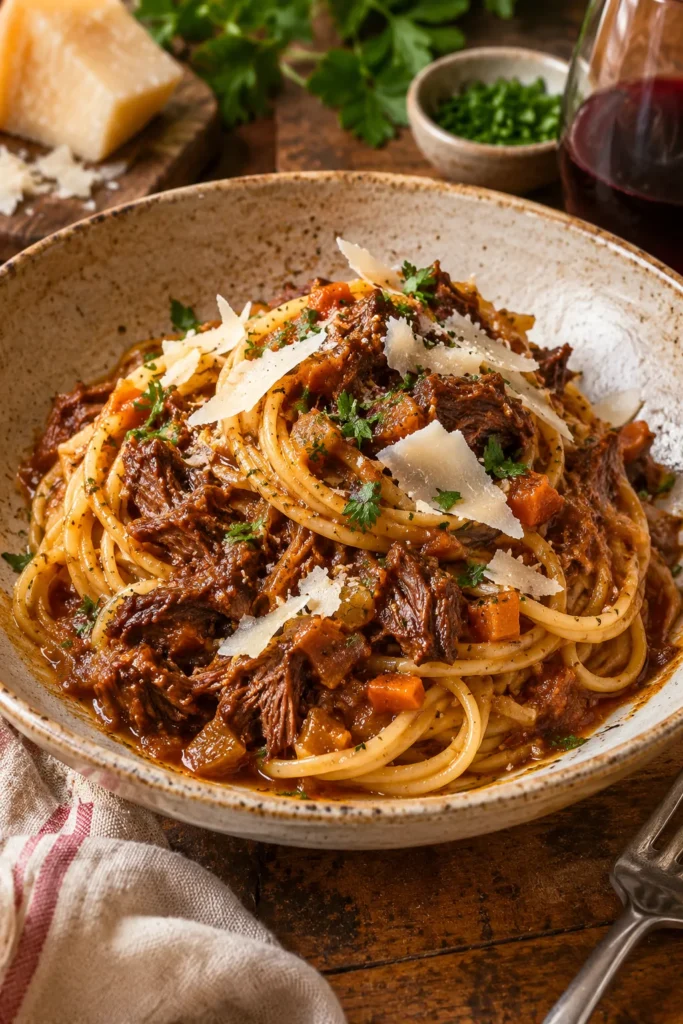
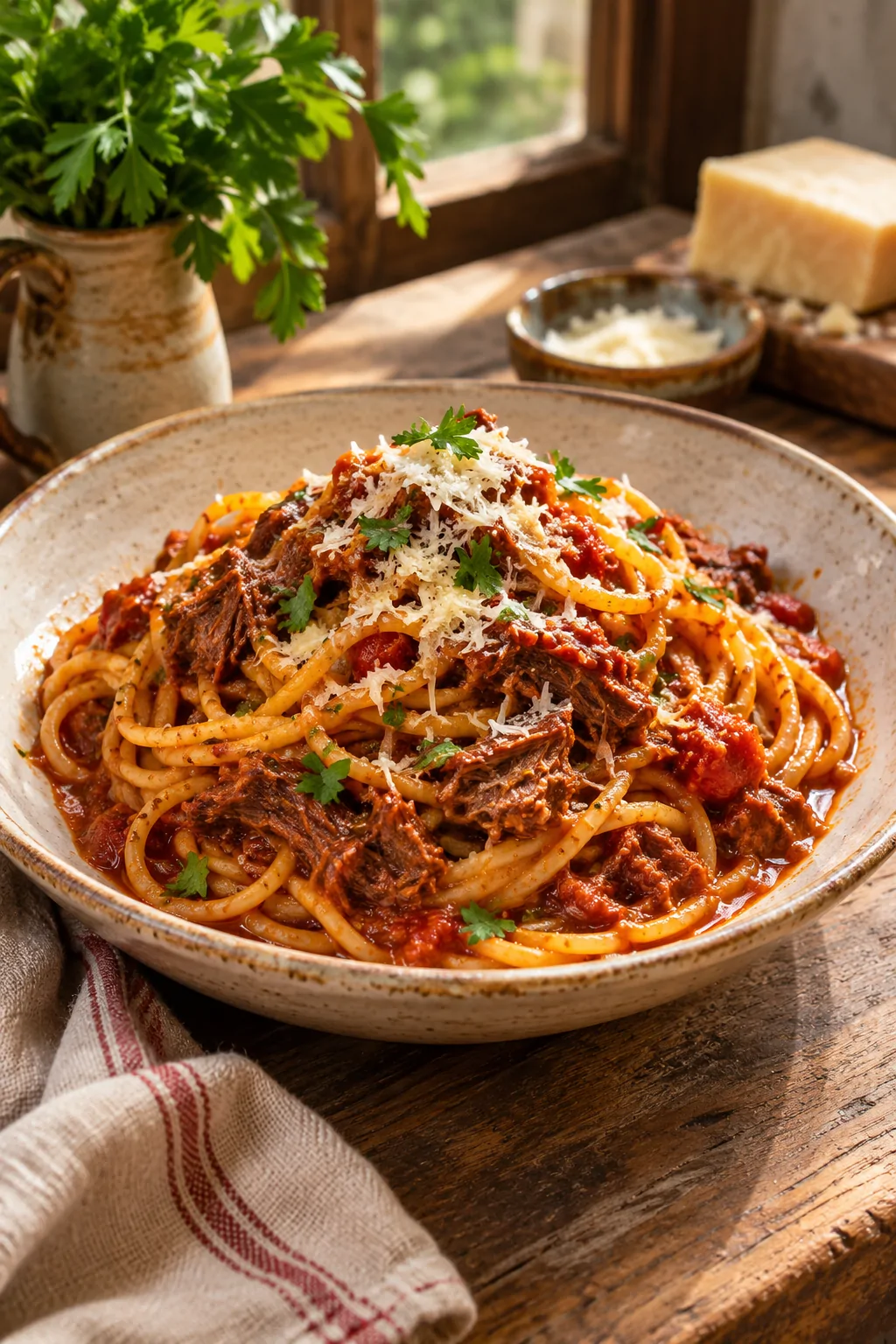
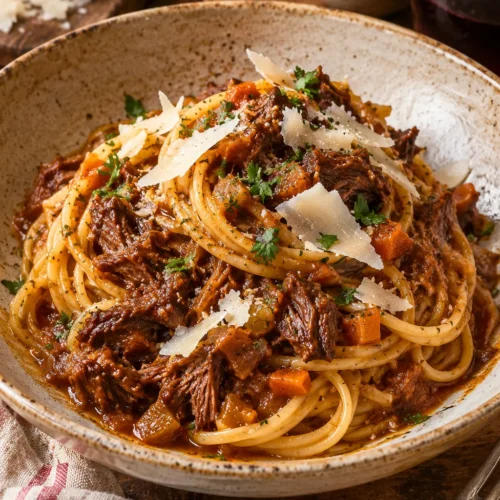
This beef cheek ragu pasta turns tender leftover beef and its rich sauce into a fast, deeply savory dinner. Spaghetti finishes directly in a tomato-based ragu, where pasta water helps the sauce cling to every strand. Parmesan and parsley add a bright, salty finish. It is especially useful when a previous slow-cooked meal has left you with a small amount of beef and sauce: a few fresh aromatics and pantry tomatoes make that leftover portion feel like a completely new supper.
What is beef cheek ragu pasta?
Beef cheek ragu pasta is a tomato-coated pasta dish built around shredded beef cheek. Beef cheek cooking sauce brings concentrated savory flavor, while crushed tomatoes keep the finished ragu bright enough for a quick meal. The sauce is not meant to simmer for hours in this version; the beef is already cooked and tender, so the goal is to warm it gently and emulsify it with the spaghetti.
Why this leftover-beef pasta works
The beef is already tender, so the short cooking time is about rebuilding the sauce and coating the pasta. Sautéed onion and garlic give the ragu a fresh base, while crushed tomatoes balance the richness of the beef. Finishing the spaghetti in the pan makes the sauce glossy and cohesive.
Ingredient notes for a rich ragu
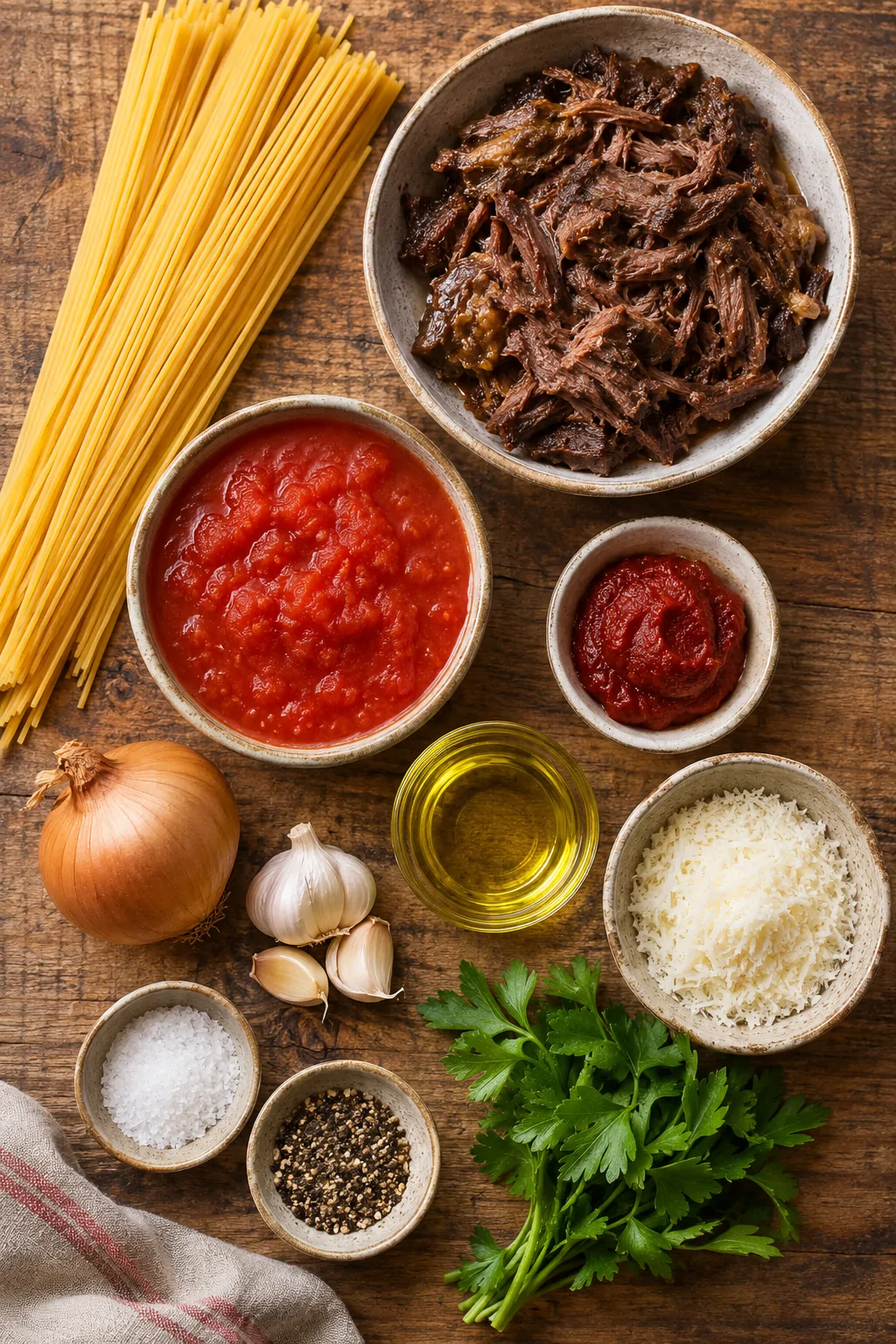
- Dried spaghetti gives the sauce plenty of surface area to cling to.
- Use shredded, fully cooked beef cheek and its reserved cooking sauce.
- Crushed tomatoes and tomato paste deepen the ragu without adding a long simmer.
- Keep pasta water nearby to loosen the sauce and help it emulsify.
How to make beef cheek ragu pasta
Cook the spaghetti
Boil the spaghetti in well-salted water until it is just shy of al dente. Reserve some pasta water before draining.
Build the quick ragu
Sauté onion and garlic in olive oil, then add the shredded beef, its sauce, crushed tomatoes, tomato paste and water. Simmer until hot and season to taste.
Finish the pasta in the sauce
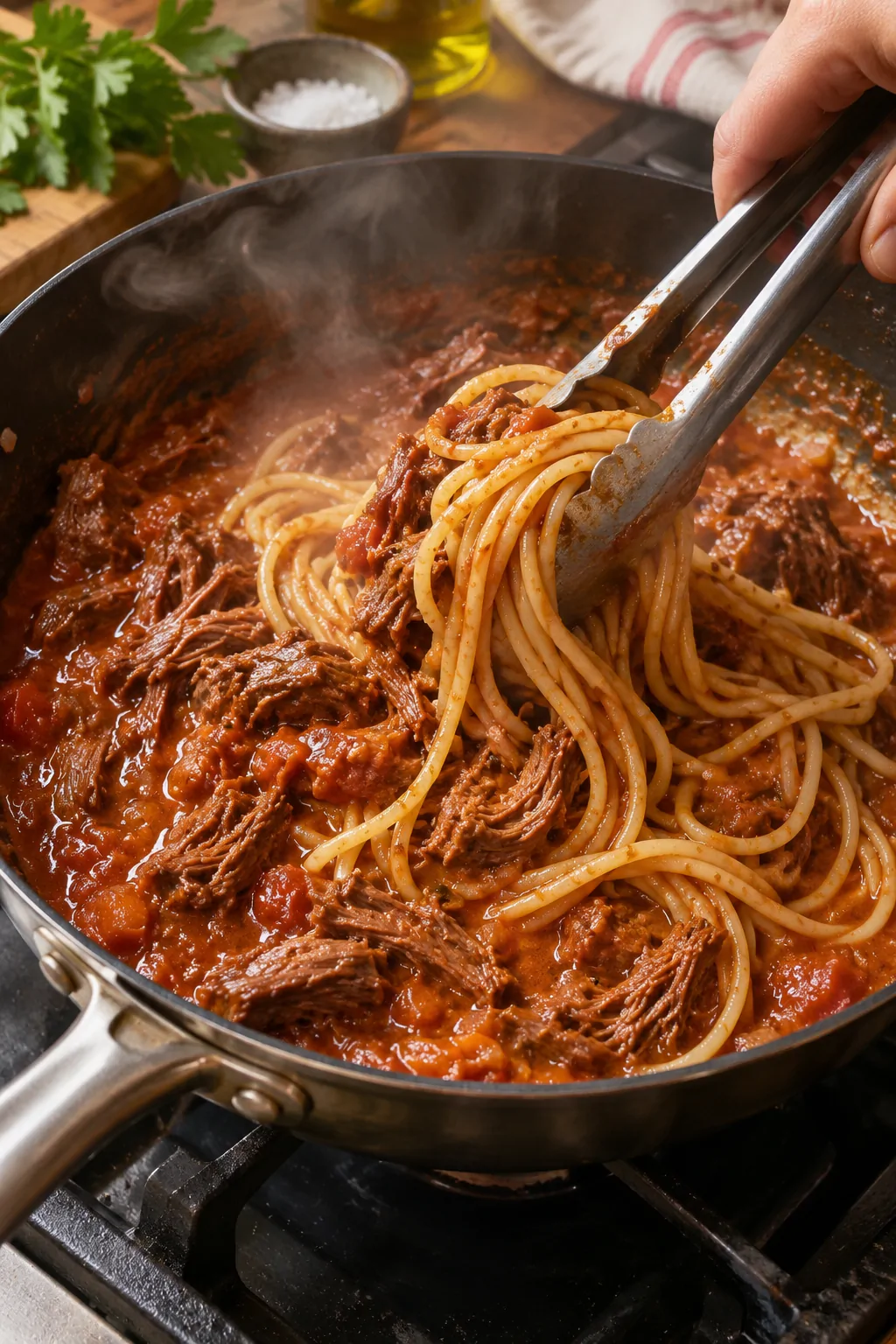
Move the spaghetti straight into the ragu with tongs. Toss with pasta water for one to two minutes so the sauce coats the strands.
Texture and doneness cues
Stop boiling the spaghetti just before it reaches your preferred texture because it will finish in the pan. The ragu is ready when it is steaming, the beef is hot, and the sauce briefly holds a trail when you drag a spoon through it. Add pasta water gradually; the finished sauce should cling rather than pool.
Exact cooking sequence
- Bring a large pot of salted water to a boil. Cook the spaghetti until just under al dente, then reserve 1/2 cup pasta water and drain.
- Meanwhile, heat the olive oil in a large pan over medium-high heat. Sauté the onion and garlic for about 3 minutes.
- Add the shredded beef cheek, reserved sauce, crushed tomatoes, tomato paste and water. Bring to a rapid simmer and season with salt and pepper.
- Transfer the drained spaghetti into the pan with tongs. Add 1/2 cup pasta water and toss for 1 to 2 minutes, until the sauce clings to the pasta.
- Serve immediately with parmesan and parsley.
Serving and pairing ideas
Finish each bowl with parmesan and chopped parsley. A crisp green salad, roasted broccoli, or lightly dressed fennel makes a fresh contrast to the rich beef. Serve the pasta immediately while the sauce is at its glossiest.
Optional variation
For a spicy variation, add a pinch of red pepper flakes with the onion and garlic, or stir in a teaspoon of smoked paprika with the tomato paste. The optional variation keeps the beef cheek ragu pasta recognizable while adding gentle heat and a deeper smoky note. If the original beef sauce is already strongly seasoned, taste before adding extra salt.
Storage and reheating
Refrigerate leftovers in a covered container for up to three days. Reheat gently in a skillet with a splash of water or stock, tossing until hot. The pasta absorbs sauce as it rests, so a little liquid restores the texture better than high heat.
FAQ: frequently asked questions
Final tips for a balanced bowl
Keep the garnish simple because the ragu already has a full, slow-cooked flavor. A little parmesan adds salt and nuttiness, while parsley brings freshness. Black pepper should be added according to the seasoning of the original beef cheek cooking sauce. If the sauce tastes heavy, a crisp salad or a squeeze of lemon at the table can sharpen the contrast without changing the recipe.
For clarity, this recipe specifically calls for leftover beef cheek and beef cheek cooking sauce, not raw beef. Those leftovers should be fully cooked and chilled safely before they go into the pan. Warming them in the tomato mixture keeps the meat succulent and gives the sauce enough time to become cohesive without drying the beef.
Planning the meal
This is a useful second-day recipe because most of the work has already happened in the original braise. Measure the tomatoes, tomato paste, and seasonings before you start, then put the pasta water on while the onion softens. Keeping each step moving means the spaghetti reaches the pan while the ragu is still loose and hot. If you are cooking for four, use a wide pan so the pasta can be tossed without breaking. For two servings, halve the ingredients and reserve the same kind of pasta water. Taste at the end, since the leftover sauce and parmesan may already supply plenty of salt.
Beef Cheek Ragu Pasta with Leftover Beef
Adjust the serving amount to scale the ingredient list. Written quantities in the steps refer to the original recipe; adjust them in the same proportion. Timing may vary with batch size.
Ingredients
Ingredients
- 350 g dried spaghetti
- 2 cups leftover beef cheek shredded
- 1 cup beef cheek cooking sauce reserved
- 1 medium onion diced
- 2 cloves garlic minced
- 2 tablespoons olive oil
- 2 cups crushed tomatoes canned
- 3 tablespoons tomato paste
- 1/2 cup water plus pasta water as needed
- 1-2 teaspoons salt to taste
- black pepper to taste
- parmesan and parsley to serve
Instructions
Instructions
- Bring a large pot of salted water to a boil. Cook the spaghetti until just under al dente, then reserve 1/2 cup pasta water and drain.
- Meanwhile, heat the olive oil in a large pan over medium-high heat. Sauté the onion and garlic for about 3 minutes.
- Add the shredded beef cheek, reserved sauce, crushed tomatoes, tomato paste and water. Bring to a rapid simmer and season with salt and pepper.
- Transfer the drained spaghetti into the pan with tongs. Add 1/2 cup pasta water and toss for 1 to 2 minutes, until the sauce clings to the pasta.
- Serve immediately with parmesan and parsley.