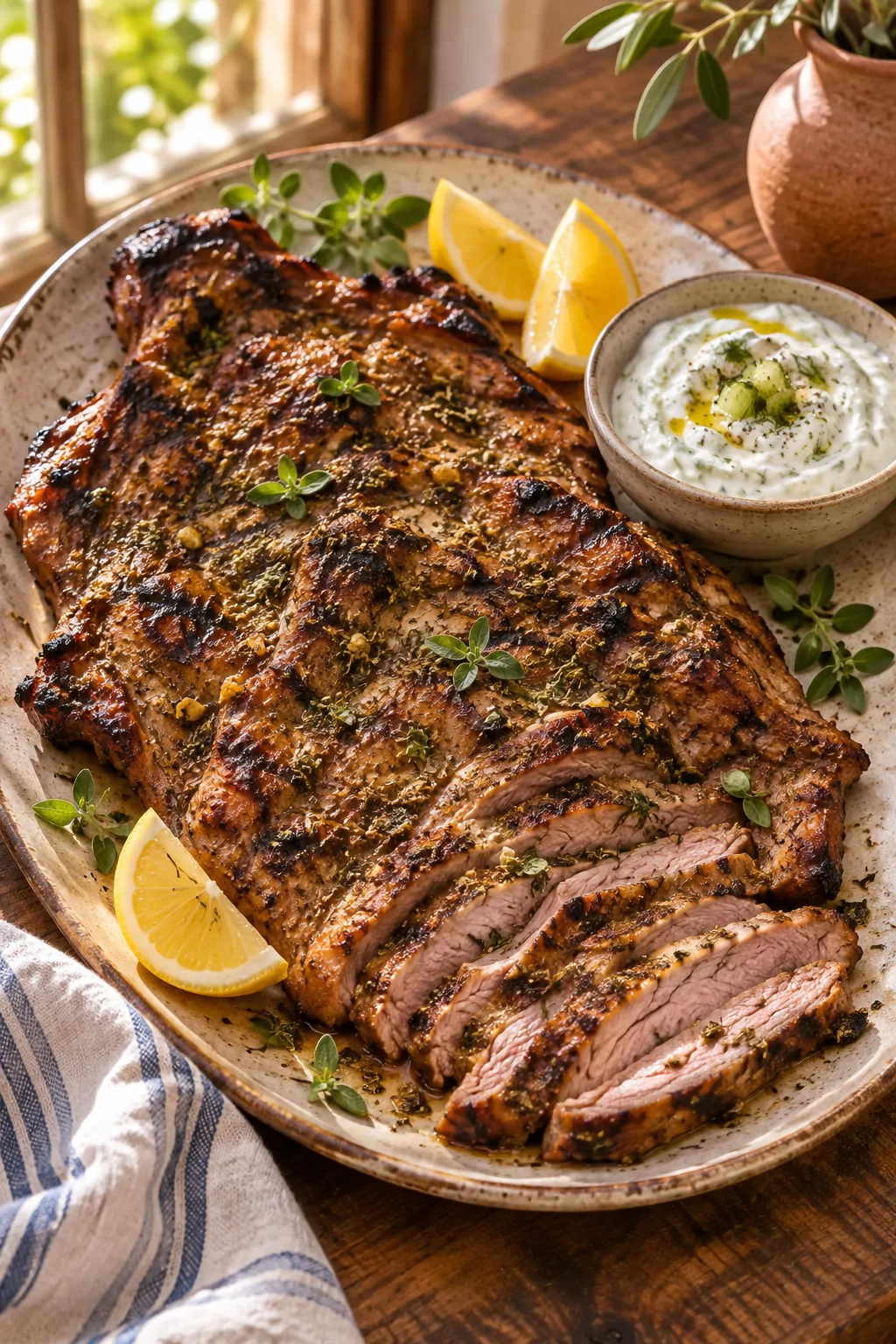


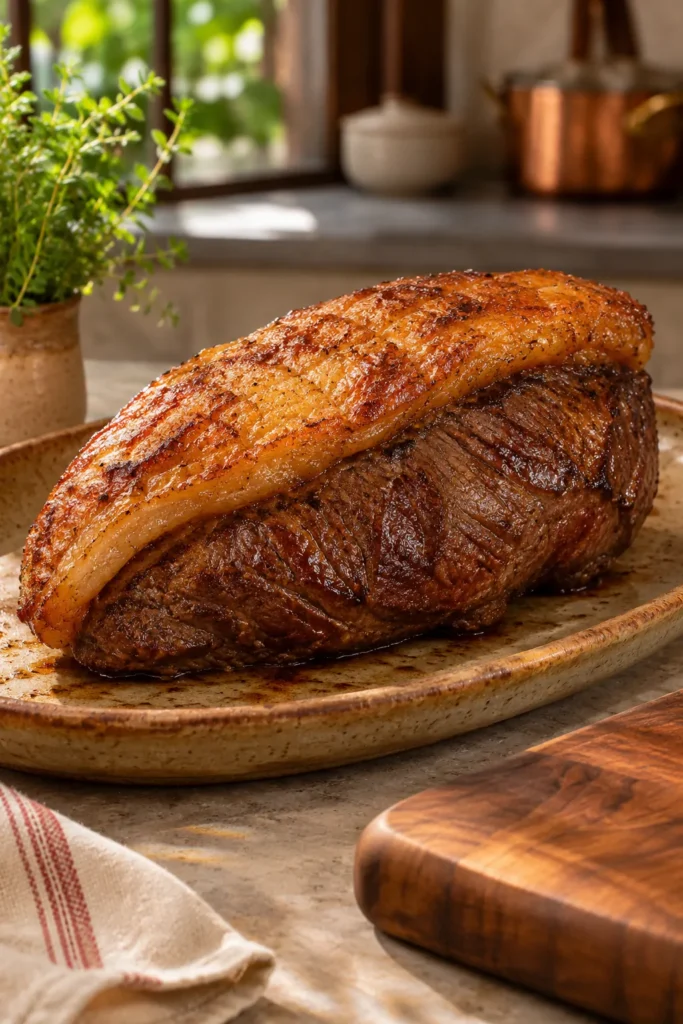
Picanha rump cap roast is a beautifully simple centerpiece: a thick, beefy cut with a generous fat cap that bastes the meat as it cooks. A hot sear builds a savory crust, while a short oven finish keeps the center juicy. With coarse salt, black pepper, and careful slicing, this Brazilian-inspired roast becomes an impressive dinner without a complicated marinade.
What makes picanha rump cap roast special?
Picanha is prized for its triangular shape and thick layer of fat. The fat cap should be scored, not removed, so it renders gradually and protects the roast. Because the seasoning is restrained, the beef remains the focus.
Why this roast works
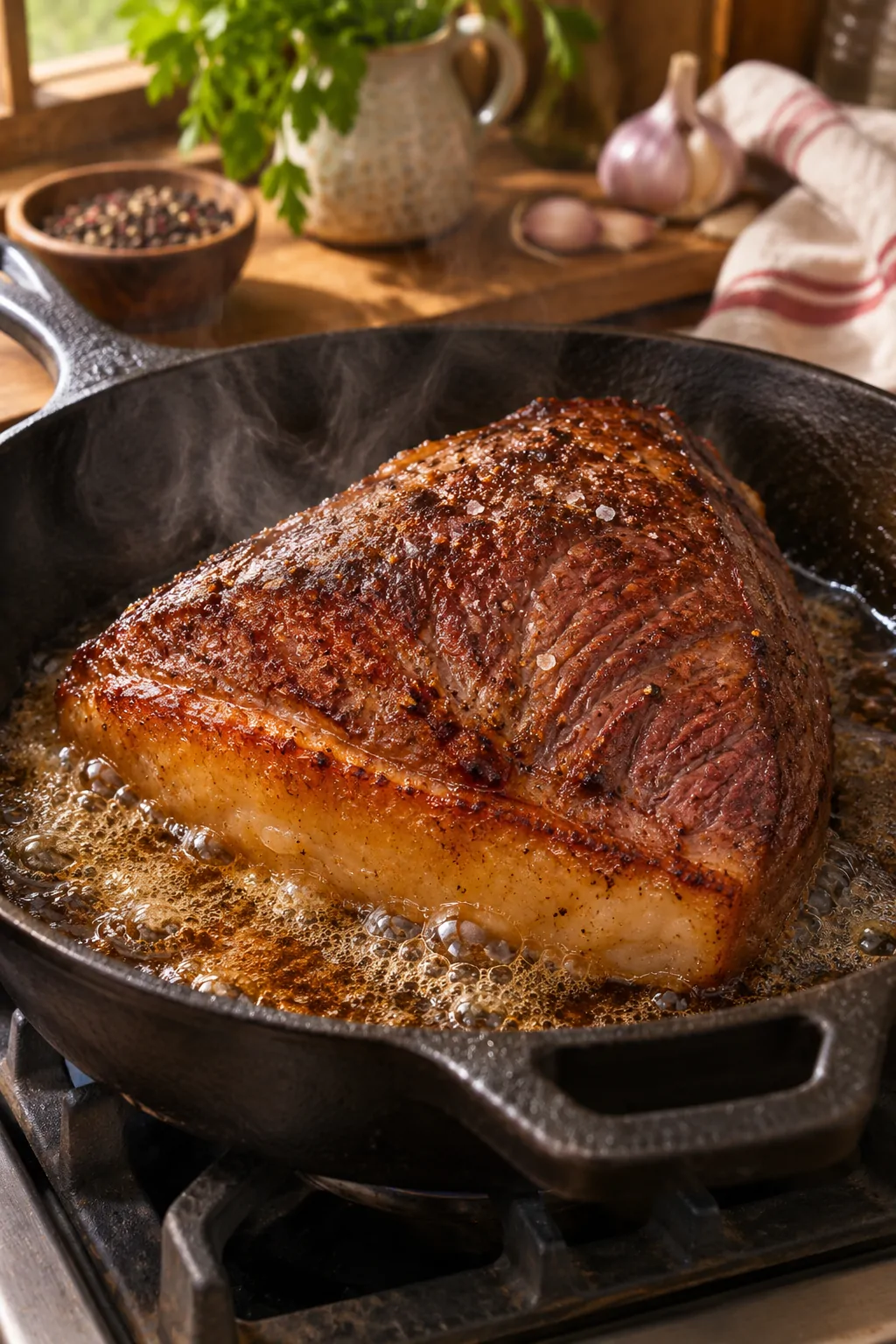
The stovetop sear starts rendering the fat and gives the surface deep color. Finishing in a hot oven cooks the center evenly. Resting is essential: it gives the juices time to settle before slicing.
How to make picanha rump cap roast
Plan for about an hour including resting. Use an instant-read thermometer rather than relying only on time, since roast thickness varies.
Ingredients
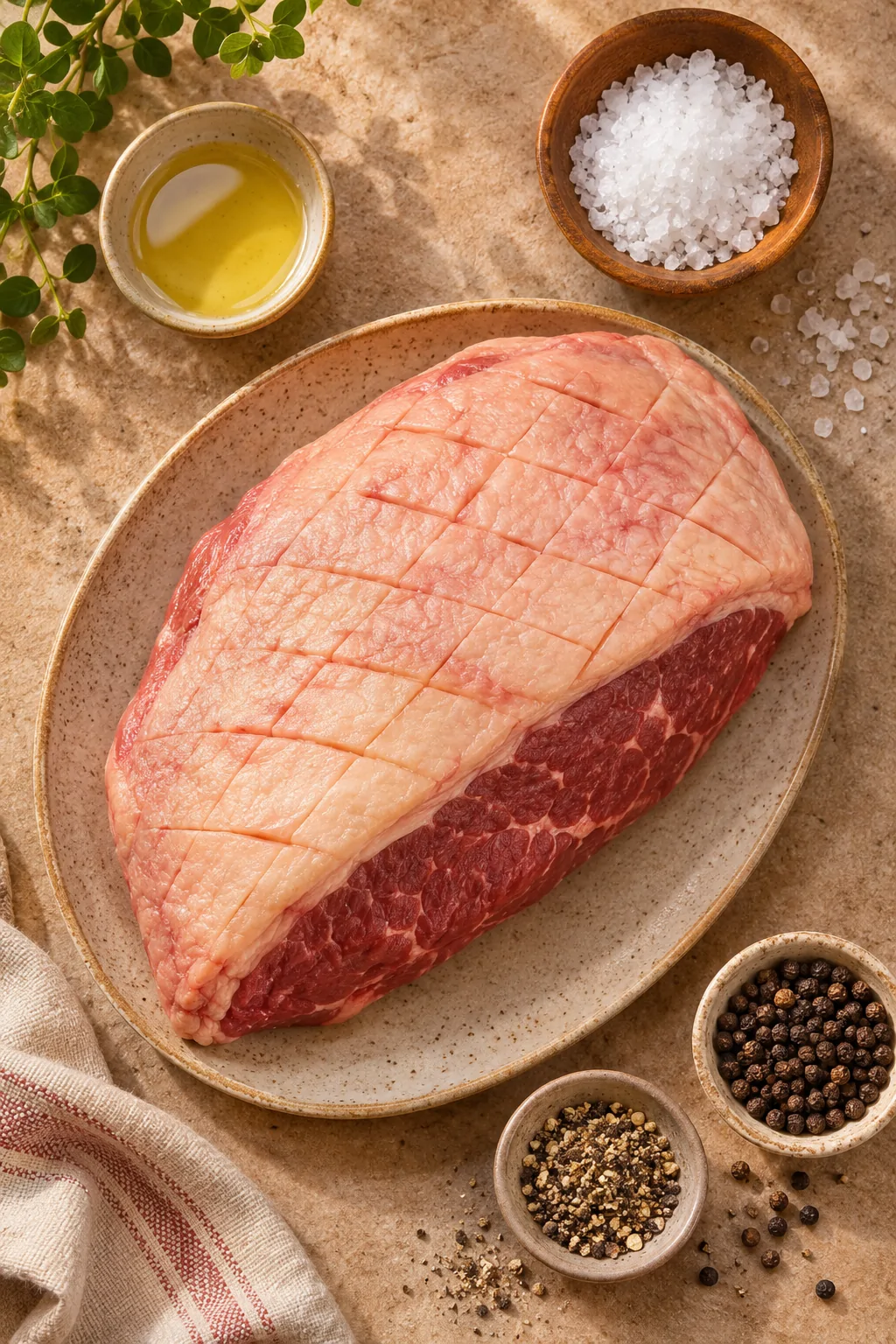
- 1.5 kg picanha rump cap roast, fat cap scored
- 2 tablespoons coarse salt, divided
- 1 teaspoon freshly ground black pepper
- 1 tablespoon neutral oil
Method
- Pat the roast dry and score the fat cap without cutting into the meat.
- Season all sides with salt and pepper, then let the roast stand while the oven heats to 220°C.
- Sear the roast fat-side down in an oven-safe skillet with the oil until deeply golden.
- Turn the roast fat-side up and roast until the center reaches 52–54°C for medium-rare.
- Rest for 15 minutes, then slice thinly across the grain and serve.
How to judge doneness
Look for a browned, lightly crisp fat cap and a center that feels springy rather than firm. Pull the roast at 52–54°C for medium-rare; carryover heat will raise the temperature as it rests.
Serving ideas
Serve thin slices with roasted potatoes, a crisp green salad, or a sharp salsa. The rich fat cap benefits from something acidic on the plate, such as chimichurri or dressed tomatoes.
Choosing and preparing the cut
Look for a compact triangular roast with an even fat cap. The meat should be firm, moist, and free of strong odors. If the cut is very cold, let it sit briefly while you prepare the skillet, but do not leave raw beef at room temperature for an extended period. Patting the surface dry is more important than adding extra oil: moisture creates steam, while a dry surface browns quickly.
Score the fat in shallow diagonal lines, then cross them to make diamonds. The cuts help the fat render without slicing into the lean center. Keep the fat cap attached during cooking. It is the roast’s built-in protection, and it seasons the surface as it melts.
Temperature and texture cues
An instant-read thermometer gives the most reliable result. Insert it from the side into the thickest part of the meat, avoiding the fat cap. Pulling the roast at 52–54°C produces a rosy medium-rare center after resting. If you prefer medium, continue until the center is closer to 57–60°C, remembering that the roast will keep cooking for a few minutes off the heat.
The exterior should look deeply bronzed rather than pale brown. The fat cap should be softened and lightly crisp at the edges. If the crust is darkening too quickly before the center is ready, move the skillet to a lower oven rack or reduce the oven temperature slightly while continuing to check the internal temperature.
Make-ahead and carving notes
You can season the roast several hours ahead and keep it covered in the refrigerator. Bring it out while the oven preheats so the surface is not icy when it reaches the skillet. After cooking, rest it uncovered. Covering tightly traps steam and can soften the crisp fat cap.
Use a sharp carving knife and find the direction of the muscle fibers. Cut across those fibers in thin, even slices. This is especially important with picanha because the grain can change direction across the triangular cut. A thick slice may look generous, but a thin cross-grain slice will be easier to chew and lets the rendered fat feel balanced.
Pairings for a rich roast
Balance the beef with bright, fresh flavors. A parsley-and-garlic chimichurri, lemony greens, tomato salad, or quick-pickled onions all work well. For a fuller dinner, add roasted potatoes or warm bread to catch the juices. Keep the side dishes simply seasoned so the coarse salt crust and beefy flavor remain clear.
One useful roast tip
Always identify the grain before cooking. It can be easier to see on the raw cut, and slicing across it after resting makes a bigger difference to tenderness than adding more seasoning.
Optional variation
Optional: Add a small pinch of smoked paprika to the pepper for a gently smoky crust. Keep the salt amount unchanged so the beef still tastes balanced.
Storage and reheating
Refrigerate leftovers in a covered container for up to three days. Slice cold for sandwiches, or warm gently in a low oven with a splash of broth so the meat does not overcook.
Troubleshooting the roast
If the meat seems less tender than expected, check the slice direction before changing the cooking method. Picanha can be juicy yet chewy when it is cut with the grain. If the fat cap remains rubbery, the skillet may not have been hot enough at the start; use a steady medium-high heat and give the fat time to render before moving the roast. If the pan begins to smoke heavily, lower the heat briefly and pour off excess rendered fat, leaving enough to keep the surface glossy.
Salt is the main seasoning here, so distribute it evenly over the meat and fat. Coarse crystals need a little time to cling to the surface. Avoid adding a wet sauce before searing, since it will interfere with browning. Serve sauces at the table instead, where their acidity can lift each rich bite.
When to serve picanha
This roast is ideal for a small celebration, a weekend dinner, or a meal where one centerpiece needs to satisfy several preferences. Slice the center more rare and the end pieces more cooked, then arrange them together so everyone can choose. It also makes useful leftovers: chilled slices are excellent in sandwiches, grain bowls, and salads, while the crisp fat can be warmed in a skillet for extra flavor.
Can I cook picanha ahead?
Yes. Roast it slightly less than your final target, rest it, and rewarm slices gently just before serving.
What should I do with the fat cap?
Keep it attached while roasting. It renders and protects the surface; trim only after cooking if you prefer leaner slices.
FAQs
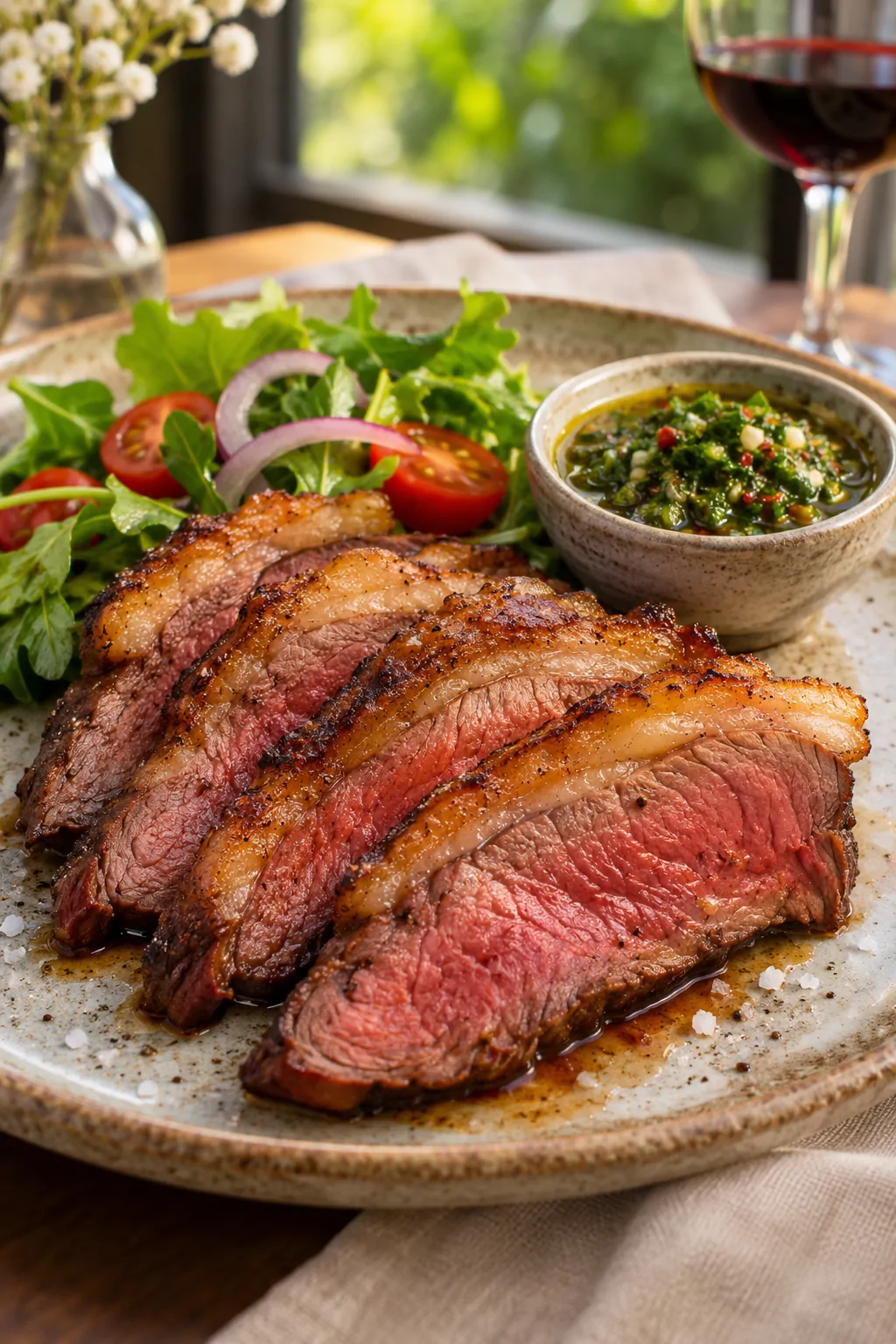
This roast keeps the technique focused and the flavor generous: crisp rendered fat, a deeply browned crust, and tender slices at the center.
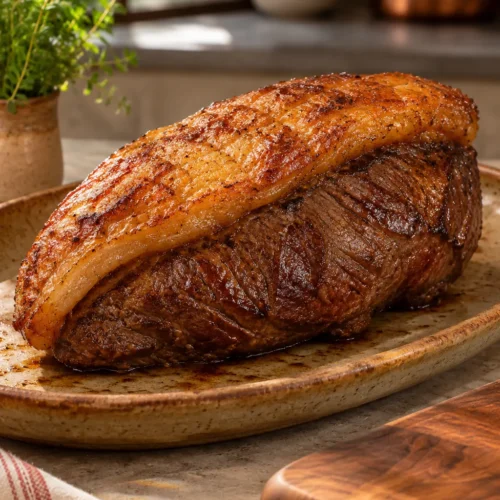
Picanha (Brazilian Rump Cap Roast)
Adjust the serving amount to scale the ingredient list. Written quantities in the steps refer to the original recipe; adjust them in the same proportion. Timing may vary with batch size.
Ingredients
Ingredients
- 1.5 kg picanha rump cap roast fat cap scored in a diamond pattern
- 2 tbsp coarse salt divided
- 1 tsp black pepper freshly ground
- 1 tbsp neutral oil for searing
Instructions
Instructions
- Pat the roast dry and score the fat cap without cutting into the meat.
- Season all sides with salt and pepper, then let the roast stand while the oven heats to 220°C.
- Sear the roast fat-side down in an oven-safe skillet with the oil until deeply golden.
- Turn the roast fat-side up and roast until the center reaches 52–54°C for medium-rare.
- Rest for 15 minutes, then slice thinly across the grain and serve.