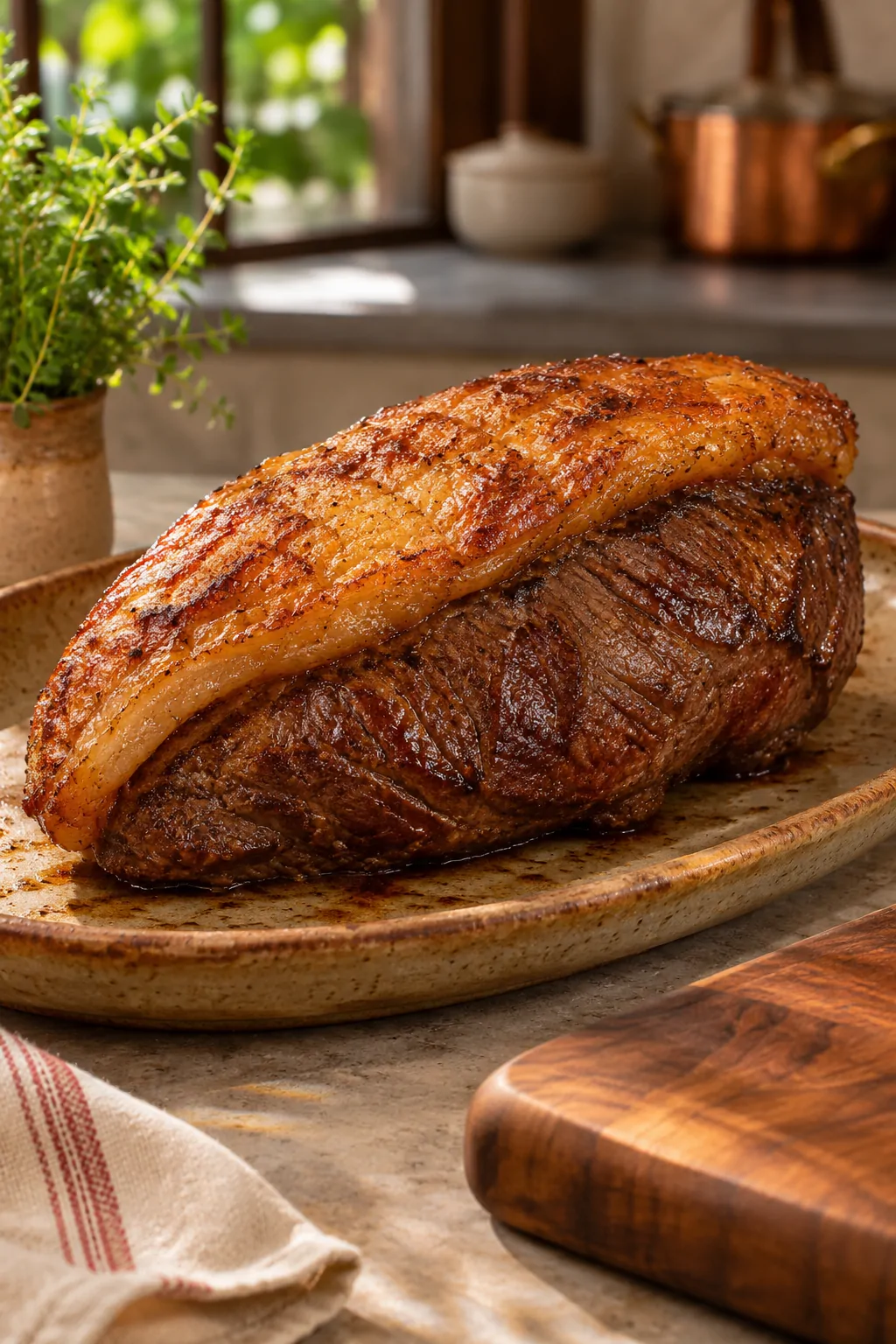


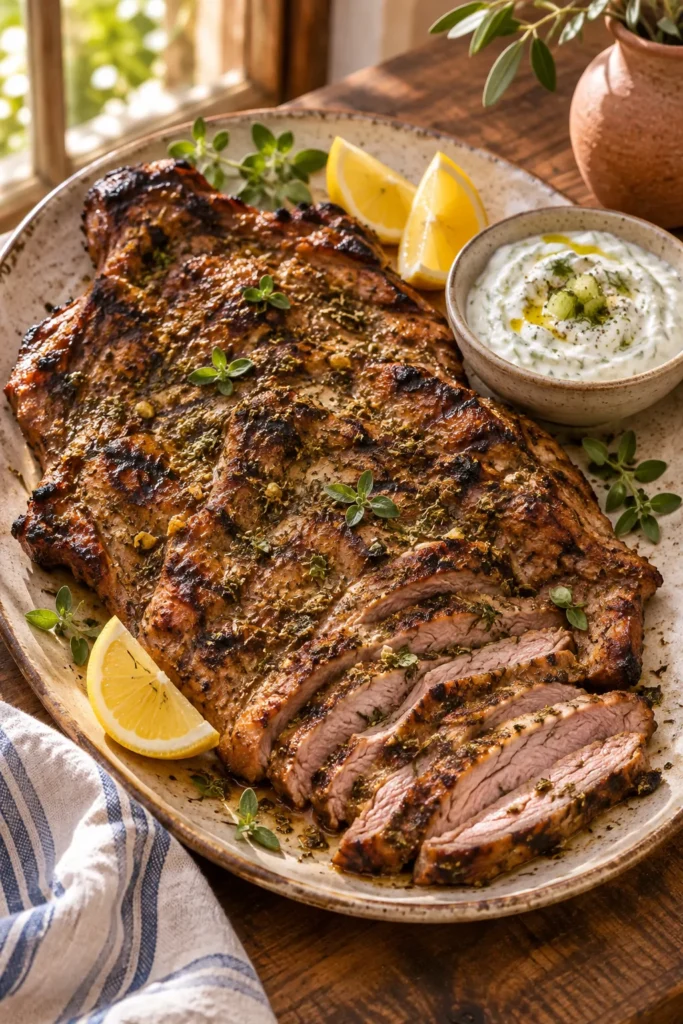
Greek butterflied lamb leg is a generous centerpiece with a bright garlic-lemon marinade, oregano-scented crust, and juicy slices inside. Flattening the boneless leg helps it cook more evenly, while a hot grill or quick skillet sear builds the browned edges that make this dinner feel special. Marinate ahead, cook to temperature, rest it well, and the lamb is ready for a relaxed platter with lemon, tzatziki, salad, and warm flatbread.
What is Greek butterflied lamb leg?
A butterflied lamb leg has the bone removed and the meat opened into a broad, uneven sheet. It is ideal for grilling because the thinner edges brown while the thickest section stays tender. The Greek-style treatment here is simple: garlic, dried oregano, lemon juice, lemon zest, olive oil, salt, and pepper. The marinade is fresh and savory rather than sweet, so it suits both a holiday table and an easy outdoor meal.
Why this lemon-garlic lamb works
Lemon brightens the rich lamb, olive oil carries the oregano and garlic across the surface, and a long rest in the marinade seasons the folds. Cooking over high heat gives the outside smoky color quickly. A thermometer matters because a butterflied leg is not perfectly uniform; measuring the thickest part is more reliable than relying on minutes alone.
Ingredients and marinade notes
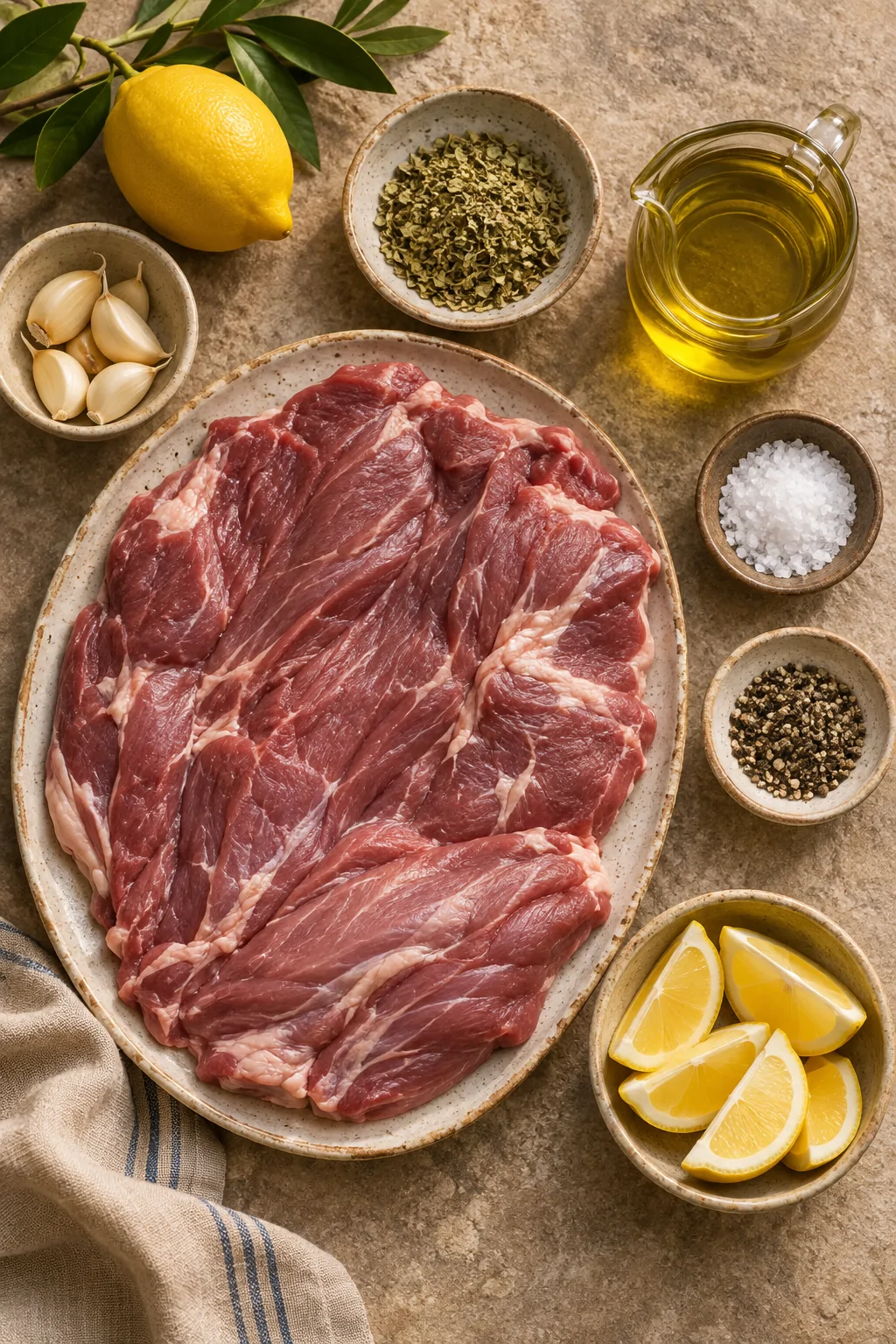
- One butterflied lamb leg, about 1.5 kg, trimmed.
- Three large garlic cloves, one tablespoon dried oregano, two teaspoons salt, and one teaspoon black pepper.
- One-third cup fresh lemon juice, the zest of one lemon, and one-half cup olive oil.
- One tablespoon olive oil for grilling or searing, plus lemon wedges for serving.
Massage the marinade into every crease rather than only brushing the top. Three hours is the minimum useful marinating time, while an overnight rest gives the strongest flavor. Keep the lamb refrigerated during this stage and bring it out about an hour before cooking.
How to make Greek butterflied lamb leg
Whisk the garlic, oregano, salt, pepper, lemon juice, zest, and half a cup of olive oil into a marinade.
Place the butterflied lamb in a large bag or dish, pour over the marinade, massage it into the meat, and chill for at least 3 hours or overnight.
Take the lamb out of the refrigerator about 1 hour before cooking. Heat a grill until very hot, or heat an oven to 350°F with a rack over a roasting tray.
For grilling, oil the grates and cook the lamb fat-side down for about 12 minutes, then turn and cook about 8 minutes more. For the oven method, sear pieces in an oiled skillet for 2 to 3 minutes per side, then roast for 22 to 25 minutes.
Cook until the thickest part reaches 135°F for medium-rare, or the preferred doneness. Loosely cover with foil and rest for 10 minutes.
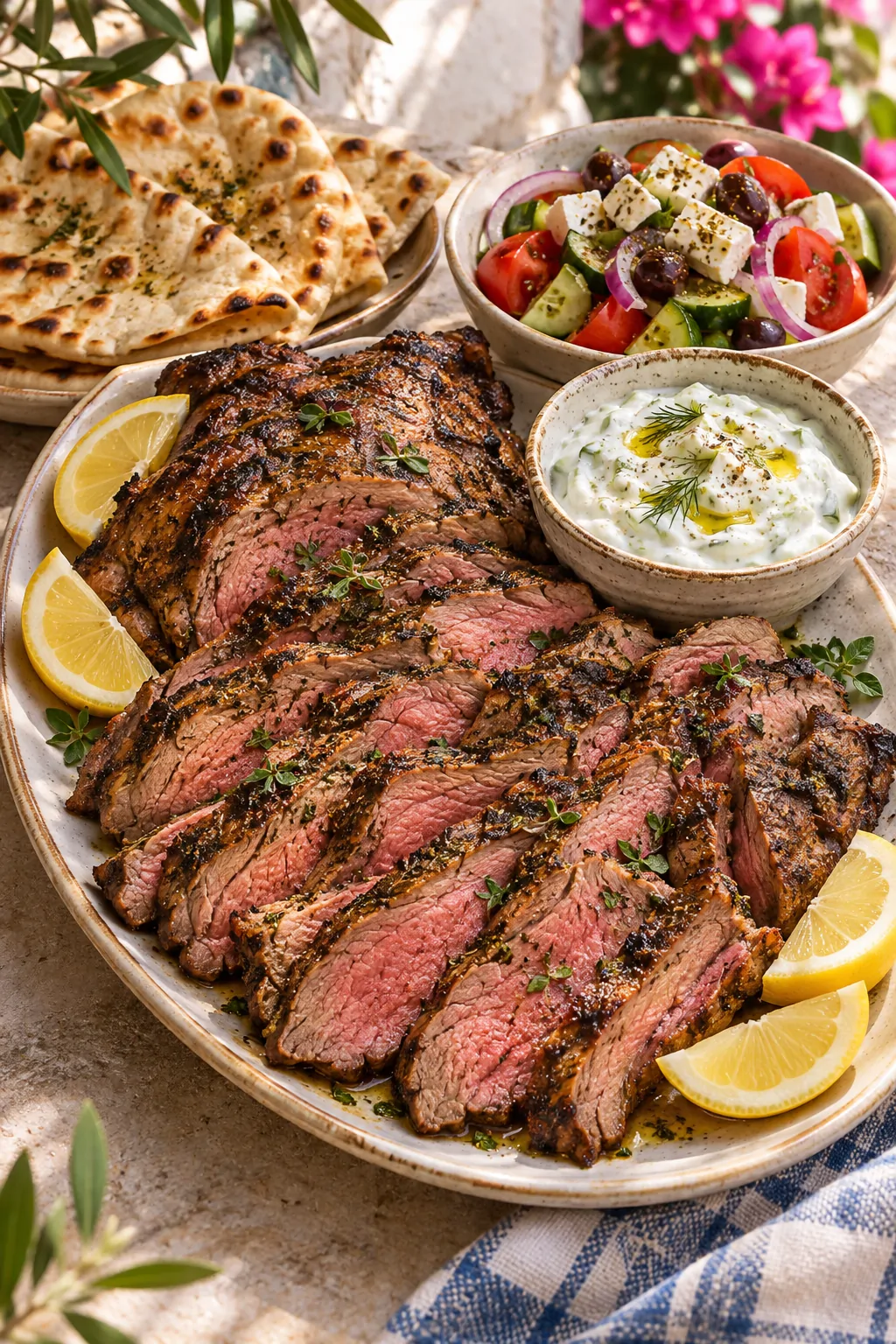
Slice across the grain and serve with lemon wedges, Greek salad, tzatziki, and warm flatbreads.
Whisk the garlic, oregano, salt, pepper, lemon juice, zest, and half a cup of olive oil into a loose marinade. Put the lamb in a large food-safe bag or shallow dish, pour in the marinade, and turn the meat until coated. Cover and refrigerate for at least three hours or overnight.
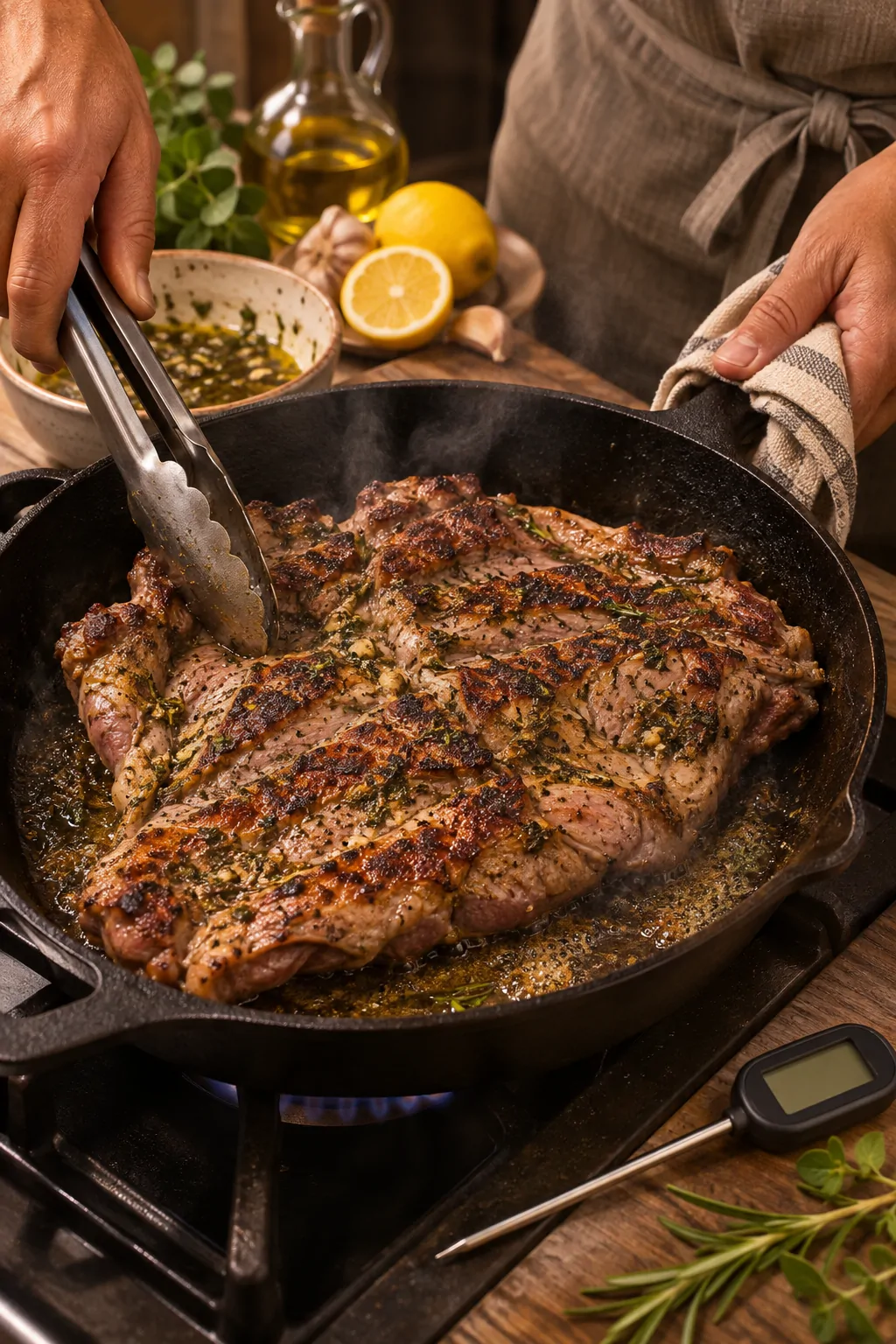
Take the lamb from the refrigerator about one hour before cooking. For a grill, oil the grates and heat them until very hot. Place the lamb fat-side down and grill for about 12 minutes, turn it, and cook the flesh side for about 8 minutes. For an indoor method, heat the oven to 350°F, cut the lamb into two or three pieces so it fits a skillet, and sear each piece in the tablespoon of oil for 2 to 3 minutes per side.
Transfer the seared pieces to a rack over a tray and roast for 22 to 25 minutes. Whether grilled or roasted, cook until the thickest section reaches 135°F for medium-rare or the preferred pull temperature. Loosely cover the meat with foil and rest for 10 minutes before slicing.
Temperature, texture, and slicing cues
The outside should be deeply browned with small charred patches, while the center should feel springy rather than hard. Insert the thermometer sideways into the thickest section for the clearest reading. Resting is not optional: it gives the hot juices time to settle and makes the slices easier to keep moist. Slice across the grain, adjusting direction where the muscle changes.
Serving ideas and optional variation
Arrange the lamb on a warm platter with lemon wedges, tzatziki, Greek salad, and flatbreads. Lemon rice, a Mediterranean rice salad, or a chickpea salad also works well. Optional variation: add a pinch of red pepper flakes to the marinade for gentle heat, or replace a little of the dried oregano with fresh oregano at the table. Keep the core lemon-garlic balance intact.
Make-ahead, storage, and reheating
Marinate the lamb the night before and prepare the salad and sauce while it comes toward room temperature. Cooked lamb keeps in a sealed container in the refrigerator for up to four days. Rewarm slices gently in a covered skillet with a spoonful of water or stock; prolonged high heat can dry the lean outer pieces. Cold leftovers are excellent in flatbread with salad and tzatziki.
Tips for a reliable Greek butterflied lamb leg
Choose a leg with fairly even thickness, trim only excess surface fat, and avoid crowding the skillet. Pat away dripping marinade before searing so the lamb browns instead of steams. Have the thermometer ready before the meat hits the heat, and remember that the lamb will continue cooking slightly during the rest. Slice just before serving for the juiciest texture.
FAQs about Greek butterflied lamb leg
Can I cook it entirely in the oven? Yes. Sear the pieces first for color, then roast at 350°F until the thickest section reaches your desired temperature.
How long should lamb marinate? Three hours works, but an overnight marinade gives the garlic, lemon, and oregano more time to season the meat.
What temperature is medium-rare lamb? Pull it at about 135°F in the thickest section, then rest it loosely covered before slicing.
A generous centerpiece with little fuss
Once the marinade is mixed, this lamb needs only high heat, a thermometer, and a patient rest. The broad shape makes it easy to portion, and the lemon, oregano, and garlic keep every bite lively. Serve it family-style and let everyone build a plate with the sauces and sides they like.
Greek Butterflied Lamb Leg with Garlic and Lemon
Adjust the serving amount to scale the ingredient list. Written quantities in the steps refer to the original recipe; adjust them in the same proportion. Timing may vary with batch size.
Ingredients
Ingredients
- 1 butterflied lamb leg, about 1.5 kg trimmed
- 3 large garlic cloves minced
- 1 tablespoon dried oregano
- 2 teaspoons salt
- 1 teaspoon black pepper
- 1/3 cup fresh lemon juice
- 1 lemon zest from 1 lemon
- 1/2 cup olive oil
- 1 tablespoon olive oil for grilling or searing
- 1 lemon wedged for serving
Instructions
Instructions
- Whisk the garlic, oregano, salt, pepper, lemon juice, zest, and half a cup of olive oil into a marinade.
- Place the butterflied lamb in a large bag or dish, pour over the marinade, massage it into the meat, and chill for at least 3 hours or overnight.
- Take the lamb out of the refrigerator about 1 hour before cooking. Heat a grill until very hot, or heat an oven to 350°F with a rack over a roasting tray.
- For grilling, oil the grates and cook the lamb fat-side down for about 12 minutes, then turn and cook about 8 minutes more. For the oven method, sear pieces in an oiled skillet for 2 to 3 minutes per side, then roast for 22 to 25 minutes.
- Cook until the thickest part reaches 135°F for medium-rare, or the preferred doneness. Loosely cover with foil and rest for 10 minutes.
- Slice across the grain and serve with lemon wedges, Greek salad, tzatziki, and warm flatbreads.