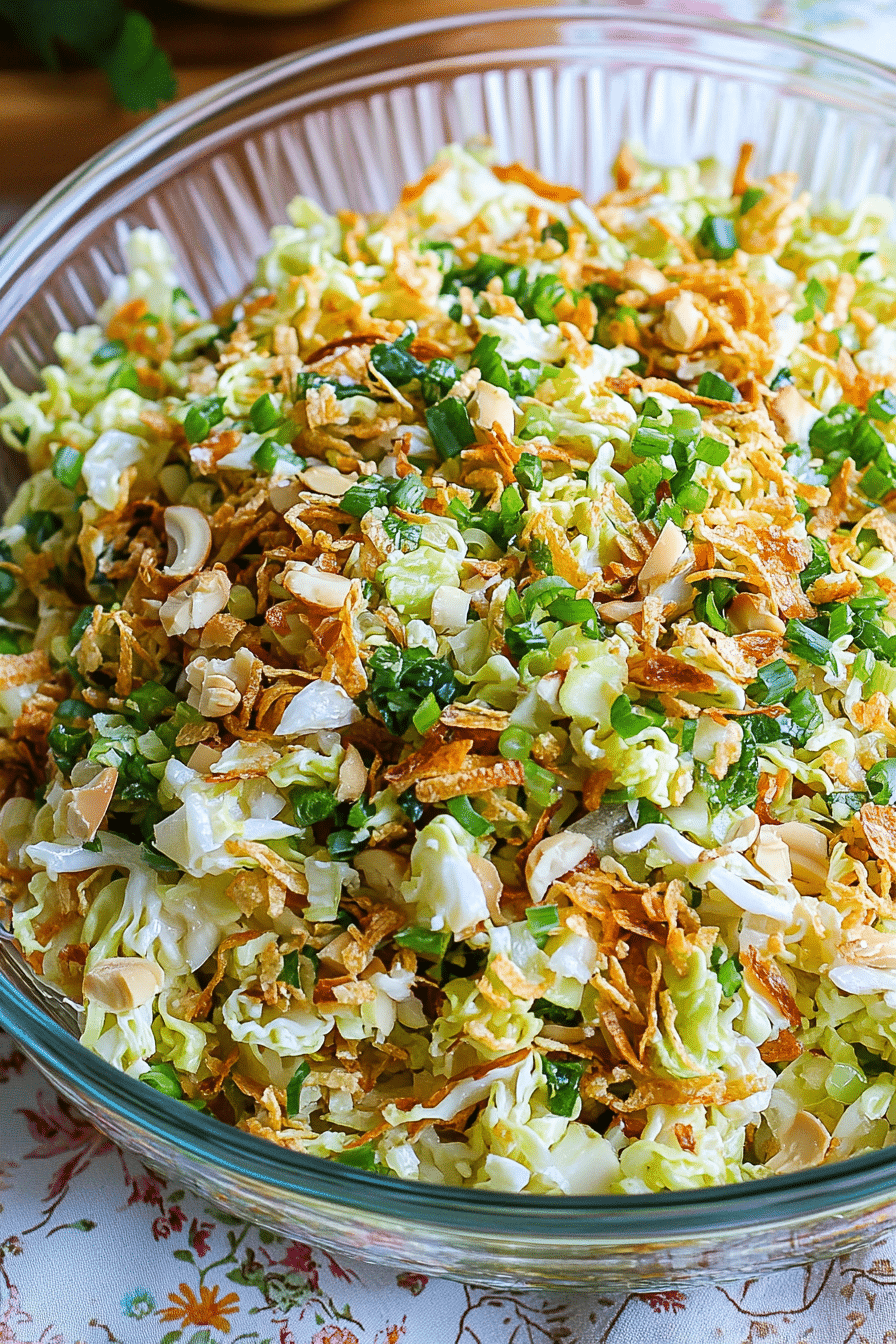



Homemade ramen noodles are within reach when a pasta machine handles the firm dough. This recipe combines all-purpose flour, warm water, and baked baking soda (or kansui) to create fresh, springy strands with a golden tint. The dough rests before it is rolled, cut, and boiled, so the process is organized into manageable stages. Once ready, these noodles make a quick, satisfying base for broth, vegetables, or sliced meat.
What makes homemade ramen noodles different
Ramen noodles are wheat noodles made with an alkaline solution. That alkaline ingredient changes the dough’s color, texture, and flavor, giving the finished noodles their characteristic spring. The dough is deliberately firm and crumbly at first; a pasta machine does the repeated flattening that would otherwise make hand-kneading tiring.
Why this no-knead method works
The key is patience between passes. A short rest lets the flour hydrate, while folding the dough through the widest machine setting gradually smooths rough edges. After the sheet becomes cohesive, narrower settings create an even thickness. Boiling for only about one minute keeps the strands pleasantly firm rather than gummy.
Ingredients and equipment
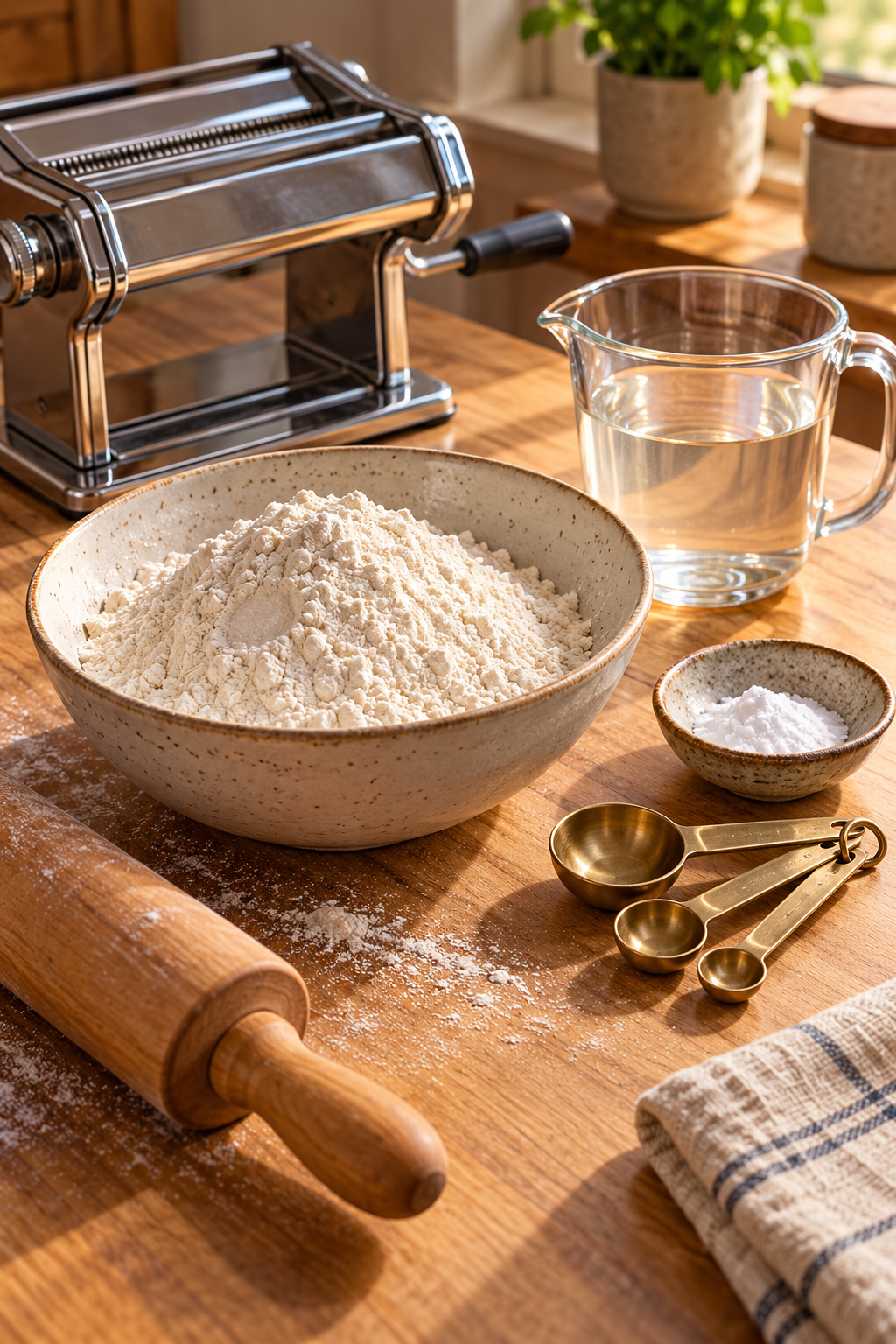
Gather 240 grams all-purpose flour, 2 teaspoons baked baking soda or 1 teaspoon kansui, and 1/2 cup plus 1 teaspoon warm water. Keep a little extra water nearby for a dough that refuses to come together, and use tapioca or cornstarch for light dusting. You will also need a bowl, a rolling pin, a pasta machine, a knife or dough scraper, and a large pot.
How to make homemade ramen noodles
Build and rest the dough
Mix the baked baking soda or kansui into the warm water. Pour the alkaline water into the flour and stir with a spoon, spatula, or chopsticks. The mixture should look crumbly. Squeeze it together with your hands until one ball forms. If loose flour remains, add water one tablespoon at a time. Cover the dough and let it rest for 30 minutes at room temperature, or chill it overnight.
Roll the dough smooth
Use a rolling pin to compress the dough for 2 to 3 minutes, turning it and gathering it back into a ball. Divide it in half and cover one portion while working with the other. Flatten the piece enough to fit the widest setting of the pasta machine.
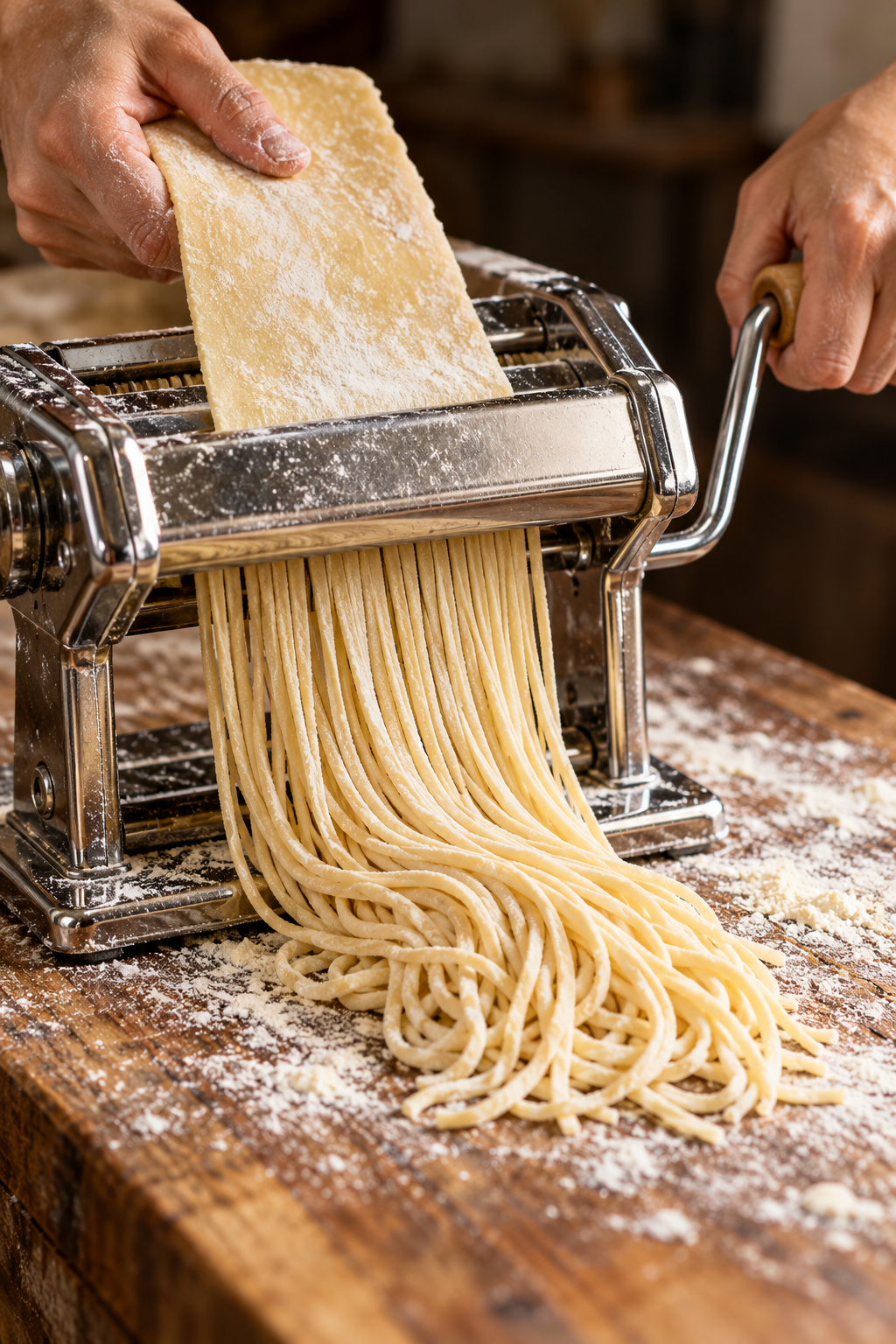
Pass the dough through the widest setting several times, folding it into thirds between passes. Continue until it looks smooth and rectangular rather than ragged. Then pass it through the next settings without folding, dusting lightly whenever the sheet feels sticky. Stop around 1.9 mm, or at the thickness you prefer.
Cut and cook the strands
- Mix the baked baking soda or kansui into the warm water to make an alkaline solution.
- Put the flour in a large bowl, pour in the alkaline solution, mix until crumbly, then squeeze the crumbs into one ball. Add water a tablespoon at a time only if needed.
- Cover the dough and rest it at room temperature for 30 minutes, or refrigerate it overnight.
- Work the stiff dough with a rolling pin for 2 to 3 minutes, turning and compressing it into a ball as you go.
- Divide the dough in half and pass each piece through a pasta machine on its widest setting, folding into thirds between passes until smooth and rectangular.
- Continue passing the dough through progressively narrower settings without folding, dusting lightly to prevent sticking, until about 1.9 mm thick.
- Cut the sheets into thin strands with the pasta machine, repeating with the second half.
- Boil the noodles for about 1 minute, drain, and rinse under cold water before adding to soup.
Watch for a cohesive sheet, clean strands, and noodles that remain slightly firm after boiling.
Serving ideas
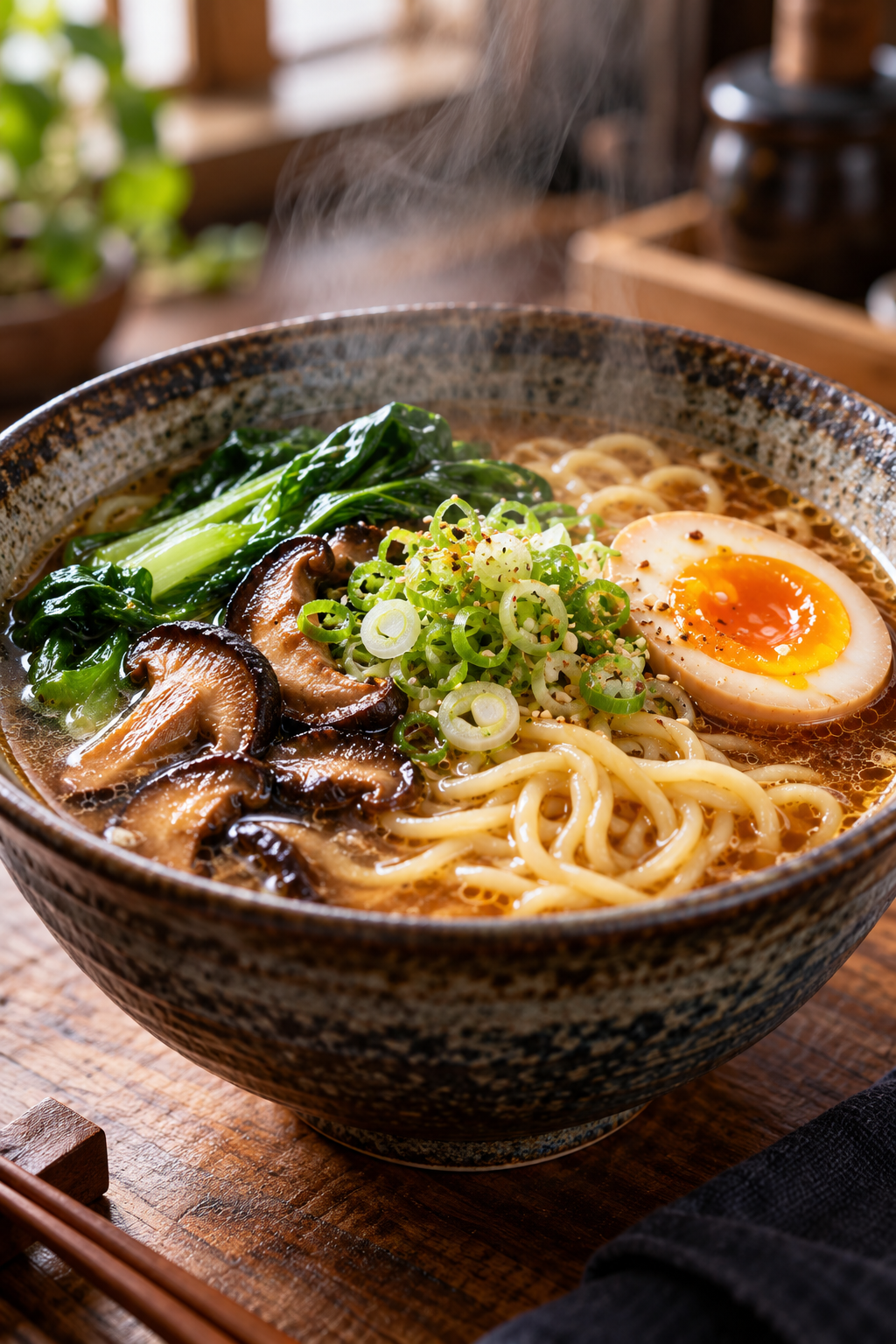
Use the noodles in a clear chicken broth, miso soup, or tonkotsu-style bowl. Add greens, mushrooms, corn, shredded chicken, tofu, or a soft-boiled egg. Because the noodles are thin and cook quickly, prepare the toppings and broth before dropping them into boiling water. For a simple meal, toss drained noodles with sesame oil, soy sauce, scallions, and a little chili crisp.
Tips for better noodles
- Measure flour by weight when possible; a packed cup can vary considerably.
- Keep unused dough covered so its surface does not dry while the first portion is rolled.
- Do not fold after leaving the widest machine setting; folding later can make the sheet uneven.
- Use only a light coating of starch, since excess dust can cloud the cooking water.
Optional variation
For a slightly thicker, chewier noodle, stop one machine setting earlier and cut the sheet with the wider cutter. This is an optional variation, not a change to the primary recipe. Keep the boiling time short and check a strand before draining.
Storage and cooking ahead
Fresh cut noodles are best cooked promptly. If you need to hold them briefly, dust lightly with starch, form loose nests, cover, and refrigerate. Cook chilled noodles in boiling water and separate them with chopsticks. For meal prep, rinse cooked noodles cold, drain well, and add them to hot broth only at serving time.
Homemade ramen noodle questions
Can baking soda replace kansui?
Yes. The baking soda must be baked first as directed by the source method, then measured into the warm water. Kansui is the traditional alkaline alternative.
Why is the dough so stiff?
Ramen dough is intentionally low in moisture. Let the dough rest, then use the pasta machine to do the repeated flattening. Add water only a tablespoon at a time if it will not form a ball.
How long should fresh ramen noodles boil?
Thin fresh strands need about 1 minute. They should be slightly firm because they continue softening in hot soup.
A fresh bowl starts here
These homemade ramen noodles reward a steady pace: hydrate the flour, rest the dough, let the machine smooth it, and boil the strands briefly. Once the technique feels familiar, you can pair the noodles with almost any broth and toppings for a fresh bowl made to order.
FAQs about homemade ramen noodles

Homemade Ramen Noodles From Scratch
Adjust the serving amount to scale the ingredient list. Written quantities in the steps refer to the original recipe; adjust them in the same proportion. Timing may vary with batch size.
Ingredients
Ingredients
- 240 g all-purpose flour about 2 cups
- 2 teaspoons baked baking soda or 1 teaspoon kansui/lye water
- 1/2 cup plus 1 teaspoon warm water add a little more only if needed
- as needed tapioca or cornstarch for dusting
Instructions
Instructions
- Mix the baked baking soda or kansui into the warm water to make an alkaline solution.
- Put the flour in a large bowl, pour in the alkaline solution, mix until crumbly, then squeeze the crumbs into one ball. Add water a tablespoon at a time only if needed.
- Cover the dough and rest it at room temperature for 30 minutes, or refrigerate it overnight.
- Work the stiff dough with a rolling pin for 2 to 3 minutes, turning and compressing it into a ball as you go.
- Divide the dough in half and pass each piece through a pasta machine on its widest setting, folding into thirds between passes until smooth and rectangular.
- Continue passing the dough through progressively narrower settings without folding, dusting lightly to prevent sticking, until about 1.9 mm thick.
- Cut the sheets into thin strands with the pasta machine, repeating with the second half.
- Boil the noodles for about 1 minute, drain, and rinse under cold water before adding to soup.