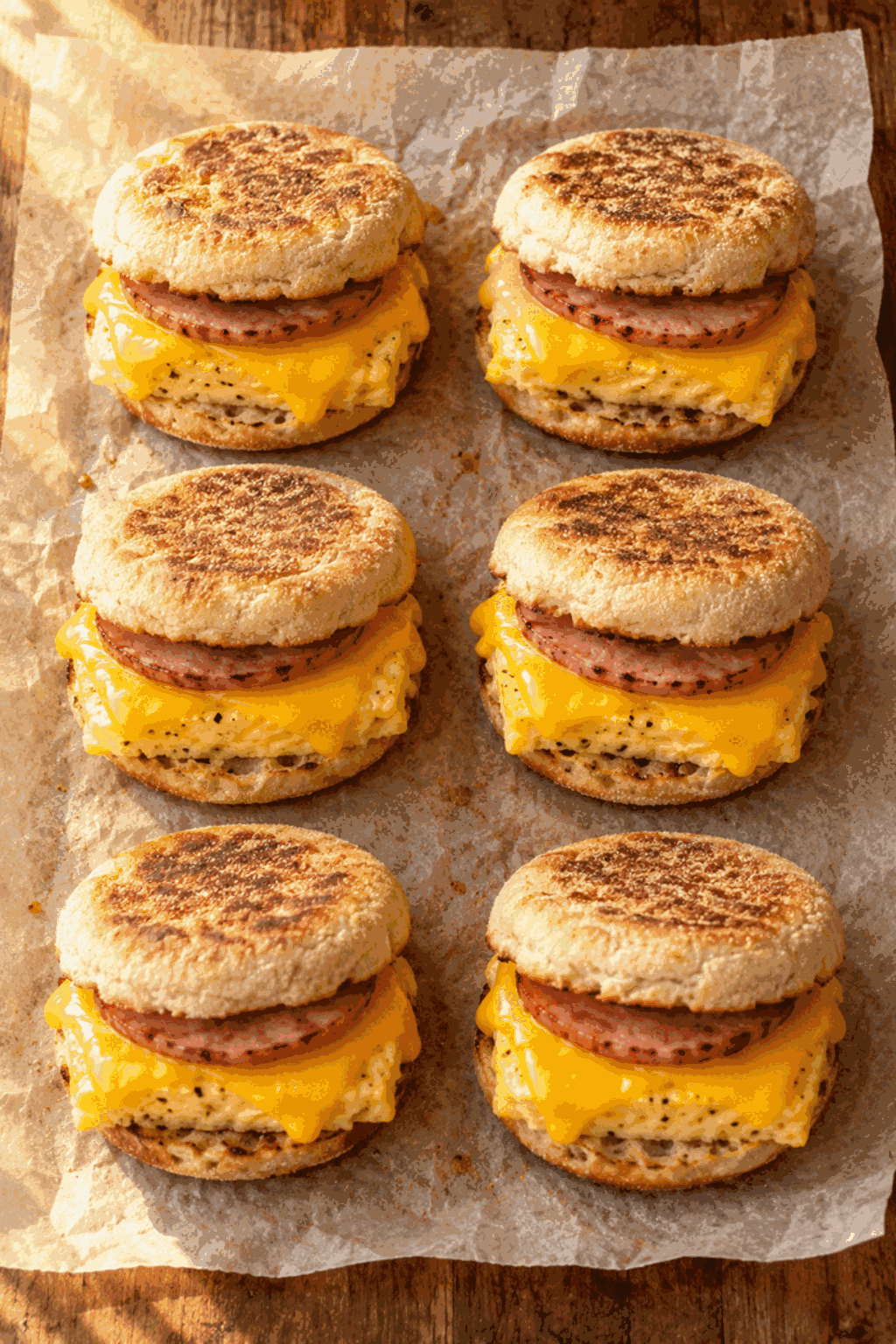


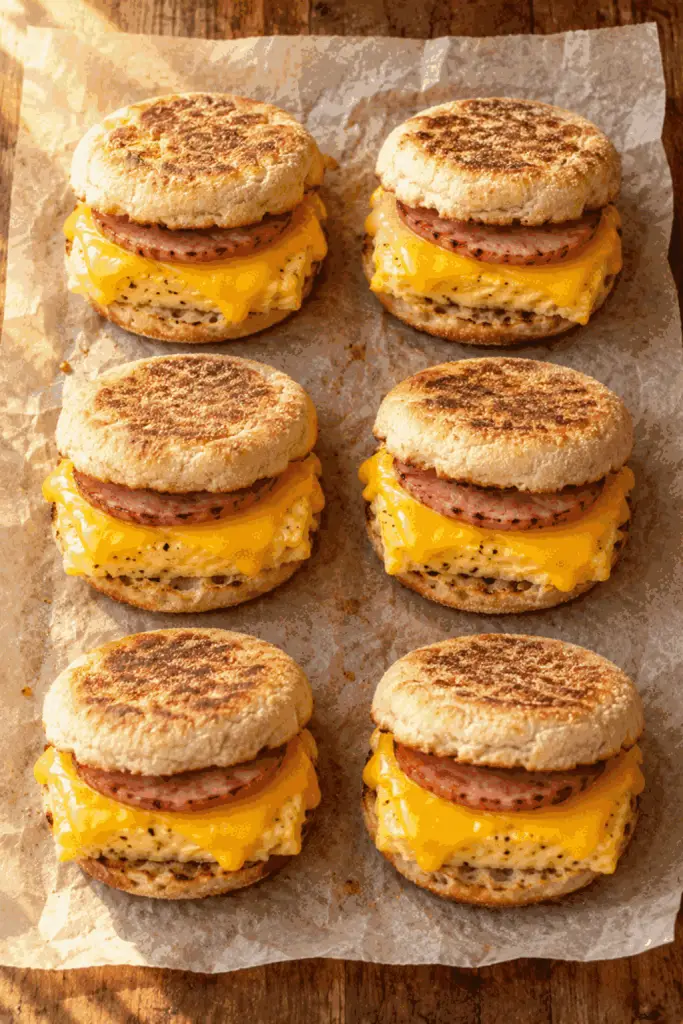
Freezer breakfast sandwiches make busy mornings easier with sheet-pan eggs, melty cheese, and savory Canadian bacon or ham tucked into toasted English muffins. The eggs bake as one thin layer, so you can cut six even portions and assemble the sandwiches quickly. Make a batch for the freezer, or enjoy them warm straight from the oven when you want a filling breakfast without cooking each egg separately.
What are freezer breakfast sandwiches?
Freezer breakfast sandwiches are assembled sandwiches designed to be wrapped, frozen, and reheated when needed. This version uses a baked sheet-pan egg layer rather than frying six separate eggs. That approach makes the portions uniform and keeps the preparation practical when you are cooking for several mornings at once. The sandwiches are simple enough for a weekday routine, but they also work for a weekend meal-prep session.
Why these freezer breakfast sandwiches work
Sheet-pan eggs cook evenly and stay tender because the milk adds moisture. Cutting the baked eggs into squares keeps every sandwich consistent, while the English muffins provide a sturdy base for freezing and reheating.
Ingredients
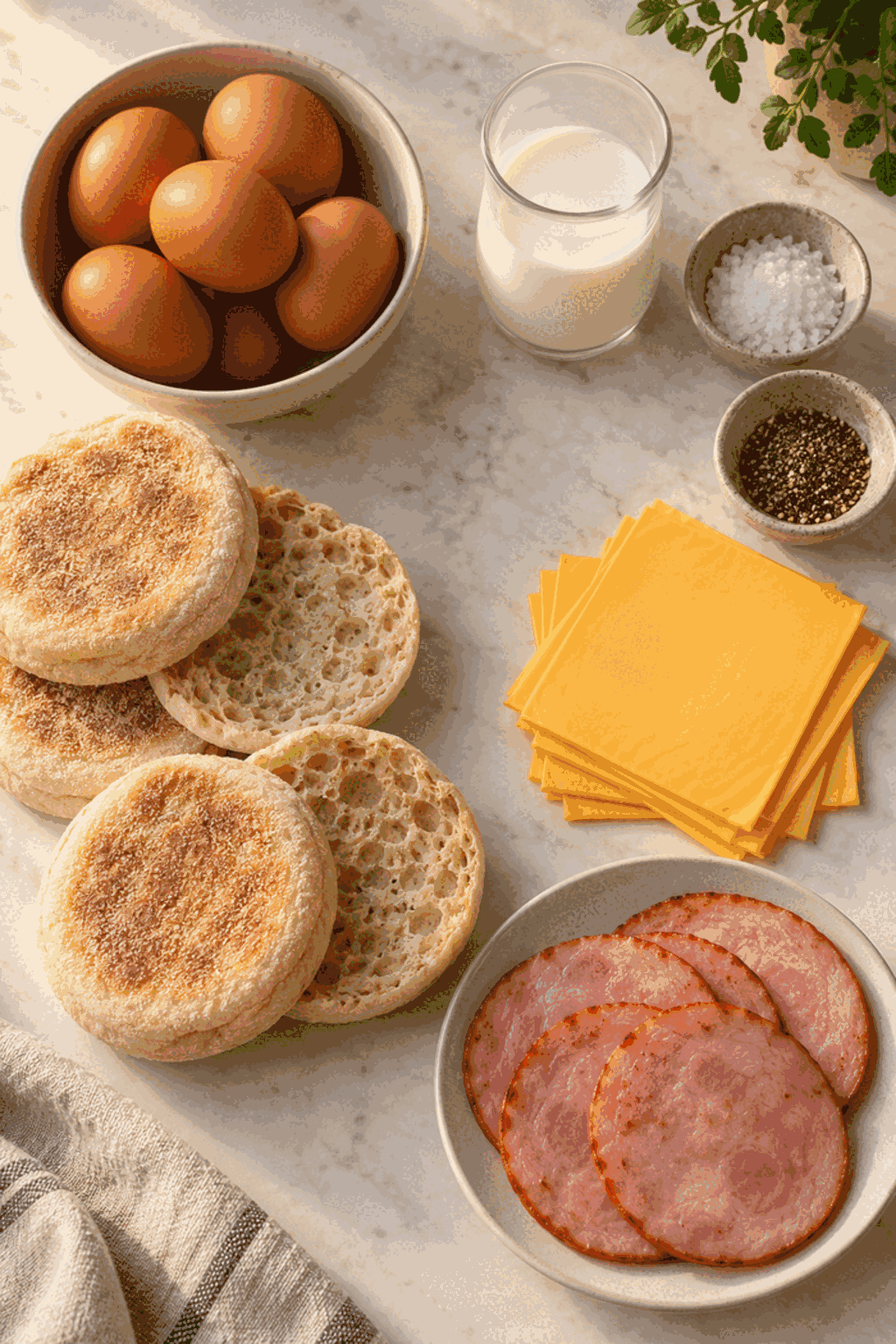
- 8 large eggs
- 1/4 cup milk
- 1/2 teaspoon salt
- 1/4 teaspoon black pepper
- 6 split English muffins
- 6 slices American cheese
- 6 slices Canadian bacon or sliced ham
How to make freezer breakfast sandwiches
- Preheat the oven to 350°F. Line a large sheet pan with parchment and lightly coat it with cooking spray.
- Whisk the eggs, milk, salt, and black pepper together until combined.
- Pour the egg mixture onto the prepared sheet pan and spread it evenly.
- Bake for 15 to 20 minutes, until the eggs are set and lightly golden.
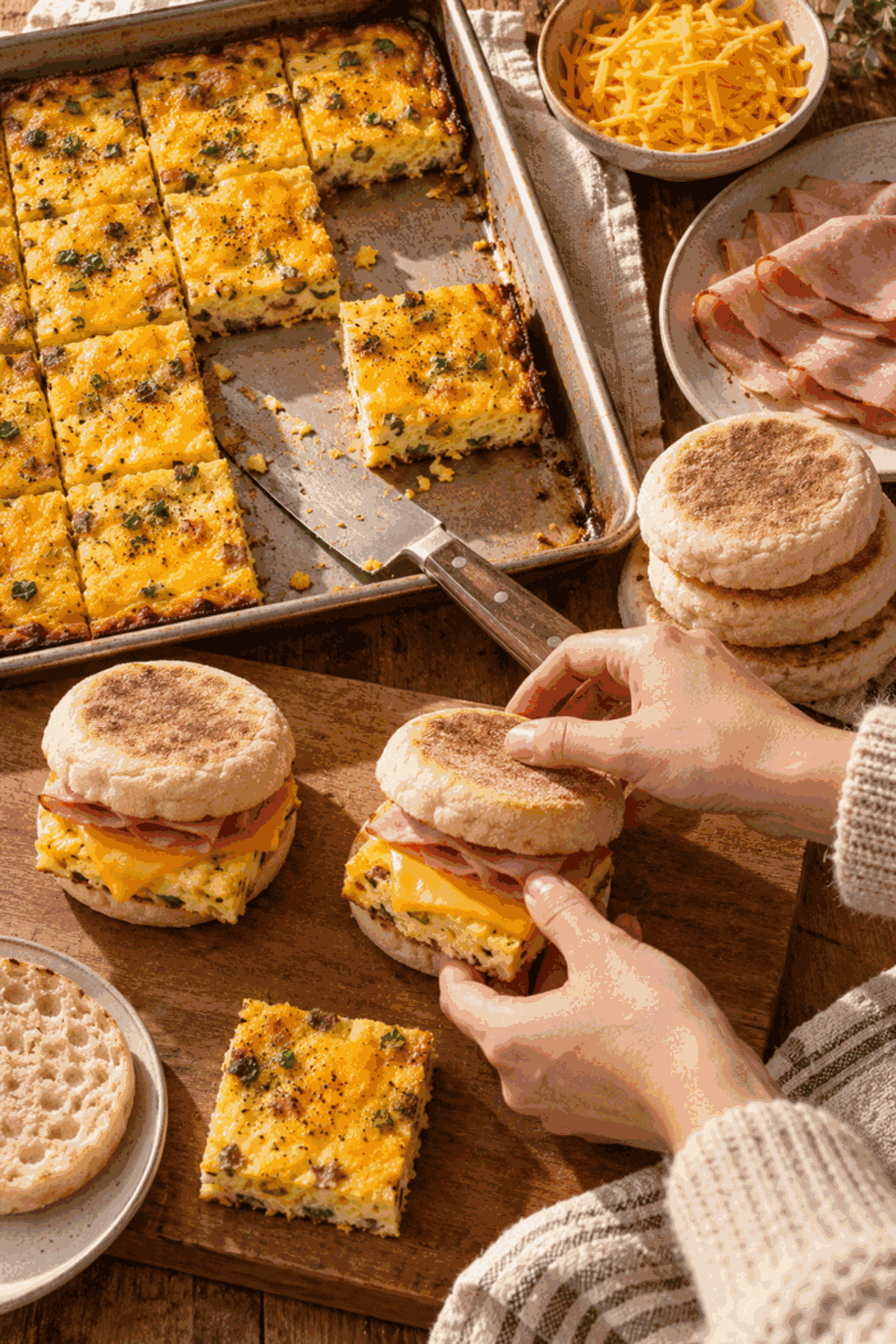
- Cool briefly, then cut the sheet-pan eggs into six squares.
- Place the egg squares on the English muffin halves with the cheese and Canadian bacon or ham.
- Wrap each sandwich in parchment or foil to freeze, or serve immediately.
Serving ideas
The mild egg, cheese, and ham combination is easy to pair with fresh sides. Add sliced fruit for sweetness, tomatoes or cucumber for a crisp contrast, or a small green salad if the sandwich is part of a later brunch. For a portable breakfast, keep the sandwich wrapped until you are ready to eat so the muffin stays protected. A little hot sauce or salsa can be served on the side rather than added before freezing.
Serve a warm sandwich with fruit, yogurt, or coffee for breakfast. They also fit neatly into a lunch bag for an early commute or a make-ahead breakfast before school.
Tips and optional variation
Let the egg sheet cool just enough to handle before cutting; this helps the squares hold their shape. Optional variation: add a thin layer of sautéed spinach or finely diced bell pepper, but cook and cool the vegetables first so extra moisture does not make the muffins soggy.
Storage and reheating
Label the wrapped sandwiches with the date so the oldest ones are used first. Separate them in a freezer bag or container to limit frost and make it easy to remove one at a time. If the cheese looks firm after reheating, let the sandwich stand for a minute before eating; the residual heat will finish warming the center. Avoid sealing a sandwich while the egg is still steaming, because trapped condensation can soften the muffin.
Making a reliable batch
Use a pan large enough for the egg mixture to form a fairly even layer. If the corners are thinner than the center, check them early and remove the pan when the middle is just set. The eggs will continue to firm slightly as they cool. Cutting with a straight downward motion helps keep the squares intact, and matching each square to the muffin size reduces overhang during wrapping.
Wrap assembled, cooled sandwiches individually and freeze them. Thaw overnight in the refrigerator for the most even reheating, then warm until the center is hot. From frozen, unwrap and microwave in short intervals, checking the middle before serving; crisp the muffin in a toaster oven if desired.
Freezer breakfast sandwich questions
Can I use ham instead of Canadian bacon?
Yes. Use six slices of deli ham or another fully cooked, thinly sliced breakfast meat.
How do I stop the English muffins from getting soggy?
Cool the eggs before assembly, wrap sandwiches tightly, and thaw them in the refrigerator before reheating when possible.
Can I make these without cheese?
Yes, the sandwiches will still hold together, though the cheese adds richness and helps keep the filling cohesive.
More make-ahead breakfast guidance
For the best texture, think of the sandwich as three parts: a fully cooked but tender egg layer, a dry and sturdy muffin, and a small amount of cheese and meat for flavor. Keeping those parts balanced makes the sandwich easier to freeze and less likely to fall apart when reheated. If you are preparing several batches, cool each component before stacking or wrapping so the freezer does not collect unnecessary moisture.
FAQs
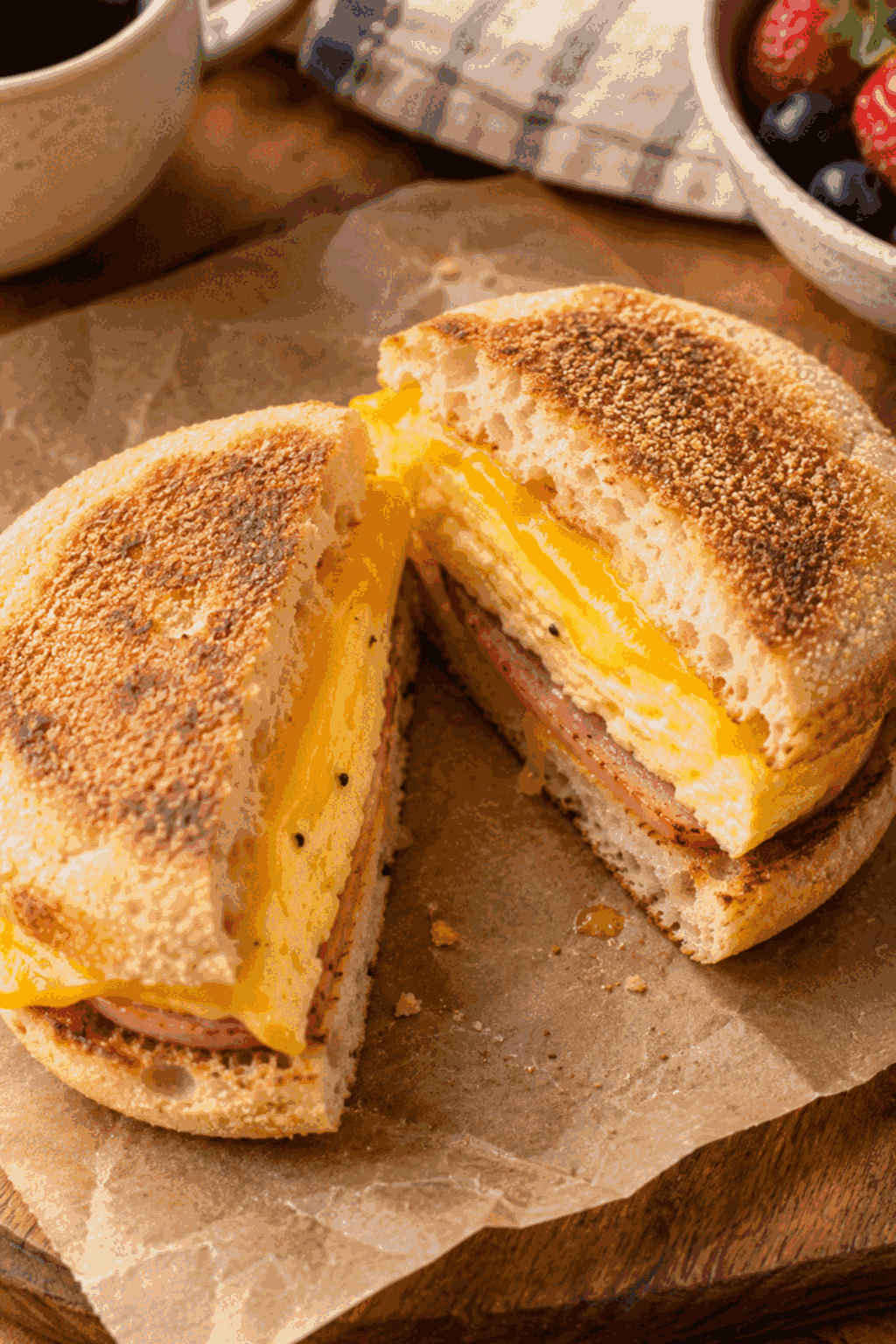
With one baked egg layer and simple assembly, these freezer breakfast sandwiches turn a short prep session into several dependable breakfasts.

Freezer Breakfast Sandwiches with Sheet-Pan Eggs
Ingredients
Ingredients
- 8 large eggs
- 1/4 cup milk
- 1/2 teaspoon salt
- 1/4 teaspoon black pepper
- 6 English muffins split
- 6 slices American cheese
- 6 slices Canadian bacon or sliced ham
Instructions
Instructions
- Preheat the oven to 350°F. Line a large sheet pan with parchment and lightly coat it with cooking spray.
- Whisk the eggs, milk, salt, and black pepper together until combined.
- Pour the egg mixture onto the prepared sheet pan and spread it evenly.
- Bake for 15 to 20 minutes, until the eggs are set and lightly golden.
- Cool briefly, then cut the sheet-pan eggs into six squares.
- Place the egg squares on the English muffin halves with the cheese and Canadian bacon or ham.
- Wrap each sandwich in parchment or foil to freeze, or serve immediately.