
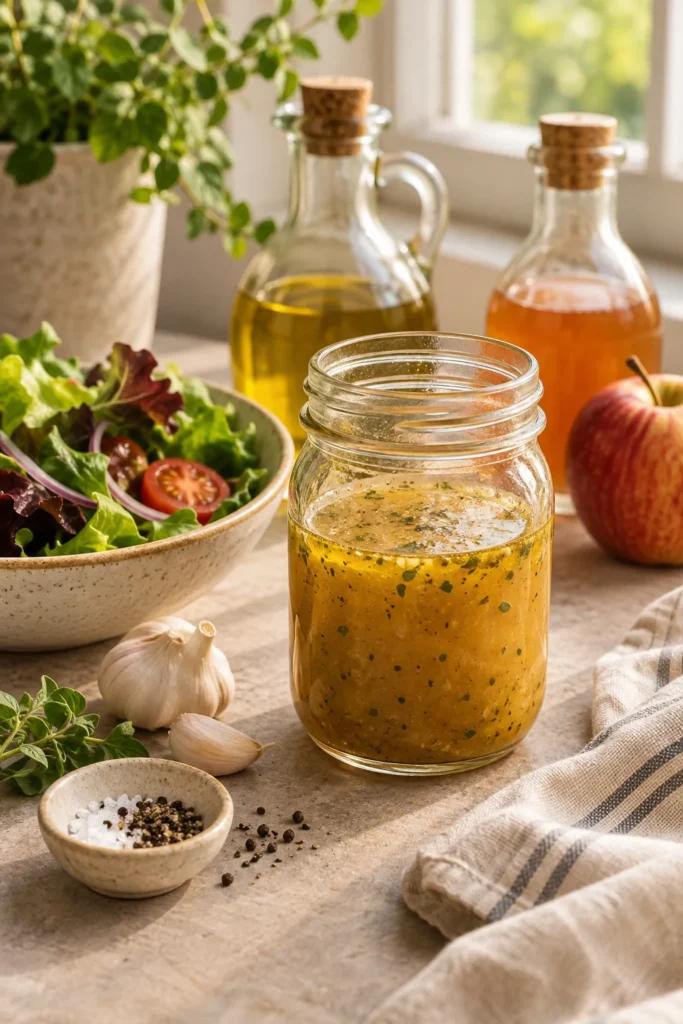
Everyday salad dressing is the two-minute answer to a bowl of greens that needs more than a squeeze of lemon. Olive oil gives it a rounded base, apple cider vinegar brings clean brightness, Dijon mustard helps the mixture emulsify, and a little honey smooths the sharp edges. Shake it in a jar, taste it once, and you have a flexible dressing for leafy salads, roasted vegetables, grain bowls, and simple lunches.
What makes this everyday salad dressing useful
This recipe is built around a dependable oil-to-acid balance, with mustard doing the practical work of helping the two liquids stay together long enough to coat the leaves. Honey adds gentle sweetness without making the dressing dessert-like, while fresh garlic gives the flavor a savory lift. Because the method is simply shake, taste, and adjust, it is easy to tailor the final balance to bitter greens, sweet tomatoes, or roasted vegetables.
Why the simple ingredients work
Extra virgin olive oil supplies body and a fruity finish. Apple cider vinegar keeps the dressing lively, but lemon juice or another mild vinegar can be used in the same role. Dijon mustard contributes seasoning and emulsifying power, and the honey rounds out the acidity. Finely grated garlic disperses more evenly than a large mince, so a little flavors the entire jar.
How to make it
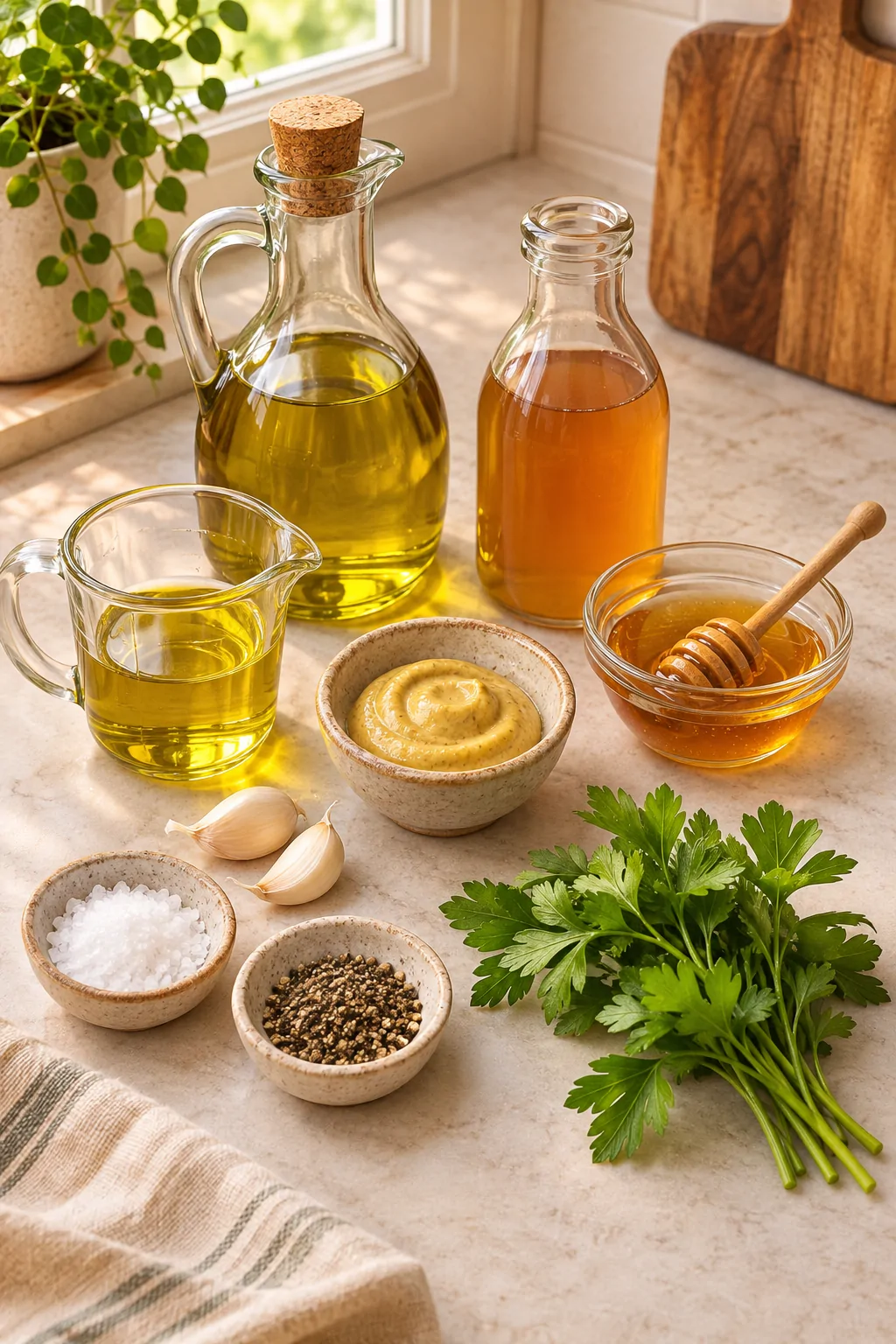
Ingredients
- 1/4 cup extra virgin olive oil
- 2 tablespoons apple cider vinegar, or another vinegar or lemon juice
- 1 teaspoon Dijon mustard
- 1 teaspoon honey
- 1 small clove garlic, finely grated
- 1/4 teaspoon fine salt
- 1/4 teaspoon freshly ground black pepper
- 1 tablespoon finely chopped fresh parsley, optional
Method
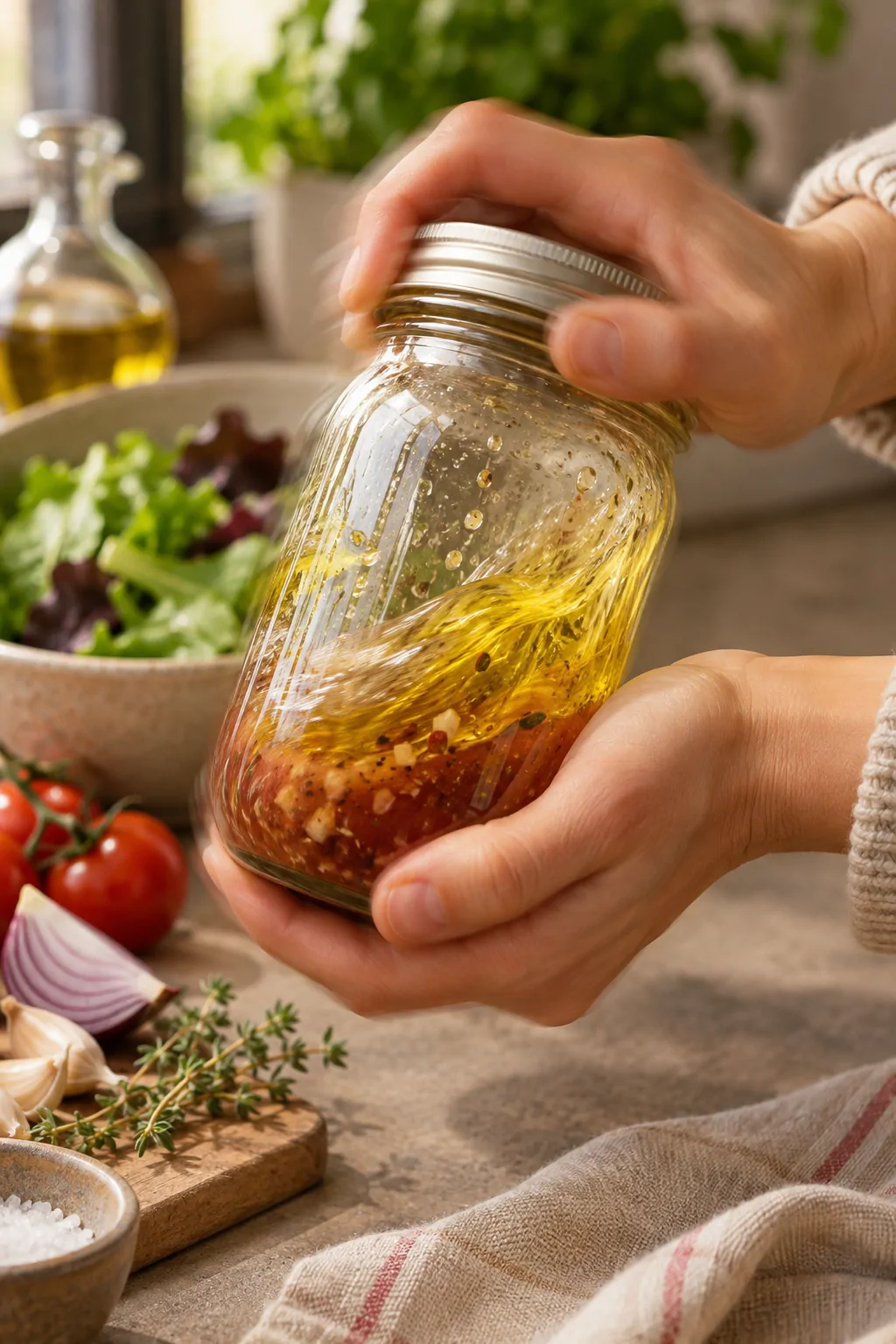
- Place the olive oil, vinegar, Dijon mustard, honey, garlic, salt, pepper, and optional parsley in a jar with a tight-fitting lid.
- Seal the jar and shake vigorously until the mustard dissolves and the dressing looks slightly thickened.
- Taste and adjust the balance with a little more vinegar for brightness, honey for sweetness, or salt as needed.
- Drizzle over a dry salad or warm vegetables and toss just before serving.
Serving ideas
Use it on crisp lettuce, cucumber, radishes, tomatoes, and shaved carrot, or spoon it over roasted potatoes and green beans while they are still warm. It also works as a quick grain-bowl sauce with quinoa, chickpeas, herbs, and feta. Keep salad leaves dry before tossing so the dressing clings instead of sliding to the bottom of the bowl.
Tips and an optional variation
Shake until the mustard disappears into the oil and vinegar, then taste from a spoon rather than judging by aroma alone. Greens vary in bitterness and sweetness, so the final adjustment is part of the recipe. For an optional variation, replace the parsley with a pinch of dried oregano and use lemon juice in place of the vinegar for a brighter Mediterranean-style finish.
Storage and troubleshooting
Without fresh garlic or herbs, the dressing can keep for weeks in a clean jar in the refrigerator; shake it again before serving. With garlic and parsley included, refrigerate it and use it promptly. Chilled olive oil may become cloudy or firm, so let the jar sit at room temperature briefly and shake again. If the flavor is too sharp, add a little oil or honey. If it tastes flat, add a small splash of vinegar and a pinch of salt.
How to use the dressing beyond salad
This jar is especially useful when a meal needs a quick finishing sauce. Spoon it over steamed broccoli, roasted cauliflower, or green beans while the vegetables are hot so they absorb some of the acidity. Toss it with cooked grains and chickpeas for a packed lunch, or use it to wake up leftover chicken and sliced cucumbers. Start with a small amount, toss thoroughly, and add more only after the food has had a moment to take on the flavor.
For a composed dinner salad, combine crunchy vegetables with a soft element such as avocado or white beans, then add the dressing at the table. The mustard and honey help it cling to uneven ingredients, while the vinegar keeps rich additions from feeling heavy. A clean jar also makes portioning simple: shake, drizzle, refrigerate, and repeat.
FAQ
Search-query answers
How do you make salad dressing from scratch?
Combine oil, vinegar, mustard, honey, garlic, salt, and pepper in a jar, then shake until blended. Taste and adjust before dressing the salad.
What is the best oil for homemade dressing?
Extra virgin olive oil is a strong everyday choice because it adds flavor and body. Use a mild oil when you want the vinegar and herbs to lead.
How do you stop dressing from separating?
Mustard helps the mixture hold together, but separation is normal. Shake the jar immediately before drizzling and toss the salad right away.
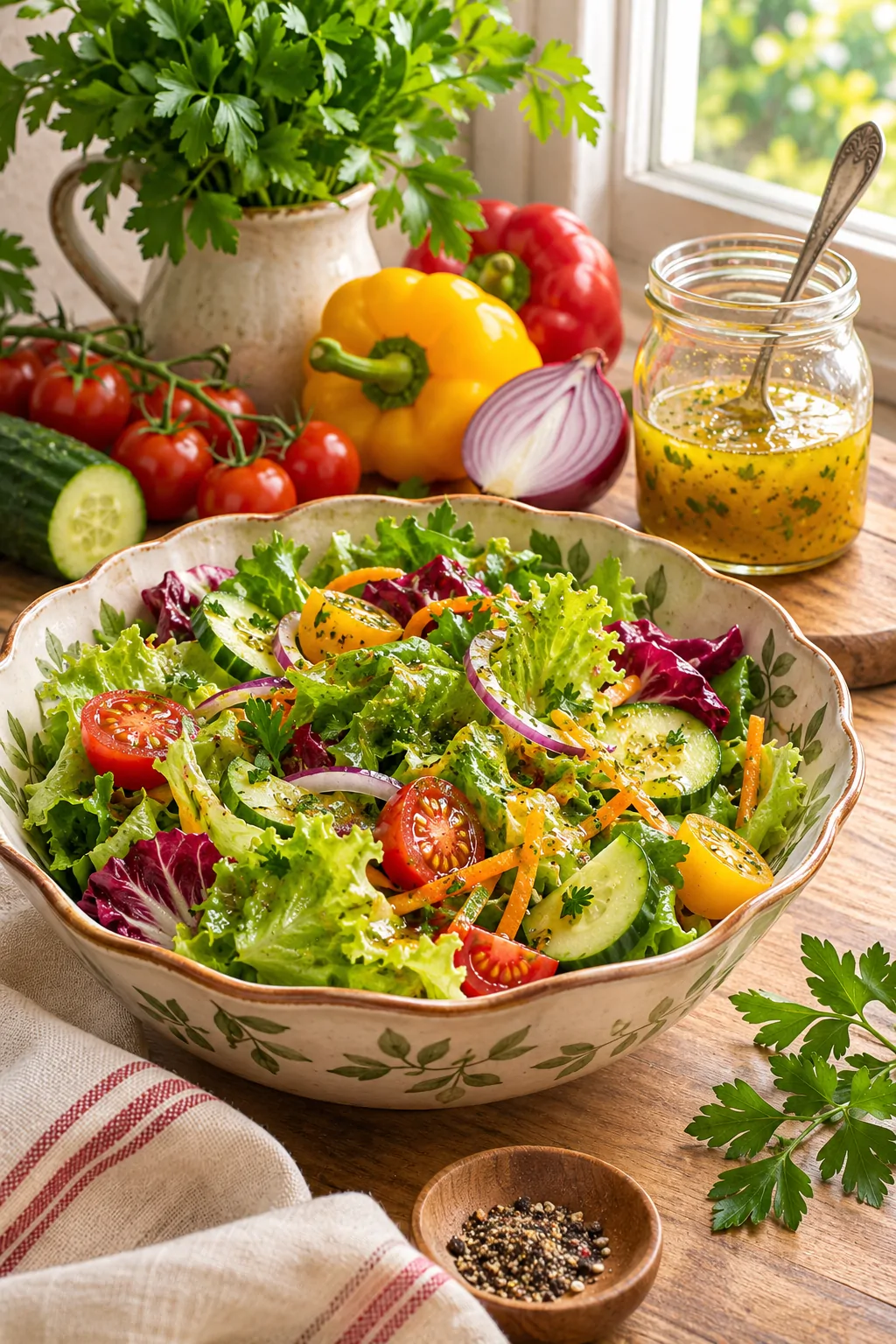
A jar of everyday salad dressing turns a few basic ingredients into a bright finishing touch you can use all week. Keep the proportions as your starting point, then make the final small adjustment for the salad in front of you.
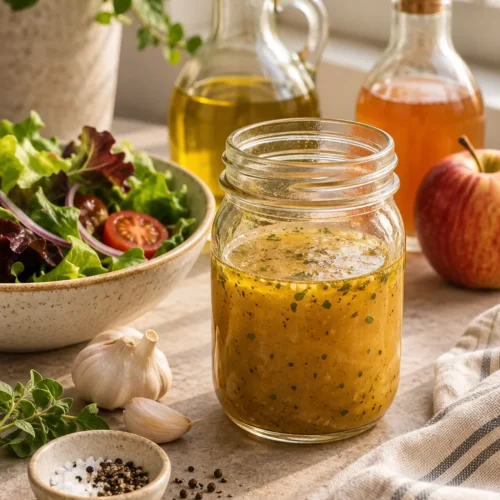
Everyday Salad Dressing
Adjust the serving amount to scale the ingredient list. Written quantities in the steps refer to the original recipe; adjust them in the same proportion. Timing may vary with batch size.
Ingredients
Ingredients
- 1/4 cup extra virgin olive oil
- 2 tablespoons apple cider vinegar or another vinegar or lemon juice
- 1 teaspoon Dijon mustard
- 1 teaspoon honey
- 1 small clove garlic finely grated
- 1/4 teaspoon fine salt
- 1/4 teaspoon black pepper freshly ground
- 1 tablespoon finely chopped fresh parsley optional
Instructions
Instructions
- Place the olive oil, vinegar, Dijon mustard, honey, garlic, salt, pepper, and optional parsley in a jar with a tight-fitting lid.
- Seal the jar and shake vigorously until the mustard dissolves and the dressing looks slightly thickened.
- Taste and adjust the balance with a little more vinegar for brightness, honey for sweetness, or salt as needed.
- Drizzle over a dry salad or warm vegetables and toss just before serving.