

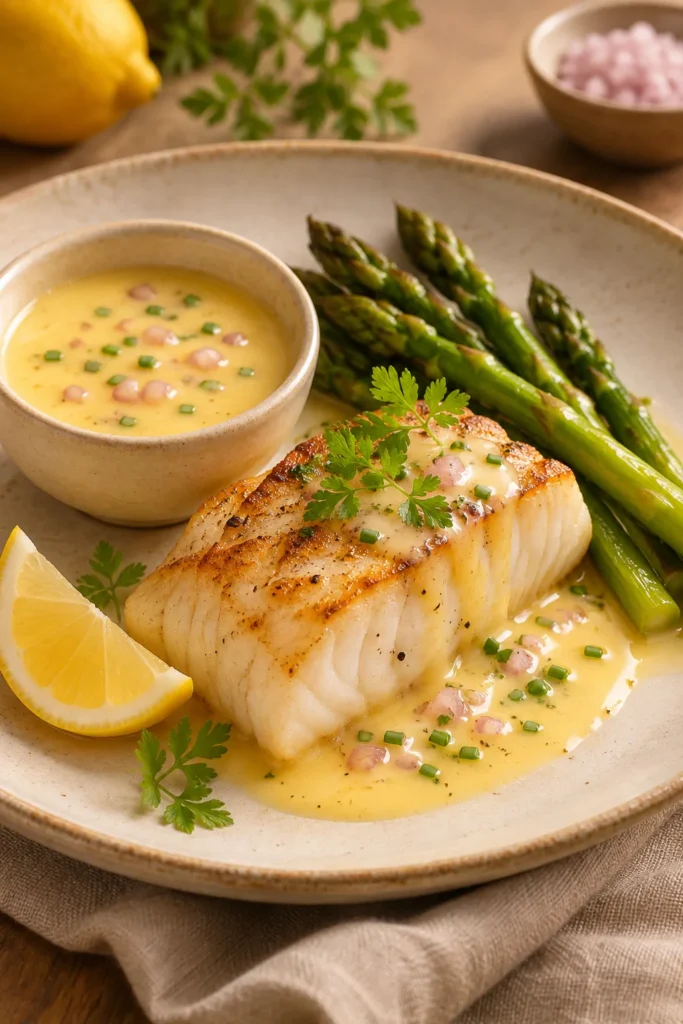
Beurre blanc sauce is a silky French butter sauce built from a sharp white-wine-and-vinegar reduction, then softened with cold butter. This version gives you a dependable pan sauce for fish, prawns, chicken, asparagus, or potatoes without complicated equipment. The key is patience: reduce the liquid fully, keep the pan gentle, and whisk in the butter gradually so the emulsion stays glossy instead of splitting. Because the sauce takes about twenty minutes, it is an especially useful finishing touch when the main dish is already cooking.
What beurre blanc sauce tastes like
The finished sauce is rich, lightly tangy, and buttery, with a gentle savoury note from shallot. It should coat the back of a spoon but still flow easily across a plate. The acidity keeps the butter from tasting heavy, which is why the sauce works so well with mild fish and delicate vegetables. A dry white wine gives the reduction a clean flavour; choose one you would be happy to drink, rather than a sweet wine.
The sauce is an emulsion, meaning the butterfat and the reduced liquid are held together in a smooth mixture. That explains the two most important details: the base must be concentrated before the butter is added, and the butter must go in slowly. If the pan is too hot, the butter melts faster than it can emulsify and the sauce can look oily.
Why this recipe works
Reducing the wine, vinegar, and shallot to roughly two tablespoons concentrates flavour and leaves enough liquid to support the butter. Cubing the butter increases the surface area, so each piece can be whisked into the reduction before the next one arrives. Lowering the heat at the right moment protects the sauce from boiling. The optional cream is not essential, but it can make the emulsion a little more forgiving when the sauce needs to wait briefly before serving.
Use a small saucepan rather than a wide skillet. A smaller base helps the liquid reduce evenly, and the whisk can reach every part of the pan. Have the cold butter ready before you begin; once the reduction is ready, the sauce comes together quickly.
Ingredients for beurre blanc sauce
- 120 ml dry white wine
- 60 ml white wine vinegar
- 1 finely chopped shallot
- 225 g cold unsalted butter, cut into cubes
- 1/4 teaspoon fine salt
- 1 tablespoon double cream, optional
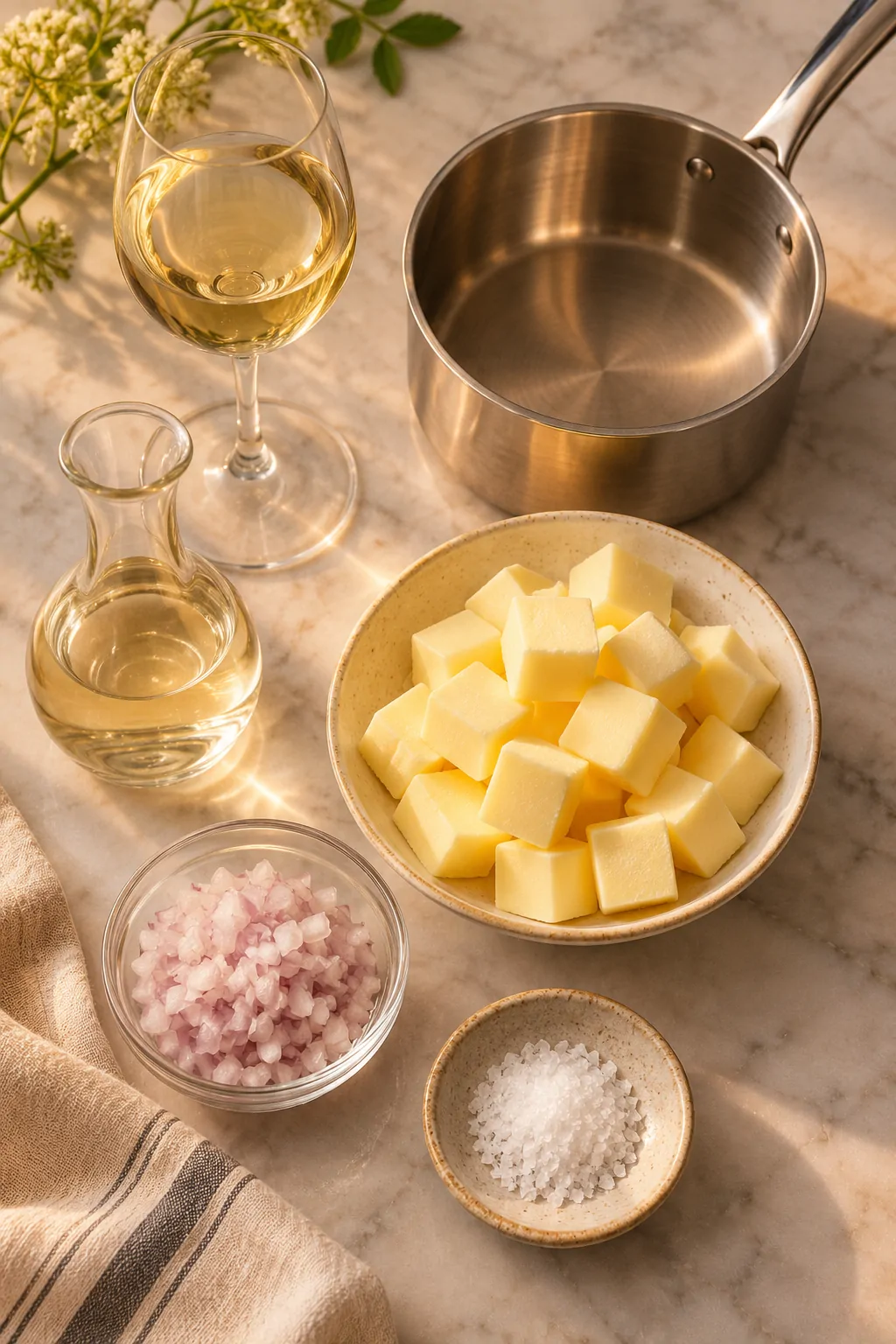
Cold unsalted butter gives you control over the seasoning and temperature. Cut the cubes fairly evenly so they soften at a similar rate. Finely chop the shallot so its flavour releases into the reduction; you can strain it out later for a completely smooth sauce.
How to make it
Reduce the base until only about two tablespoons remain.
- Put the wine, vinegar, and shallot in a small saucepan and simmer over medium heat until reduced to about 2 tablespoons.
- Lower the heat. Whisk in the cold butter one cube at a time, adding the next cube as the previous one is nearly incorporated.
- Whisk in the salt and optional cream, then strain if desired and serve warm.
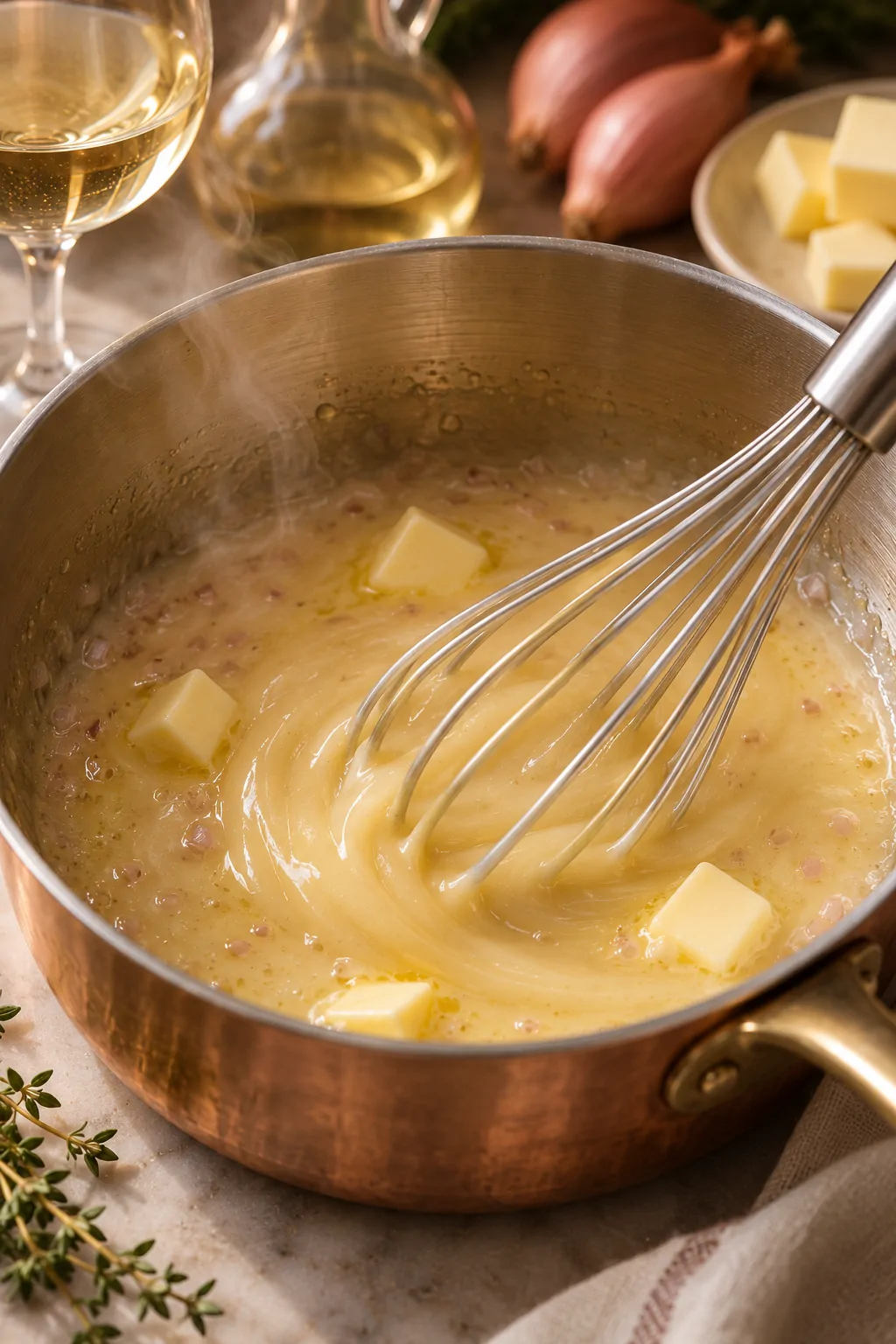
The sauce should look glossy and pale, with no clear pool of melted butter around the edges. If it begins to simmer, take the saucepan off the heat for a moment and keep whisking. Serve while warm rather than letting it sit on a hot burner.
Serving ideas
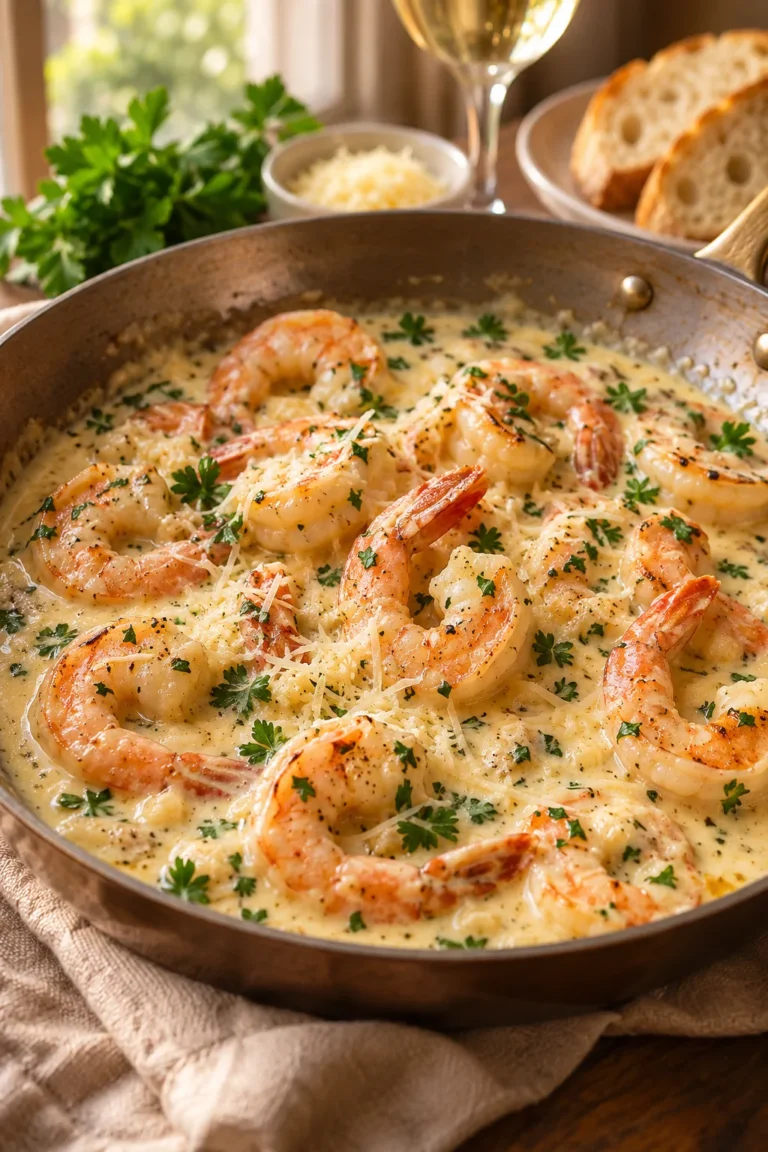
Beurre blanc is most familiar with fish, and it is excellent over salmon, cod, halibut, sea bass, or prawns. Spoon it around the fish instead of drowning a crisp skin. It also turns simple vegetables into a complete side: try asparagus, green beans, peas, or steamed leeks. For a more substantial dinner, serve it with roast chicken and boiled new potatoes.
A concrete weeknight use case is pan-seared cod with asparagus. Cook the fish and vegetables first, then make the reduction in the same clean saucepan while the cod rests. The sauce can be poured at the table so every portion receives a fresh glossy finish.
Tips and optional variation
Keep the butter cold until the moment you need it. Warm butter melts too quickly and gives you less time to build the emulsion. Do not rush the reduction, because a thin base makes a thin, flat sauce. Do not boil the completed sauce, because high heat can separate it.
If the sauce looks split, remove it from the heat and whisk in a teaspoon of cold water. For a clearly optional variation, finish with a few drops of lemon juice or a spoonful of finely chopped chives. Add either only after tasting the primary sauce, so the extra acidity or herb flavour does not hide the balanced wine-and-butter character.
Storage and reheating
Fresh beurre blanc has the best texture, but leftovers can be chilled in a covered container for up to one day. The butter will firm as it cools, so do not judge the final texture straight from the refrigerator. Rewarm it gently in a heatproof bowl over barely simmering water, whisking as it loosens. A teaspoon of warm water can help restore the emulsion. Never microwave it on high or let it boil.
If you know dinner will be delayed, keep the sauce warm only briefly and away from direct heat. Whisking occasionally helps, but a long hold is more likely to cause separation. Making the reduction ahead is a better strategy: chill the concentrated liquid, then whisk in the butter just before serving.
Search-query answers
Can you make beurre blanc without cream?
Yes. Cream is optional. The cold butter and gentle heat create the main emulsion, while cream simply adds a little stability and richness.
What does beurre blanc go with?
It pairs especially well with fish, shellfish, chicken, asparagus, green beans, leeks, and potatoes. Choose foods with a clean flavour so the sauce remains the focus.
How do you stop beurre blanc splitting?
Reduce the base first, use cold butter, add it gradually, and keep the heat low. If it starts to separate, whisk in cold water off the heat.
FAQ: Frequently asked questions
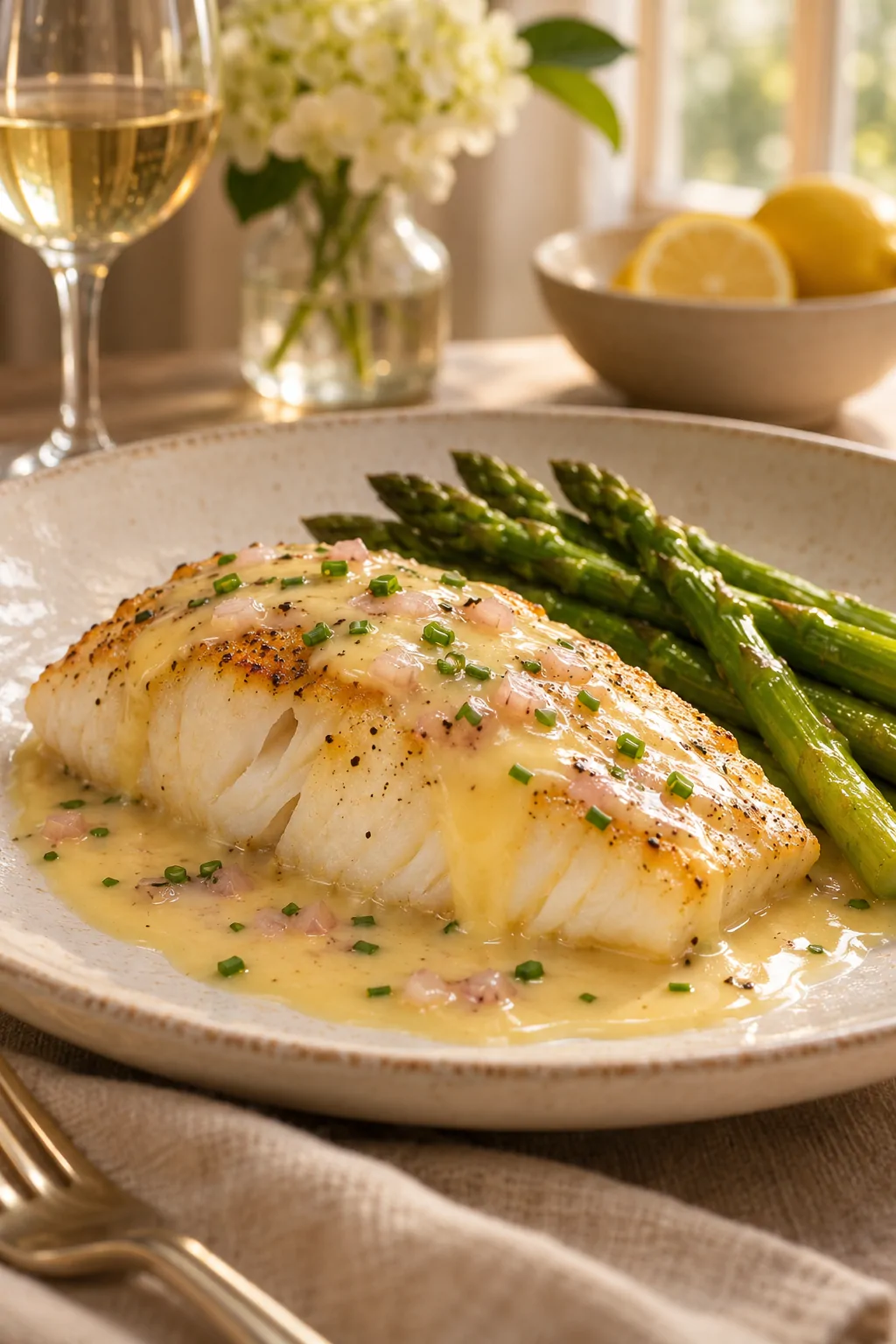
Serve this beurre blanc sauce warm and glossy, with the main dish ready before you begin whisking in the butter. A simple reduction and a little patience are all it takes to give an everyday dinner a polished finish.
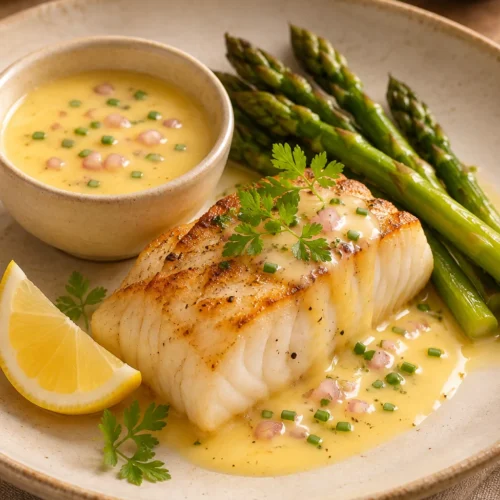
Beurre Blanc Sauce
Adjust the serving amount to scale the ingredient list. Written quantities in the steps refer to the original recipe; adjust them in the same proportion. Timing may vary with batch size.
Ingredients
Ingredients
- 120 ml dry white wine
- 60 ml white wine vinegar
- 1 shallot finely chopped
- 225 g unsalted butter cold and cut into cubes
- 1/4 tsp fine salt
- 1 tbsp double cream
Instructions
Instructions
- Put the wine, vinegar, and shallot in a small saucepan and simmer over medium heat until reduced to about 2 tablespoons.
- Lower the heat. Whisk in the cold butter one cube at a time, adding the next cube as the previous one is nearly incorporated.
- Whisk in the salt and optional cream, then strain if desired and serve warm.