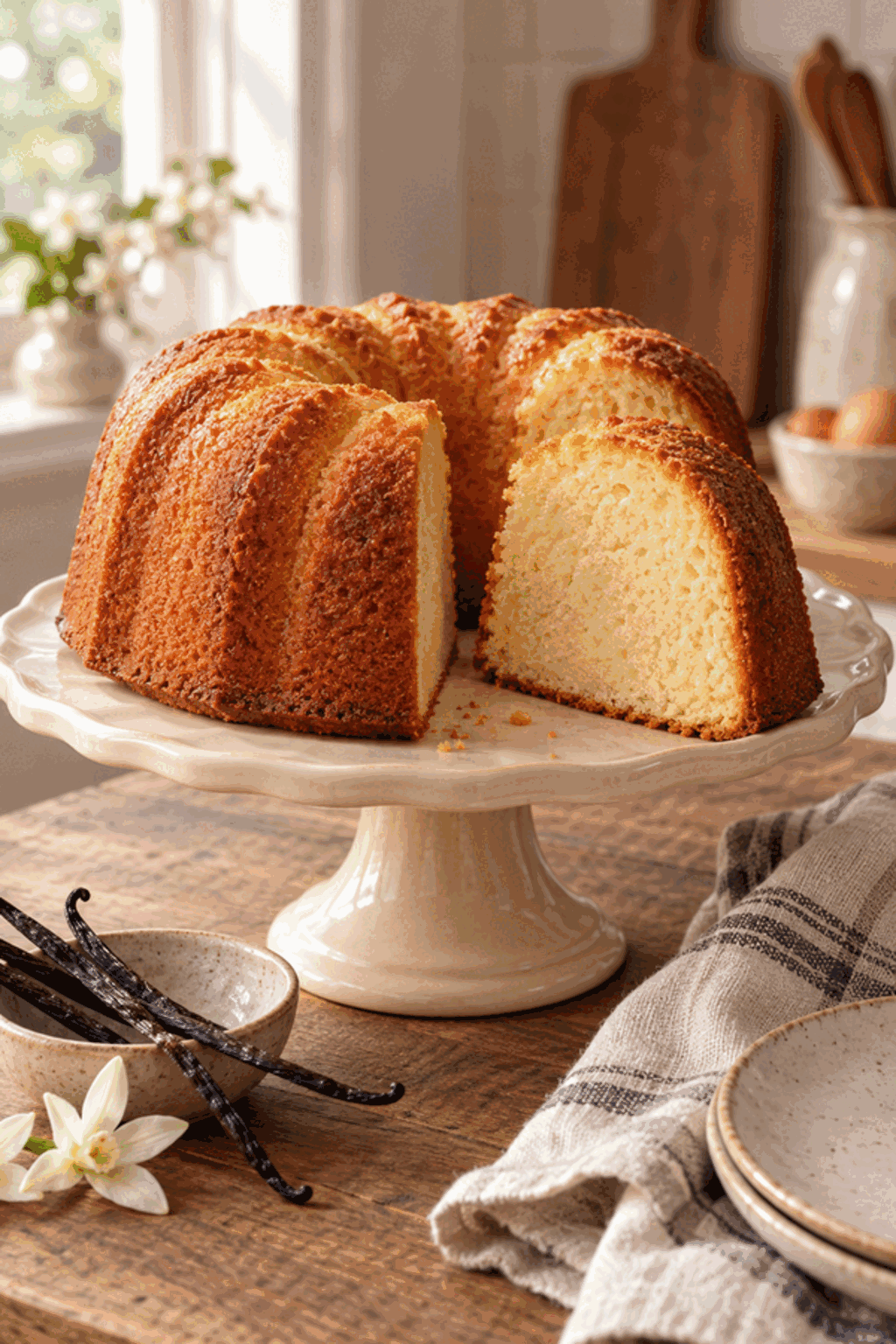


This classic pound cake has a golden crust, a tender vanilla crumb, and the rich buttery flavor that makes a simple cake worth repeating. The batter comes together by creaming softened butter and sugar, then adding eggs and alternating the dry ingredients with milk. Bake it in a tube pan for an even shape, cool it fully for clean slices, and serve it with coffee, berries, or lightly sweetened cream.
What makes this classic pound cake reliable
A tube pan helps the batter bake evenly while giving the cake its familiar ring shape. Greasing and flouring every part of the pan matters, especially around the center tube. Let the finished cake cool before adding glaze or toppings so the surface stays dry and the crumb remains easy to cut.
Butter and sugar create the cake’s fine texture when beaten until genuinely fluffy. Room-temperature eggs and milk blend into that base more smoothly, while alternating the flour mixture with milk keeps the batter cohesive. A moderate oven gives the center time to bake before the crust becomes too dark.
How to make classic pound cake
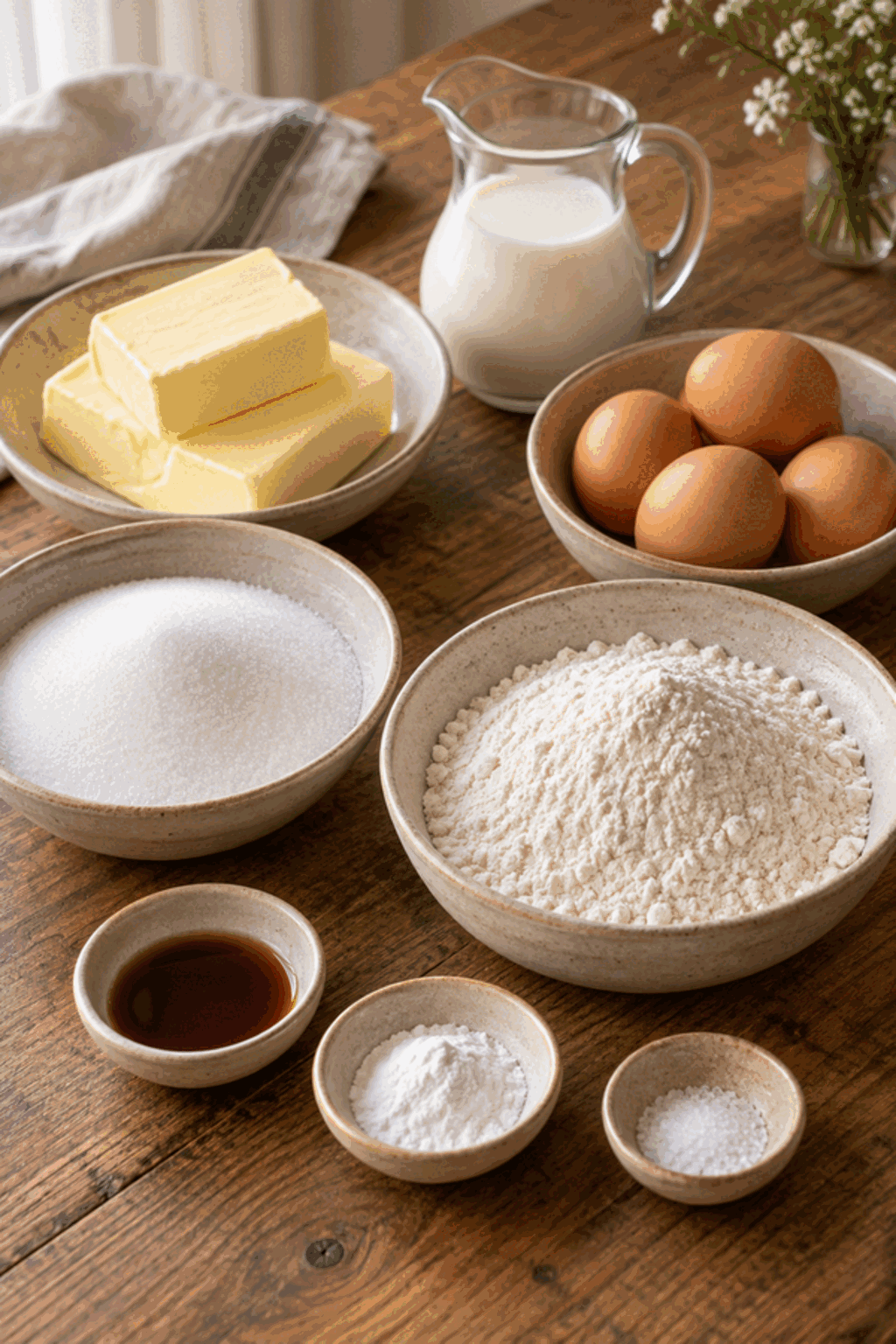
Ingredients
- 1 cup unsalted butter, softened
- 2 cups granulated sugar
- 6 large eggs, room temperature
- 3 cups sifted all-purpose flour
- 1/2 teaspoon baking powder
- 1/2 teaspoon fine salt
- 1 cup whole milk, room temperature
- 2 teaspoons vanilla extract
Mix and bake
- Heat the oven to 325°F. Grease and flour a 10-inch tube pan.
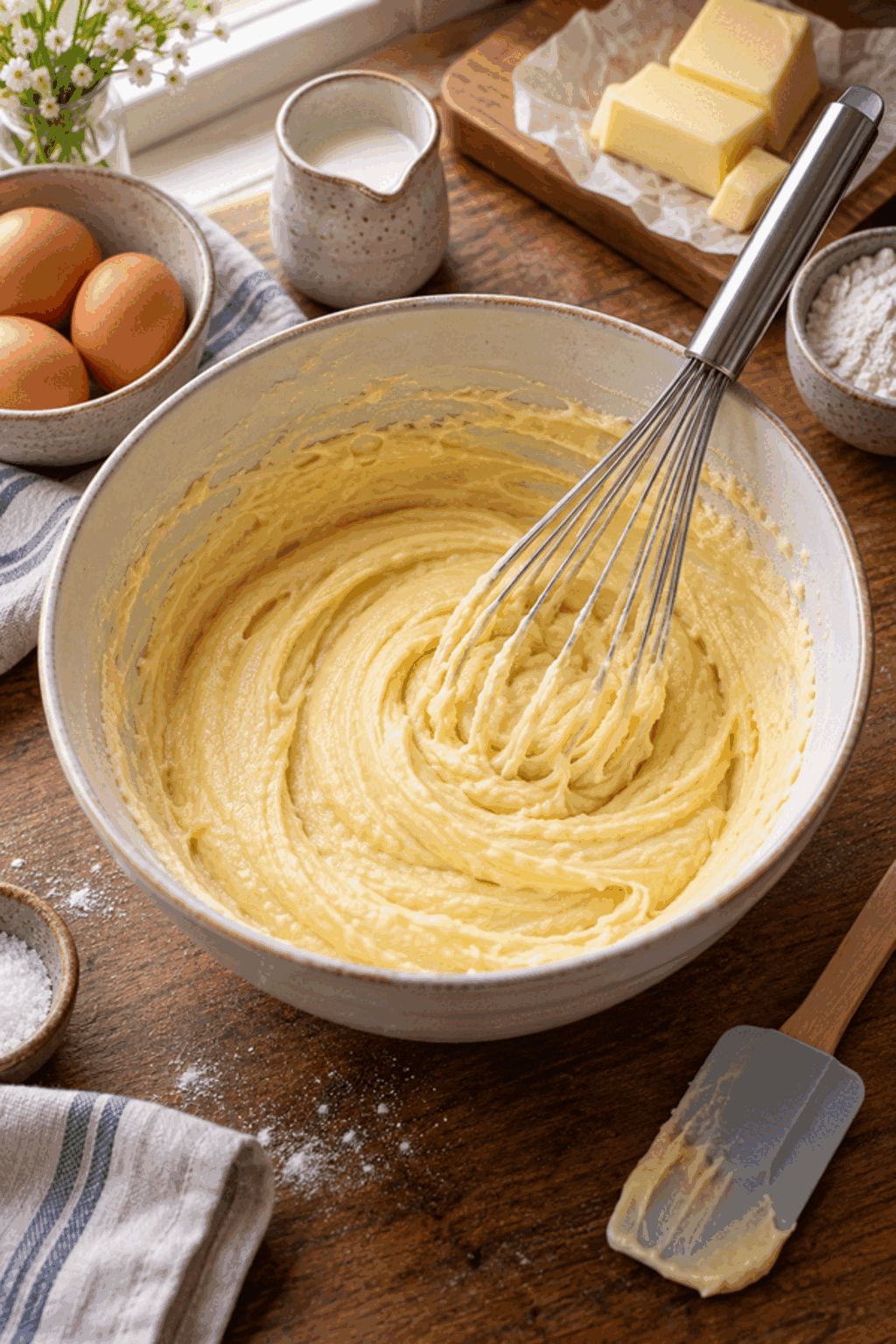
- Beat the softened butter and sugar until pale and fluffy, about 4 minutes.
- Add the eggs one at a time, beating well after each addition.
- Whisk the flour, baking powder, and salt. Add the dry mixture to the batter in three additions, alternating with milk; mix vanilla through at the end.
- Pour into the prepared pan and smooth the top. Bake until golden and a skewer comes out with a few moist crumbs, about 70 minutes.
- Cool in the pan for 15 minutes, then turn out onto a rack and cool completely before slicing.
Serving ideas
The crumb is sturdy enough for toast-like slices but soft enough to serve plain. Add berries in season, spoon warm fruit over the top, or pair a slice with tea. Keep the presentation simple because the butter and vanilla provide the main character.
A light dusting of powdered sugar is enough for a polished finish. If you are serving the cake after dinner, cut moderate slices and offer fruit alongside them. The cake can also be toasted lightly the next day, which brings out its buttery aroma without requiring a new topping.
Slice the cake for afternoon coffee, or use it as the base for berries and whipped cream at brunch. For a concrete use case, bake it the day before a family lunch; the cooled cake is easy to cover and slice when guests arrive.
Tips and optional variation
Measure flour after sifting, and do not rush the creaming step. Let the eggs and milk lose their chill so the batter stays smooth. Scrape the bowl once or twice while mixing so no butter remains at the bottom. When the flour goes in, mix only until the last dry streak disappears; extra beating can make the finished crumb tight.
Optional variation: replace one teaspoon of vanilla with finely grated lemon zest; this changes the aroma only and leaves the primary recipe unchanged. You can also serve the cake with fresh fruit, but keep additions separate from the batter so the classic texture stays intact.
Storage and reheating
Keep the cooled cake airtight at room temperature for up to three days, or freeze wrapped slices for up to two months. Thaw at room temperature. It is best served at room temperature and does not need reheating.
If you want a warm slice, heat it briefly and gently, but avoid drying the crumb. A covered plate or a few seconds in a low microwave is enough.
Keep the cooled cake airtight at room temperature for up to three days, or freeze wrapped slices for up to two months. Thaw at room temperature. It is best served at room temperature and does not need reheating.
Choosing the pan and checking doneness
A light-colored metal tube pan is a useful choice because it conducts heat steadily without darkening the crust too quickly. Set the pan on the center oven rack with room around it for air circulation. Start checking near the stated baking time, but trust the skewer and the cake’s spring rather than the clock alone. A few moist crumbs are ideal; wet streaks mean the center needs more time.
Why did my pound cake sink?
A sunken center can result from underbaking, opening the oven early, or overmixing after the flour is added. Bake until the skewer shows moist crumbs rather than wet batter.
Can I use a loaf pan?
Yes, but divide the batter between two loaf pans rather than filling one too deeply. Begin checking earlier because the smaller pans bake faster.
Classic pound cake FAQs
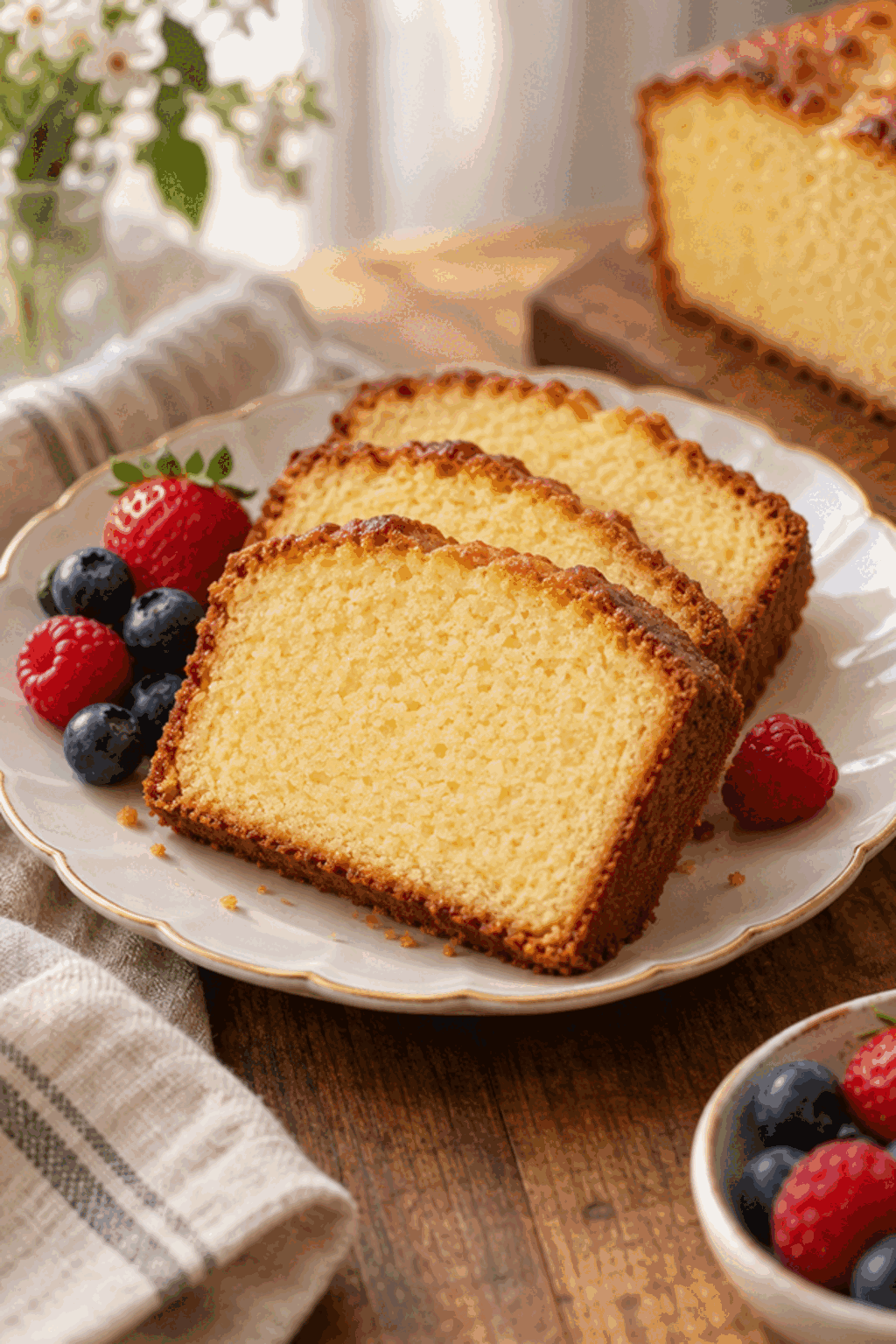
A classic pound cake rewards careful creaming and patient cooling. Once baked, its buttery crumb is versatile enough for a weekday coffee break or a dressed-up dessert plate.

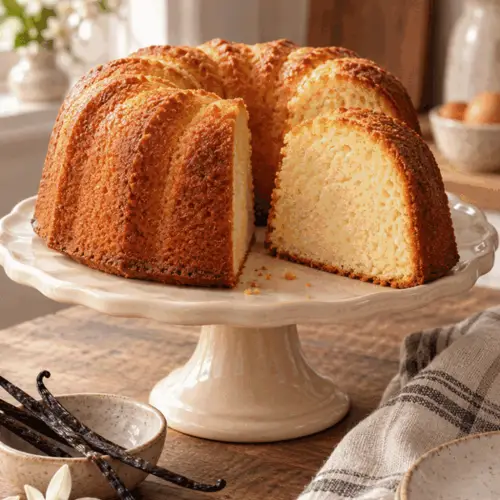
Classic Pound Cake with a Tender Vanilla Crumb
Ingredients
Ingredients
- 1 cup unsalted butter softened
- 2 cups granulated sugar
- 6 large eggs room temperature
- 3 cups all-purpose flour sifted
- 1/2 teaspoon baking powder
- 1/2 teaspoon fine salt
- 1 cup whole milk room temperature
- 2 teaspoons vanilla extract
Instructions
Instructions
- Heat the oven to 325°F. Grease and flour a 10-inch tube pan.
- Beat the softened butter and sugar until pale and fluffy, about 4 minutes.
- Add the eggs one at a time, beating well after each addition.
- Whisk the flour, baking powder, and salt. Add the dry mixture to the batter in three additions, alternating with milk; mix vanilla through at the end.
- Pour into the prepared pan and smooth the top. Bake until golden and a skewer comes out with a few moist crumbs, about 70 minutes.
- Cool in the pan for 15 minutes, then turn out onto a rack and cool completely before slicing.