

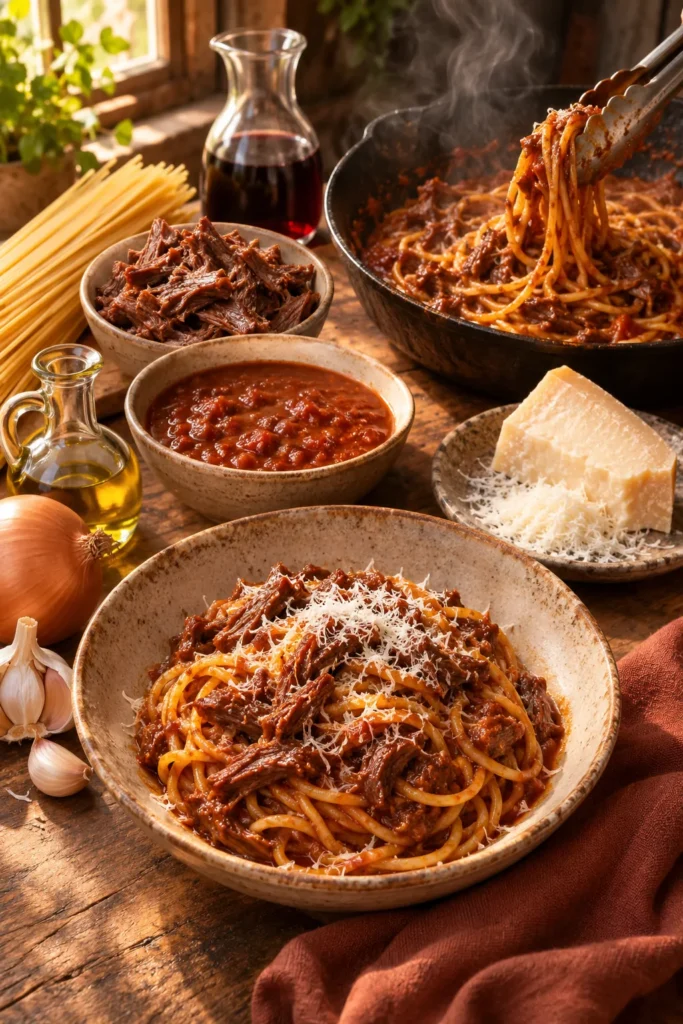
Beef cheek ragu pasta turns already-tender beef and a concentrated red-wine sauce into a fast, deeply savory dinner. The short ingredient list is designed for leftovers: while the spaghetti cooks, the onion, garlic, shredded beef, and sauce warm together in one skillet. A little pasta water helps the sauce cling, and Parmesan brings the dish together without hiding the rich beef flavor.
What beef cheek ragu pasta is
This is a quick pasta built around cooked beef cheek rather than a long simmer. The beef is shredded so every forkful gets a little meat, while the sauce supplies moisture and seasoning. It is especially useful when you have leftover braised beef and sauce that deserve a second meal.
Why this recipe works
The timing is efficient because the pasta and sauce are prepared at the same time. Sauteed onion and garlic add a fresh aromatic base, and reserved pasta water gives the sauce starch for a glossy finish. Parmesan adds salt and body at the end.
How to make beef cheek ragu pasta
Ingredients
- 350 g dried spaghetti
- 2 cups cooked beef cheek meat, shredded
- 1 cup beef cheek red-wine sauce, warmed
- 1 medium yellow onion, diced
- 2 cloves garlic, minced
- 1 tablespoon olive oil
- 1/2 cup grated Parmesan, plus more to serve
- 1/4 cup reserved pasta water, as needed
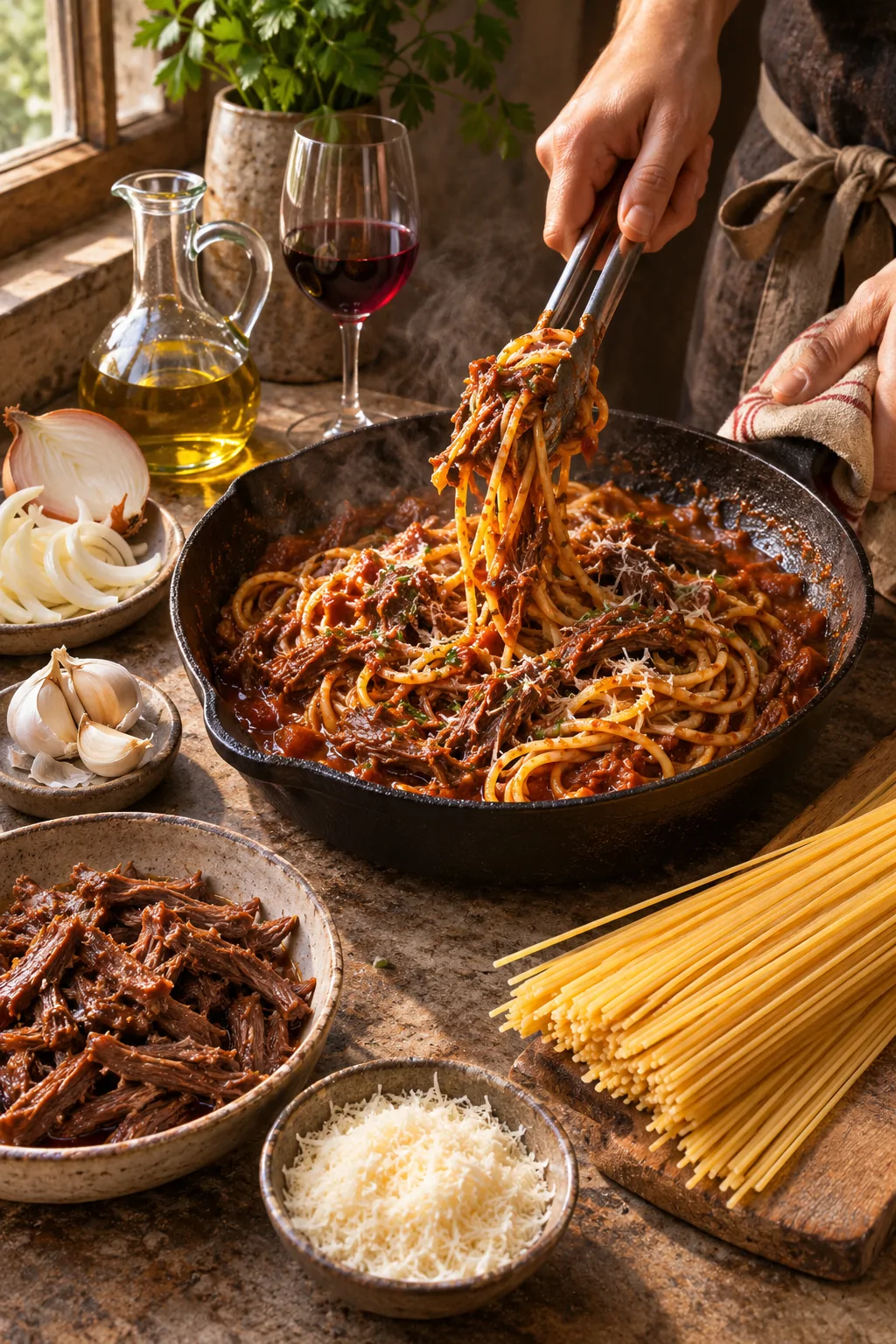
Method
- Cook the spaghetti in salted boiling water until al dente, then reserve the pasta water and drain.
- Heat olive oil in a large skillet over medium heat. Saute the onion until softened, then add the garlic and cook until fragrant.
- Add the shredded beef cheek and red-wine sauce. Stir until the beef is hot and the sauce coats it.
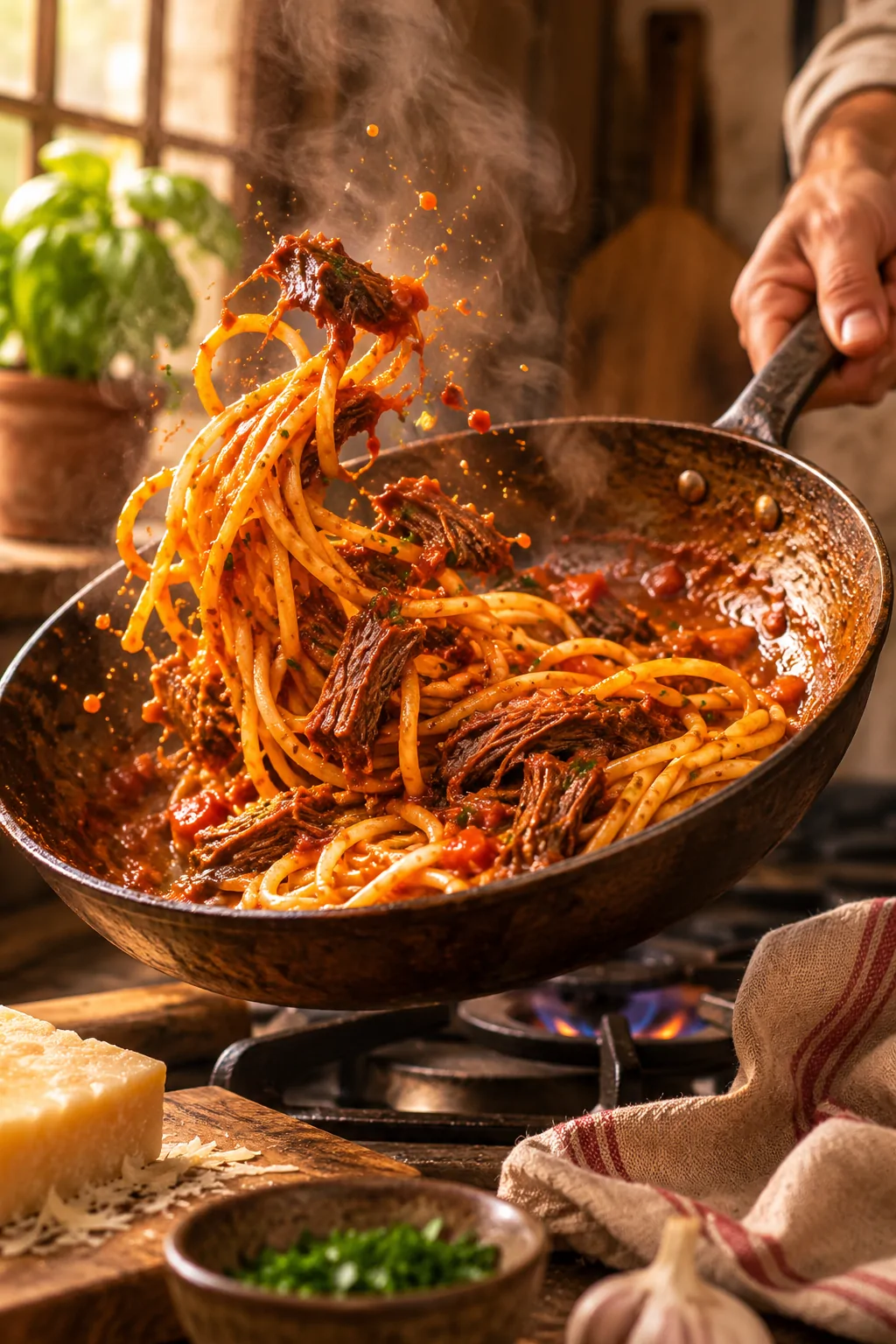
- Add the drained spaghetti and toss well. Loosen with reserved pasta water as needed.
- Stir in the Parmesan, taste, and serve with extra Parmesan.
Choosing the beef and sauce
The recipe assumes the beef cheek has already been braised until it can be pulled apart easily. That texture matters more than the exact shape of the shreds: soft strands fold through the spaghetti, while firm cubes remain separate. Warm the sauce before it enters the skillet so the beef heats quickly without drying out. If the sauce has set in the refrigerator, stir it over low heat until loose, then measure one cup.
Use a wide skillet so the beef and sauce can spread around the pasta. Crowding makes tossing difficult and can leave some noodles plain. The skillet also gives you room to add pasta water gradually. Start with a small splash; you can always add more, but you cannot remove excess liquid without overcooking the spaghetti.
Doneness cues and troubleshooting
Take the spaghetti off the heat when it is al dente, with a slight firmness at the center. It will soften a little more as it is tossed with the hot sauce. The finished ragu should look glossy and cling to the noodles rather than pool at the bottom of the pan. If it looks dry, add pasta water by the tablespoon. If it looks loose, toss for another minute over low heat before adding more cheese.
If the beef tastes muted, check seasoning after the Parmesan has melted. The red-wine sauce and cheese already contribute salt, so add any extra carefully. If the sauce tastes sharp, the dairy and starch usually round it out; a longer simmer is unnecessary for this leftover-focused preparation.
A practical use case
This is a useful next-day dinner after serving braised beef. Portion the leftover beef and sauce together when storing them, then cook fresh spaghetti when you are ready to eat. The complete meal comes together in about fifteen minutes, making it suitable for a busy evening when the main cooking work was done earlier.
Serving ideas
Serve immediately in warm bowls with extra Parmesan and a little black pepper. A crisp green salad or roasted broccoli balances the rich sauce. For a casual dinner, put the skillet on the table and let everyone adjust the cheese.
Tips and optional variation
Keep the beef in uneven, tender shreds rather than chopping it into a paste. Add pasta water a tablespoon at a time so the sauce stays concentrated. Optional variation: stir in a handful of chopped parsley or baby spinach after the pasta is coated; this changes the color and freshness without changing the main recipe.
Storage and reheating
Cool leftovers promptly and refrigerate them in a sealed container for up to three days. Reheat gently in a skillet with a splash of water or sauce, stirring until hot. Avoid high heat, which can make the beef dry and the Parmesan sauce tight.
Search-query answers
Can I make beef cheek ragu pasta with leftover beef?
Yes. Use fully cooked, tender beef cheek and enough of its sauce to keep the pasta moist.
What pasta is best for beef cheek ragu?
Spaghetti works well, but rigatoni or another sturdy shape also holds the shredded beef and sauce.
How do I loosen a thick ragu?
Use reserved pasta water a little at a time while tossing. Its starch helps the sauce cling instead of becoming watery.
FAQs
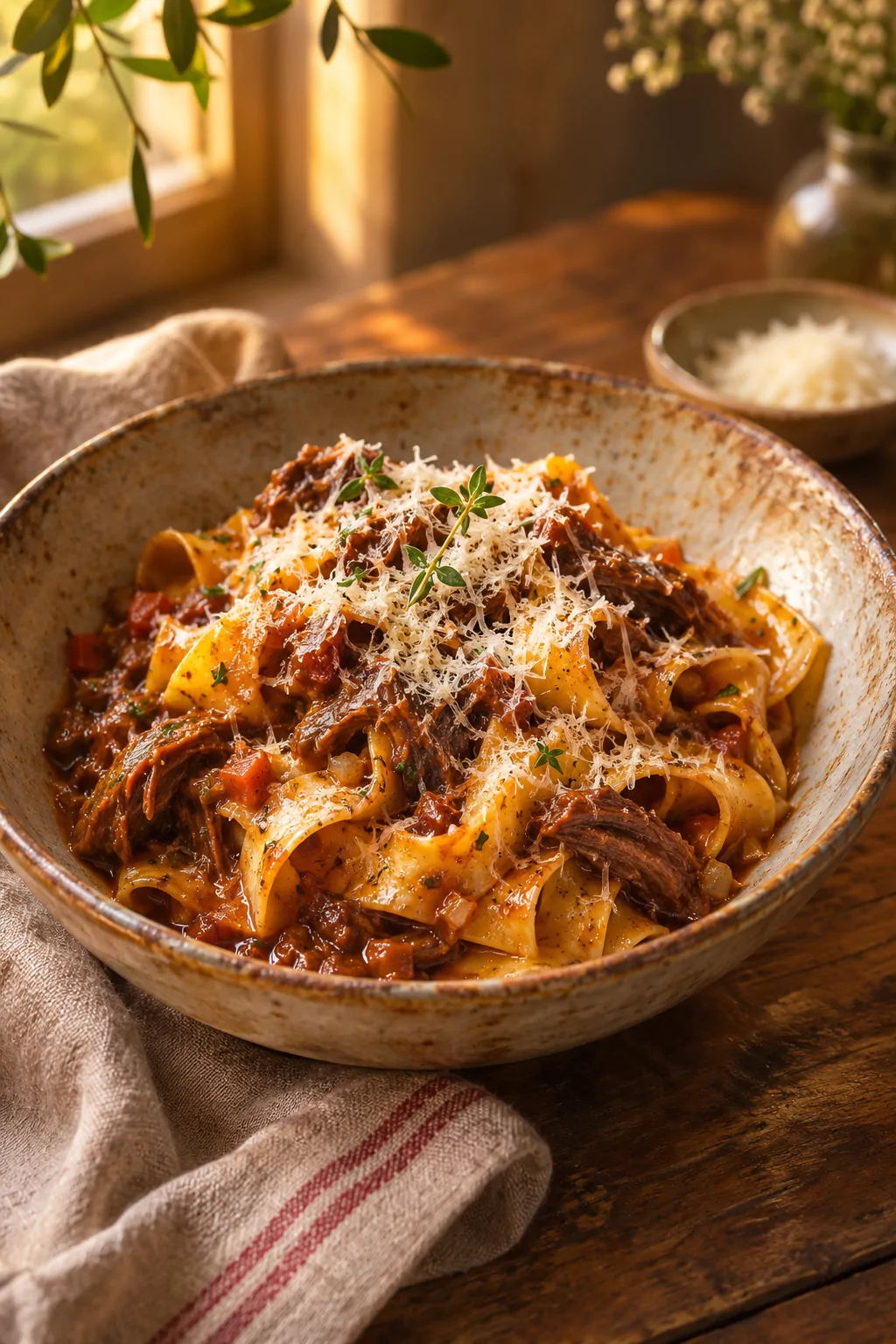
Beef cheek ragu pasta is a practical way to turn a small amount of rich leftover braise into a complete meal. Keep the sauce warm, toss patiently, and serve it as soon as the Parmesan melts into the pasta.
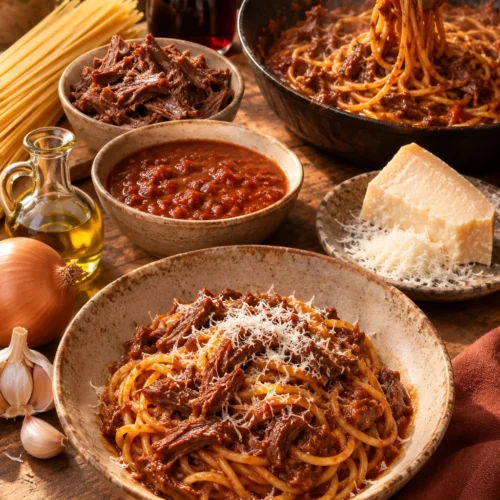
Beef Cheek Ragu Pasta
Adjust the serving amount to scale the ingredient list. Written quantities in the steps refer to the original recipe; adjust them in the same proportion. Timing may vary with batch size.
Ingredients
Ingredients
- 350 g dried spaghetti cooked according to package directions
- 2 cups cooked beef cheek meat shredded
- 1 cup beef cheek red-wine sauce warmed
- 1 medium yellow onion diced
- 2 cloves garlic minced
- 1 tablespoon olive oil for sauteing
- 1/2 cup grated Parmesan plus more to serve
- 1/4 cup reserved pasta water as needed
Instructions
Instructions
- Cook the spaghetti in salted boiling water until al dente, then reserve the pasta water and drain.
- Heat olive oil in a large skillet over medium heat. Saute the onion until softened, then add the garlic and cook until fragrant.
- Add the shredded beef cheek and red-wine sauce. Stir until the beef is hot and the sauce coats it.
- Add the drained spaghetti and toss well. Loosen with reserved pasta water as needed.
- Stir in the Parmesan, taste, and serve with extra Parmesan.