

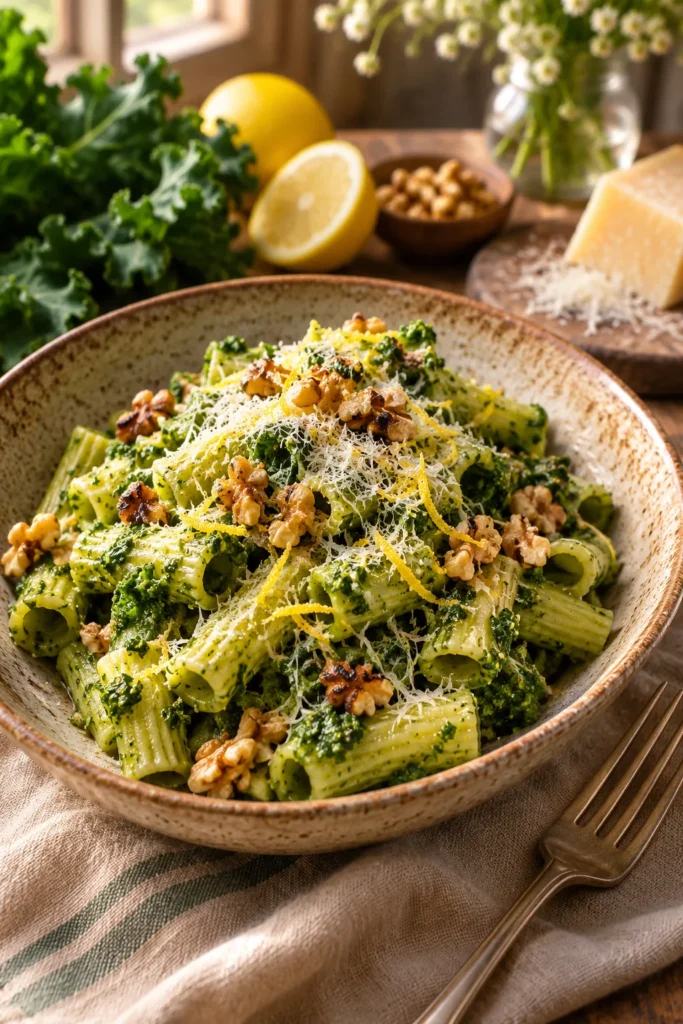
This kale pesto pasta is bright, lemony, garlicky, and satisfying, with toasted walnuts and parmesan giving the sauce depth. The pesto comes together while the pasta cooks, so it is a practical weeknight dinner that tastes fresh without requiring a long ingredient list. The kale stays vibrant, and a splash of reserved pasta water helps the sauce coat every piece smoothly. It is a quick, vegetable-forward meal for family dinners, packed lunches, or relaxed weekend cooking.
What is kale pesto pasta?
It is tender pasta tossed with vivid kale pesto made from leafy kale, walnuts, parmesan, garlic, lemon, and olive oil.
Why this kale pesto pasta works
Toasted walnuts build depth, lemon balances earthy kale, and reserved pasta water makes a glossy sauce.
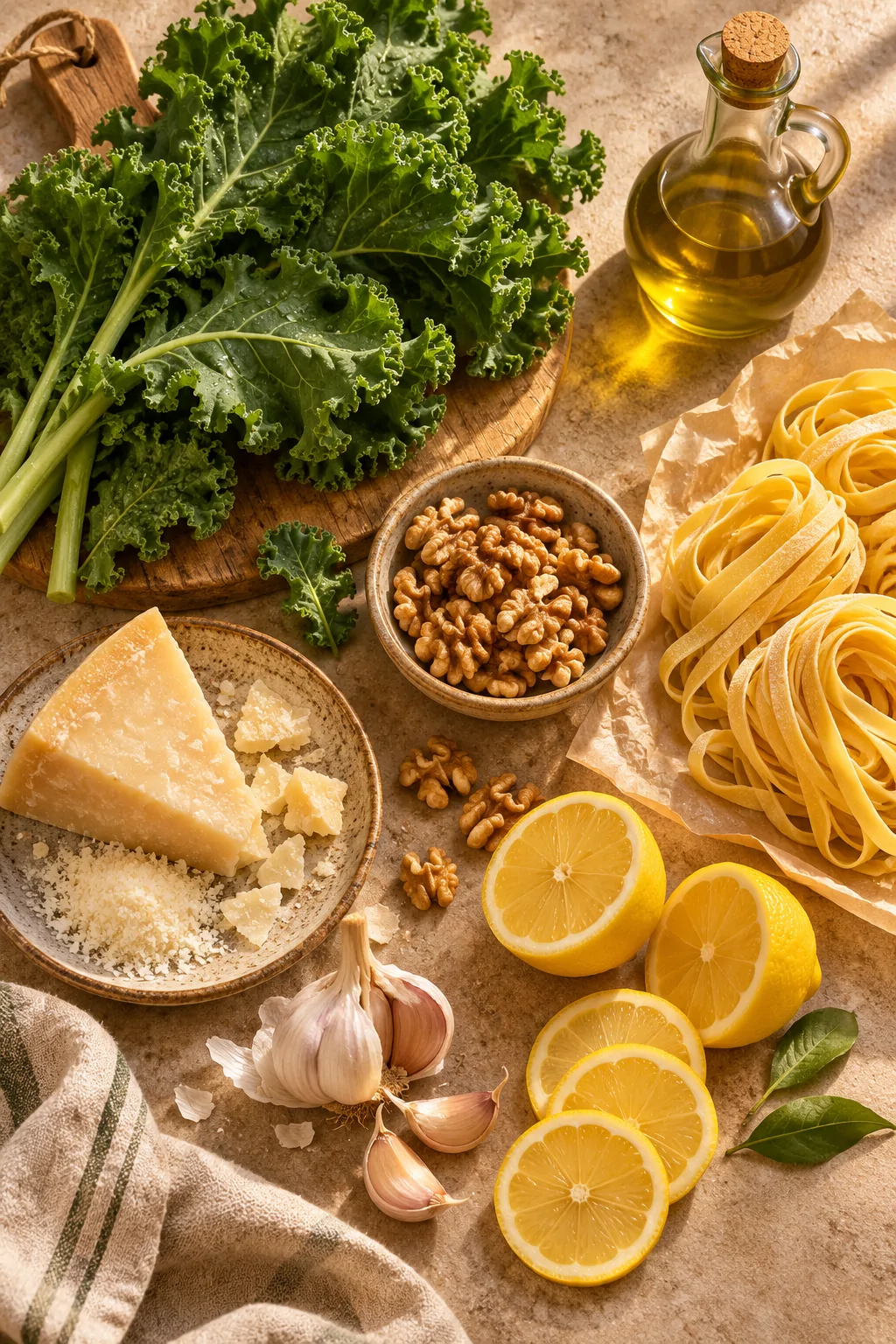
Ingredients
- 4 cups tightly packed kale leaves
- 1/2 cup finely grated parmesan
- 1 clove garlic
- 1/2 cup walnuts
- 2 teaspoons lemon zest
- 3 tablespoons lemon juice
- 1/2 cup extra-virgin olive oil
- 3/4 teaspoon kosher salt
- 1/2 teaspoon red pepper flakes
- 1 pound pasta
- 2 teaspoons kosher salt
- 1/3 cup reserved pasta water
How to make kale pesto pasta
- Bring a large pot of water to a boil and add the pasta salt. Cook the pasta according to package directions until al dente.
- Toast walnuts in a dry skillet over medium-high heat for about 3 minutes, tossing often, until fragrant.
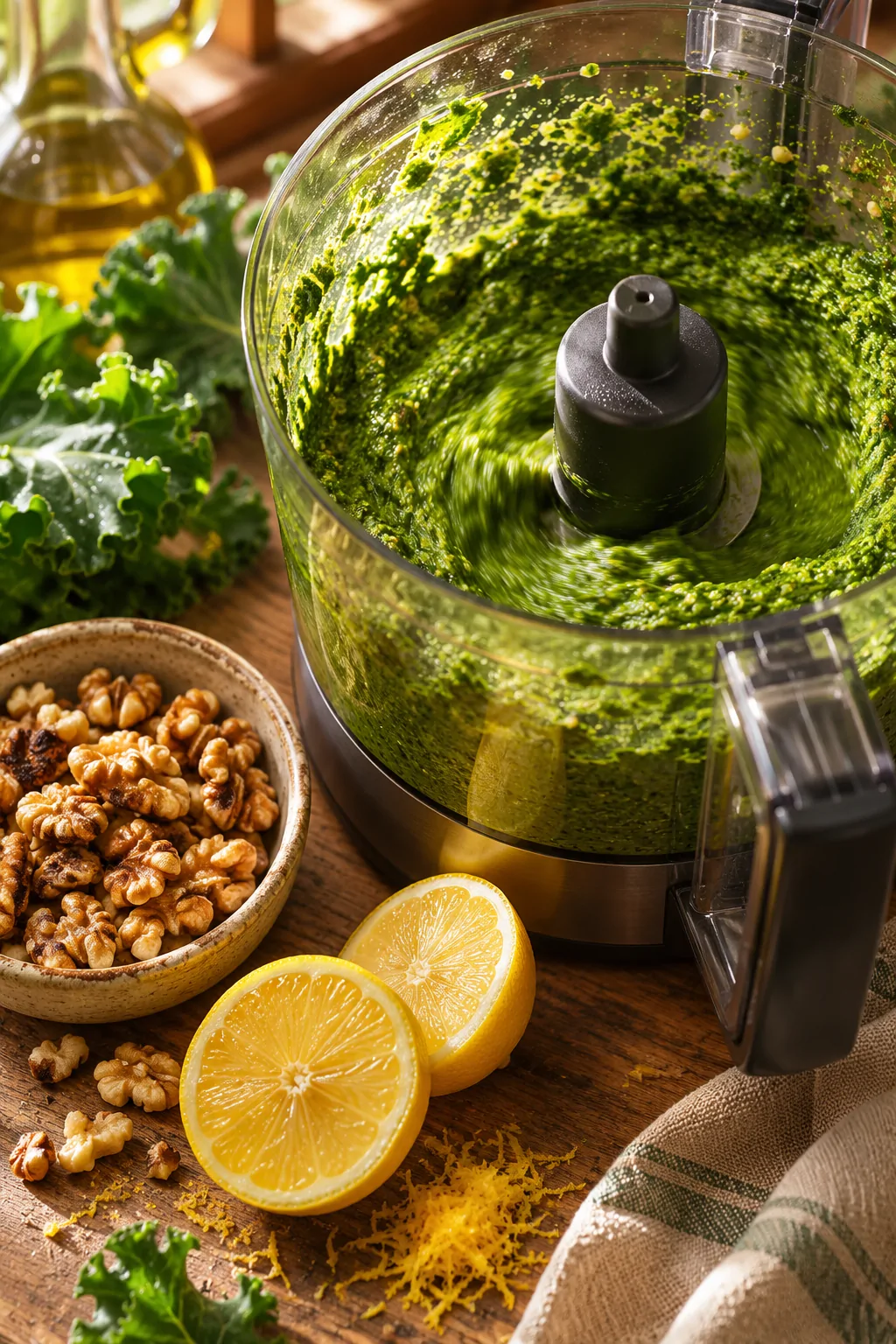
- Blend walnuts, kale, parmesan, garlic, lemon zest, lemon juice, olive oil, pesto salt, and pepper flakes until finely chopped and mostly smooth.
- Reserve 1 cup pasta water, drain pasta, and return it to the warm pot.
- Add pesto and 1/3 cup pasta water. Toss vigorously, adding more water as needed, until glossy and coated.
- Serve immediately with extra parmesan and lemon zest.
Serving ideas
Serve hot with parmesan, lemon zest, and toasted walnuts. Leftovers are also good cold as a packed lunch.
Tips and optional variations
Remove thick kale stems. Blend until finely chopped. Cashews or almonds may replace walnuts as an optional variation.
Storage and reheating
Refrigerate up to three days. Reheat with a splash of water or olive oil, or serve cold.
Choosing the kale
Curly kale or lacinato kale both work here. Choose leaves that look crisp and deeply green, then wash and dry them well. Thick stems can stay fibrous after blending, so strip the leaves from the stems before measuring. A salad spinner makes quick work of drying, and dry leaves help the pesto emulsify with the oil instead of becoming watery.
Getting the pesto texture right
The pesto does not need to be perfectly smooth. A finely chopped texture gives the sauce character and lets the kale, lemon, walnuts, and parmesan remain distinct. Stop the processor to scrape the sides if needed. If the mixture seems too thick, add a spoonful of olive oil, but wait to use pasta water until the pesto meets the hot noodles.
Making the meal ahead
You can prepare the pesto earlier in the day and keep it covered in the refrigerator. Bring it close to room temperature while the pasta cooks so it blends readily with the hot noodles. If you are packing leftovers, toss them with an extra teaspoon of olive oil and keep a small lemon wedge nearby for serving. The flavors become rounder after resting.
Pairing the pasta
A simple salad with crisp cucumber or roasted tomatoes makes a fresh companion. For a heartier table, serve garlic bread or white beans alongside. Since the pesto already contains walnuts and parmesan, the plate needs only a modest garnish. A few toasted nuts and a little zest are enough to signal the flavors in the sauce.
Common mistakes to avoid
Do not boil the pesto, because high heat can dull its color and make the cheese clump. Do not discard all the pasta water before tasting the sauce; its starch is valuable for adjusting consistency. Finally, avoid overcooking the pasta. Al dente noodles have enough structure to hold the pesto and remain pleasant when reheated.
Serving the leftovers
Cold kale pesto pasta can become a useful lunch salad. Add a splash of water and a squeeze of lemon before tossing, then finish with parmesan. If the pasta was refrigerated in a thick mass, let it sit for a few minutes before separating it. Gentle warming in a skillet with a tablespoon of water restores a glossy texture without drying the kale.
Search answers
Can I make pesto ahead?
Yes, blend it a day ahead and refrigerate it.
How do I keep pasta from drying out?
Use reserved pasta water and toss immediately while the pasta is hot.
FAQ: frequently asked questions
More ways to enjoy it
For a complete dinner, add a crisp salad, steamed green beans, or roasted vegetables. The pesto is also useful beyond this bowl: spoon it over grilled chicken, spread it on toasted bread, or stir a little into white beans. Keep the additions simple so the lemon, kale, parmesan, and walnuts remain the center of the meal.
Final recipe notes
Timing is easiest when the pasta water, walnuts, and food processor are prepared before cooking begins. Taste the pesto before adding it to the pasta and adjust lemon or salt if needed. Always reserve water before draining, because the starch makes the sauce cohesive. Serve promptly for the brightest color and creamiest texture, then cool any leftovers quickly before refrigerating.
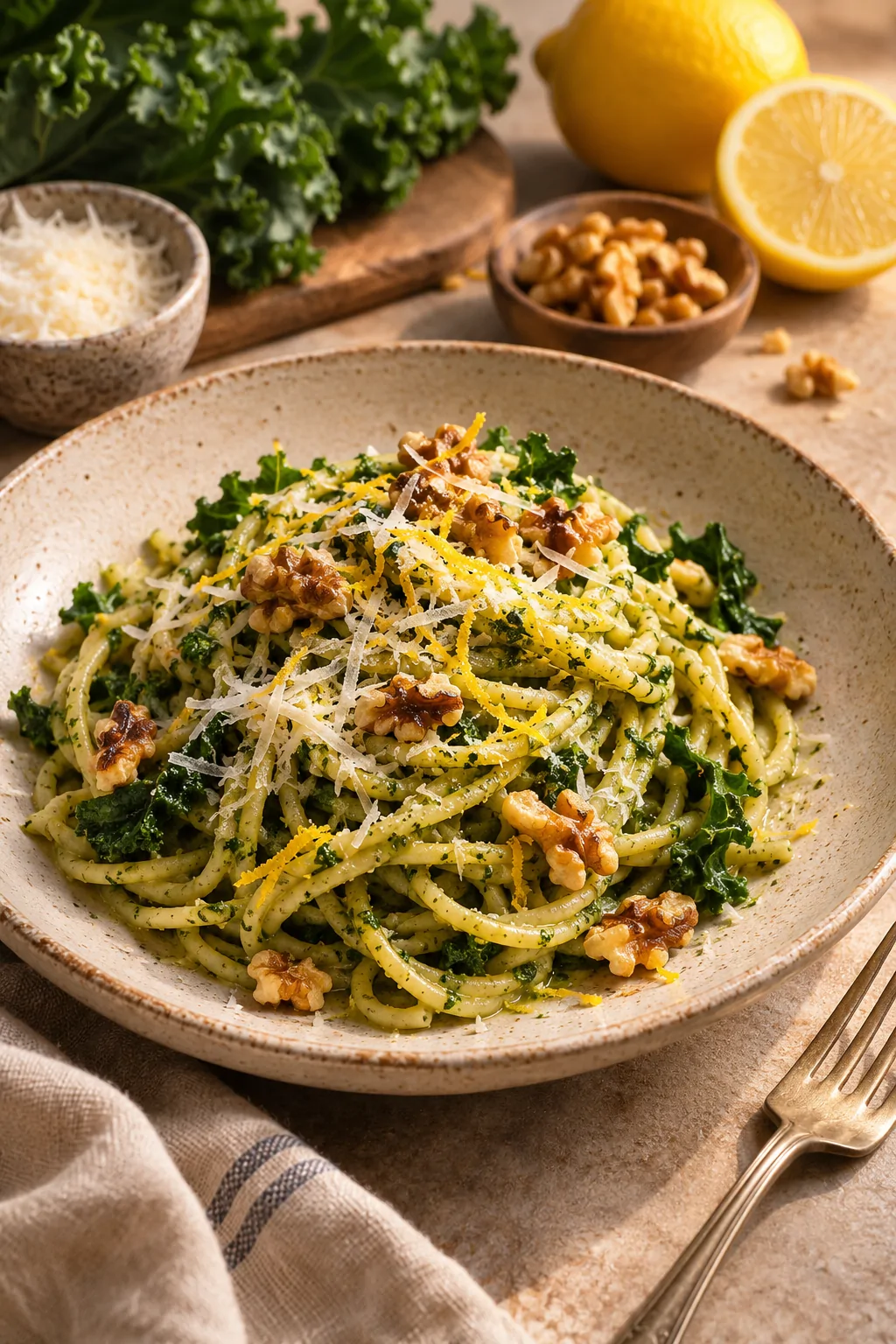
This bright green pasta is fast, flavorful, and useful for both dinner and make-ahead lunches. Toast the walnuts while the water heats, blend as the noodles cook, and finish with pasta water for a smooth coating.
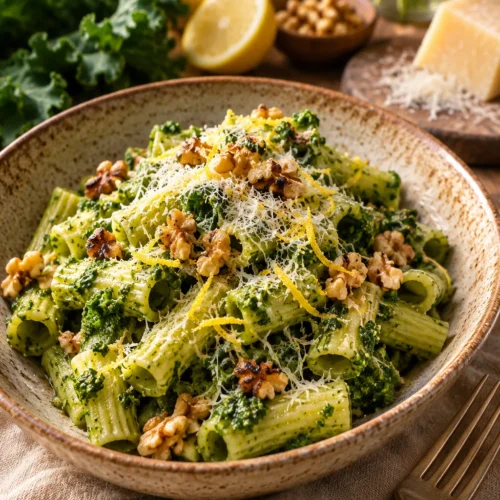
Kale Pesto Pasta with Lemon and Parmesan
Adjust the serving amount to scale the ingredient list. Written quantities in the steps refer to the original recipe; adjust them in the same proportion. Timing may vary with batch size.
Ingredients
Ingredients
- 4 cups tightly packed kale leaves torn from stems
- 1/2 cup finely grated parmesan plus more to serve
- 1 clove garlic minced
- 1/2 cup walnuts
- 2 teaspoons lemon zest
- 3 tablespoons lemon juice
- 1/2 cup extra-virgin olive oil
- 3/4 teaspoon kosher salt for pesto
- 1/2 teaspoon red pepper flakes optional
- 1 pound pasta any shape
- 2 teaspoons kosher salt for pasta water
- 1/3 cup reserved pasta water plus more as needed
Instructions
Instructions
- Bring a large pot of water to a boil and add the pasta salt. Cook the pasta according to package directions until al dente.
- Toast walnuts in a dry skillet over medium-high heat for about 3 minutes, tossing often, until fragrant.
- Blend walnuts, kale, parmesan, garlic, lemon zest, lemon juice, olive oil, pesto salt, and pepper flakes until finely chopped and mostly smooth.
- Reserve 1 cup pasta water, drain pasta, and return it to the warm pot.
- Add pesto and 1/3 cup pasta water. Toss vigorously, adding more water as needed, until glossy and coated.
- Serve immediately with extra parmesan and lemon zest.