

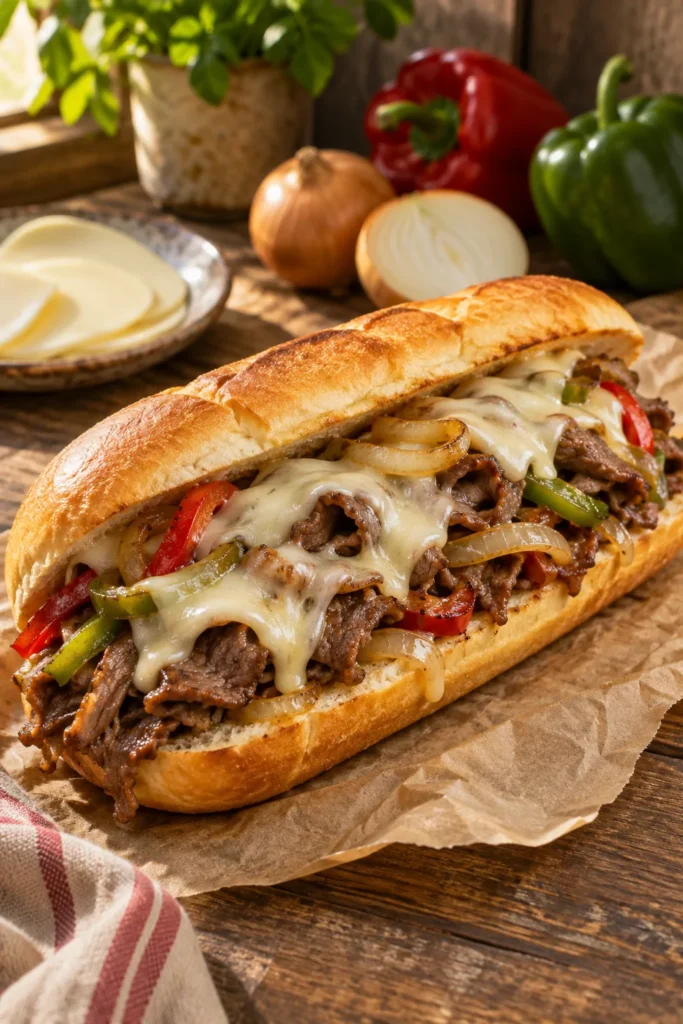
Philly cheesesteak sandwich night comes together quickly with thinly sliced ribeye, sweet peppers, onions, and melted provolone tucked into toasted hoagie rolls. The key is to cook the vegetables until tender, sear the steak in the same skillet, and finish each portion with cheese so every bite is hot and savory. This recipe makes four generous sandwiches in about 35 minutes, with a clear stovetop method that works for a weeknight dinner or a casual game-day spread.
What makes this Philly cheesesteak sandwich work
Ribeye brings enough marbling to stay flavorful during a short, hot cook. Thin slices sear quickly, while the peppers and onion add sweetness and moisture without making the rolls soggy. Cooking everything in one skillet builds flavor and keeps the workflow simple.
Ingredients
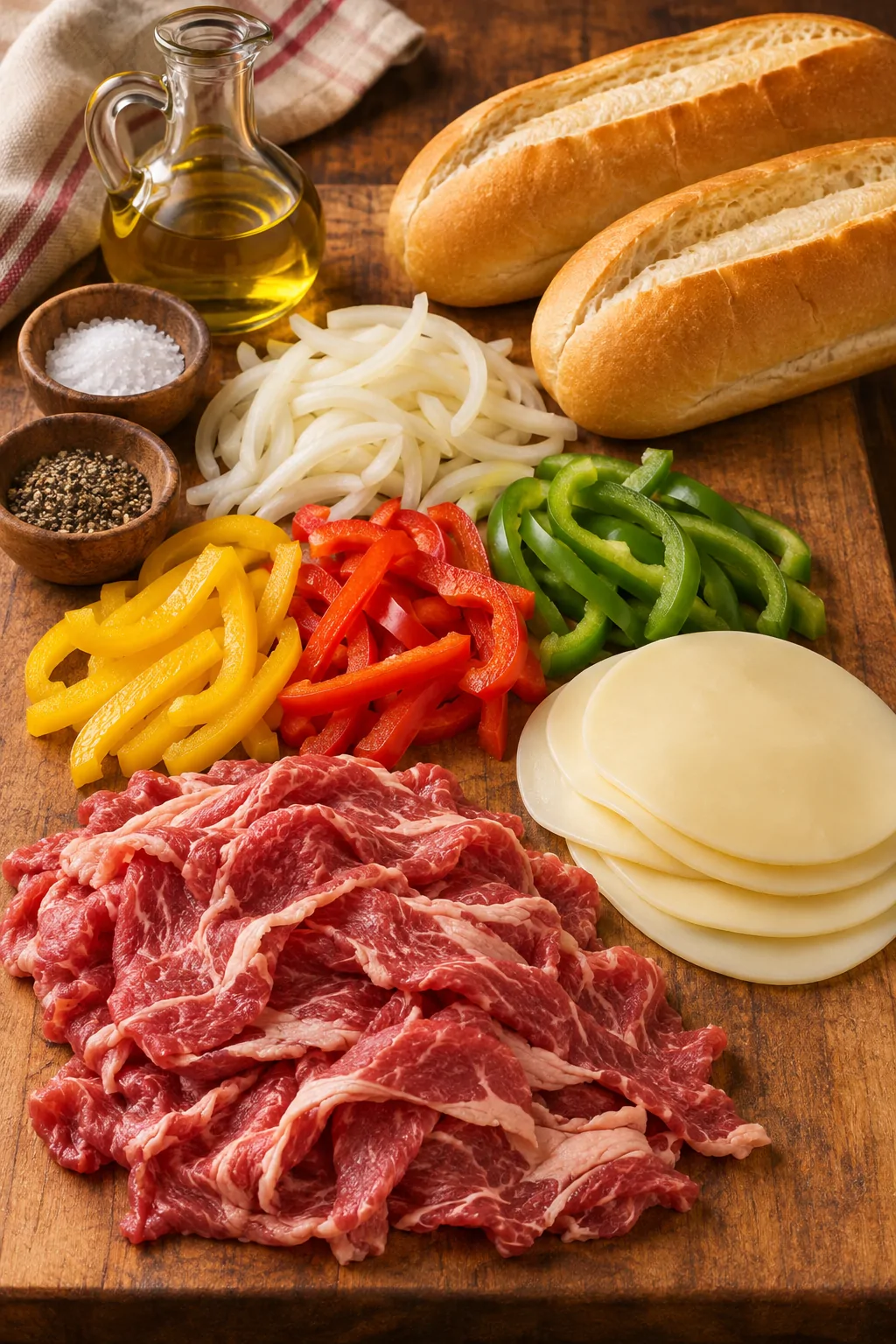
- 1 lb thinly sliced ribeye steak
- 1 tablespoon olive oil
- 1 yellow bell pepper, thinly sliced
- 1 red bell pepper, thinly sliced
- 1 green bell pepper, thinly sliced
- 1 medium onion, thinly sliced
- 4 split hoagie rolls
- 6 slices provolone cheese
- 1/2 teaspoon salt
- 1/4 teaspoon black pepper
How to make it
- Heat a large skillet over medium-high heat with the olive oil. Cook the bell peppers and onion for 5 to 7 minutes, until softened and lightly caramelized, then transfer them to a plate.
- Add the ribeye, season with salt and pepper, and cook for 3 to 5 minutes, breaking up the slices, until browned and just cooked through.
- Return the vegetables to the skillet, toss with the steak, divide into four portions, and top with provolone. Cover briefly until the cheese melts.
- Toast the rolls if desired, fill them with the cheesy steak mixture, and serve hot.
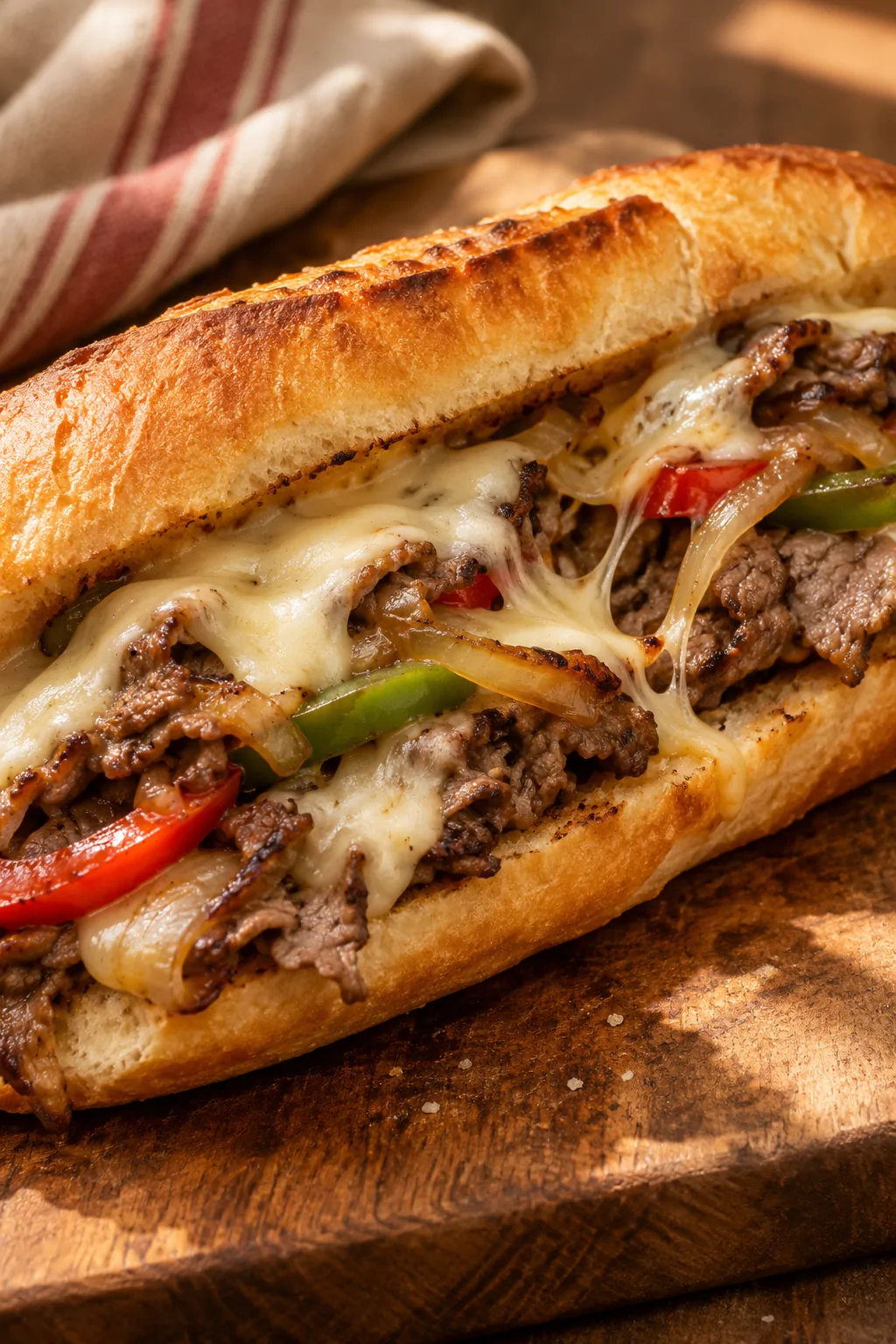
Serving ideas, tips, and variation
Serve with crisp pickles, potato wedges, or a simple green salad. For the best texture, slice the steak as thinly as possible and keep the skillet hot so it browns instead of steaming. An optional variation is to add sliced mushrooms with the peppers, but keep them clearly separate from the primary recipe and cook them until their moisture evaporates.
Storage and reheating
Store the cooked filling separately from the rolls in a covered container for up to three days. Reheat the steak and vegetables in a skillet over medium heat until hot, then add fresh cheese and fill freshly toasted rolls. Assemble only what you plan to eat so the bread stays firm.
Philly cheesesteak sandwich questions
What cut of beef works best?
Thinly sliced ribeye gives the richest result, but another tender, thin-sliced steak can work if it cooks quickly.
How do I keep the sandwich from getting soggy?
Cook excess moisture out of the vegetables, toast the rolls lightly, and assemble just before serving.
Can I prepare the vegetables ahead?
Yes. Cook them a day ahead, chill promptly, and reheat them with the freshly cooked steak.
Why the skillet method works
The order matters. Peppers and onion need time to soften and develop browned edges, while ribeye needs a shorter, hotter cook. Removing the vegetables before searing the beef prevents the pan from becoming crowded. It also lets the steak contact the skillet directly, creating savory browned bits without overcooking thin slices.
Using one pan makes the filling cohesive. When the vegetables return to the steak, their sweet juices mingle with the beef drippings. The provolone melts over divided portions instead of disappearing into a large pan, so each roll gets a balanced amount of meat, vegetables, and cheese.
Choosing and slicing the steak
Look for a well-marbled ribeye and chill it briefly before slicing. A colder steak is firmer and easier to cut into very thin pieces. Slice across the grain where possible; shorter muscle fibers make the sandwich easier to bite through. If the steak is already shaved, separate the slices before they hit the pan so they brown evenly rather than forming one dense clump.
Do not leave the beef sitting in the skillet while the vegetables cook. The steak should be the final quick-cooking component. Season immediately before it goes into the pan, then use a spatula to separate the slices. Once the centers are no longer raw and the edges are browned, move on to the cheese step.
Timing and doneness cues
The vegetables are ready when they bend easily and show a little color at the edges. They should still have enough structure to remain visible in the sandwich. The ribeye is ready when it is browned in spots and no longer has a raw center. Because thin slices finish quickly, the skillet should already be hot before the beef is added.
Cheese needs only a short covered rest. If the lid stays on too long, steam can soften the rolls later. Turn the heat low or off, arrange the provolone over the portions, cover for about a minute, and uncover as soon as the slices look glossy and relaxed.
FAQs
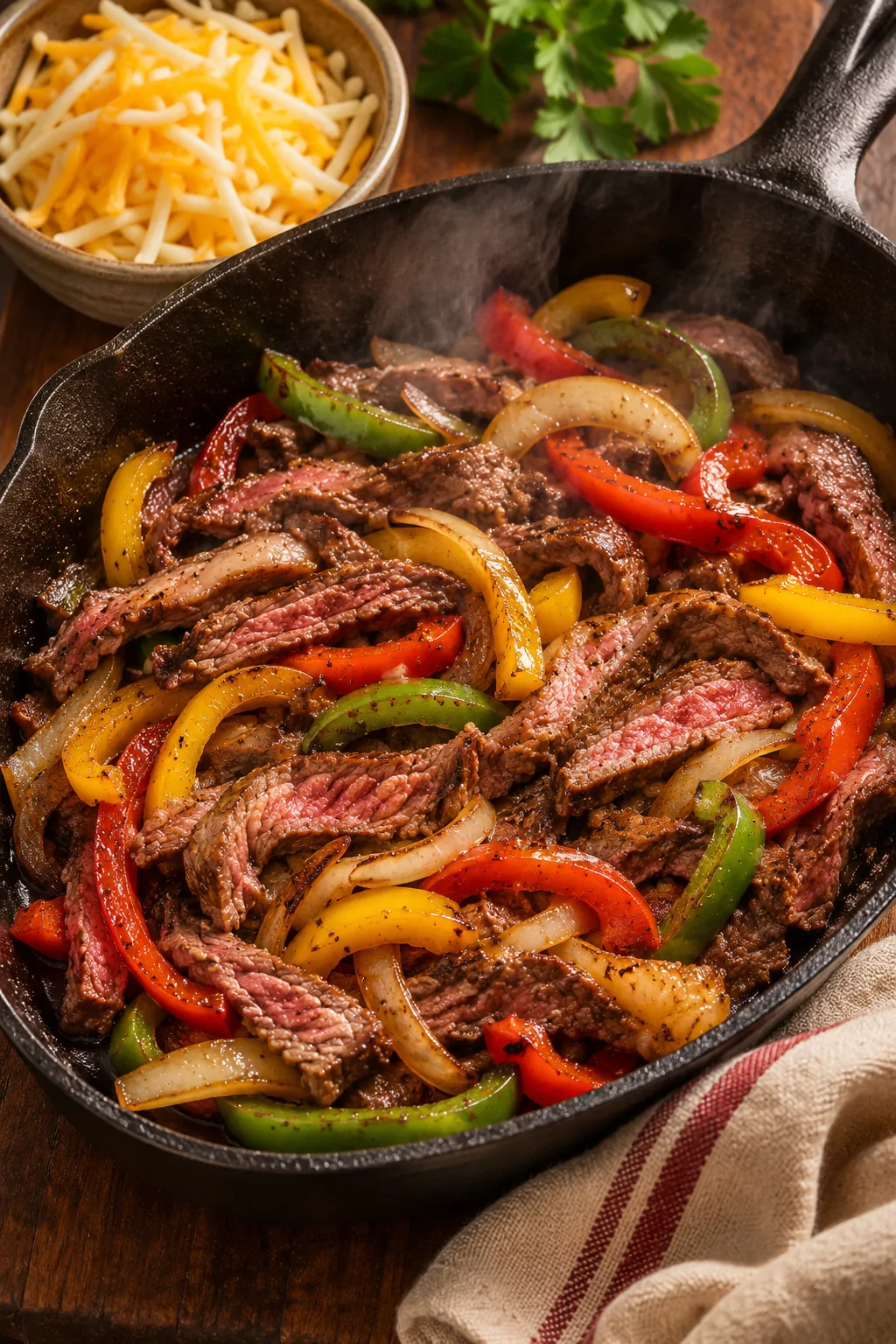
Keep the filling hot, the rolls lightly toasted, and the cheese melted right before serving for the most satisfying Philly cheesesteak sandwich.
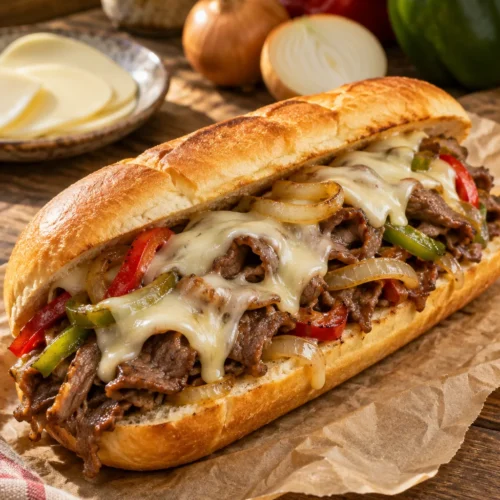
Philly Cheesesteak Sandwich
Adjust the serving amount to scale the ingredient list. Written quantities in the steps refer to the original recipe; adjust them in the same proportion. Timing may vary with batch size.
Ingredients
Ingredients
- 1 lb ribeye steak thinly sliced
- 1 tablespoon olive oil
- 1 yellow bell pepper thinly sliced
- 1 red bell pepper thinly sliced
- 1 green bell pepper thinly sliced
- 1 medium onion thinly sliced
- 4 hoagie rolls split
- 6 slices provolone cheese
- 1/2 teaspoon salt
- 1/4 teaspoon black pepper
Instructions
Instructions
- Heat a large skillet over medium-high heat with the olive oil. Cook the bell peppers and onion for 5 to 7 minutes, until softened and lightly caramelized, then transfer them to a plate.
- Add the ribeye, season with salt and pepper, and cook for 3 to 5 minutes, breaking up the slices, until browned and just cooked through.
- Return the vegetables to the skillet, toss with the steak, divide into four portions, and top with provolone. Cover briefly until the cheese melts.
- Toast the rolls if desired, fill them with the cheesy steak mixture, and serve hot.