

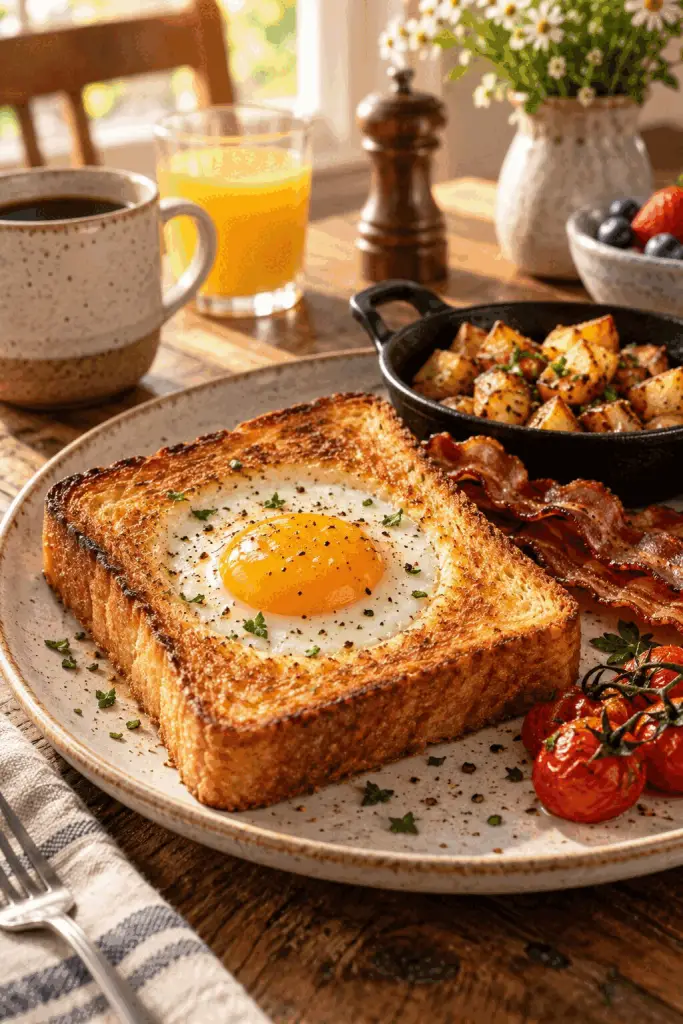
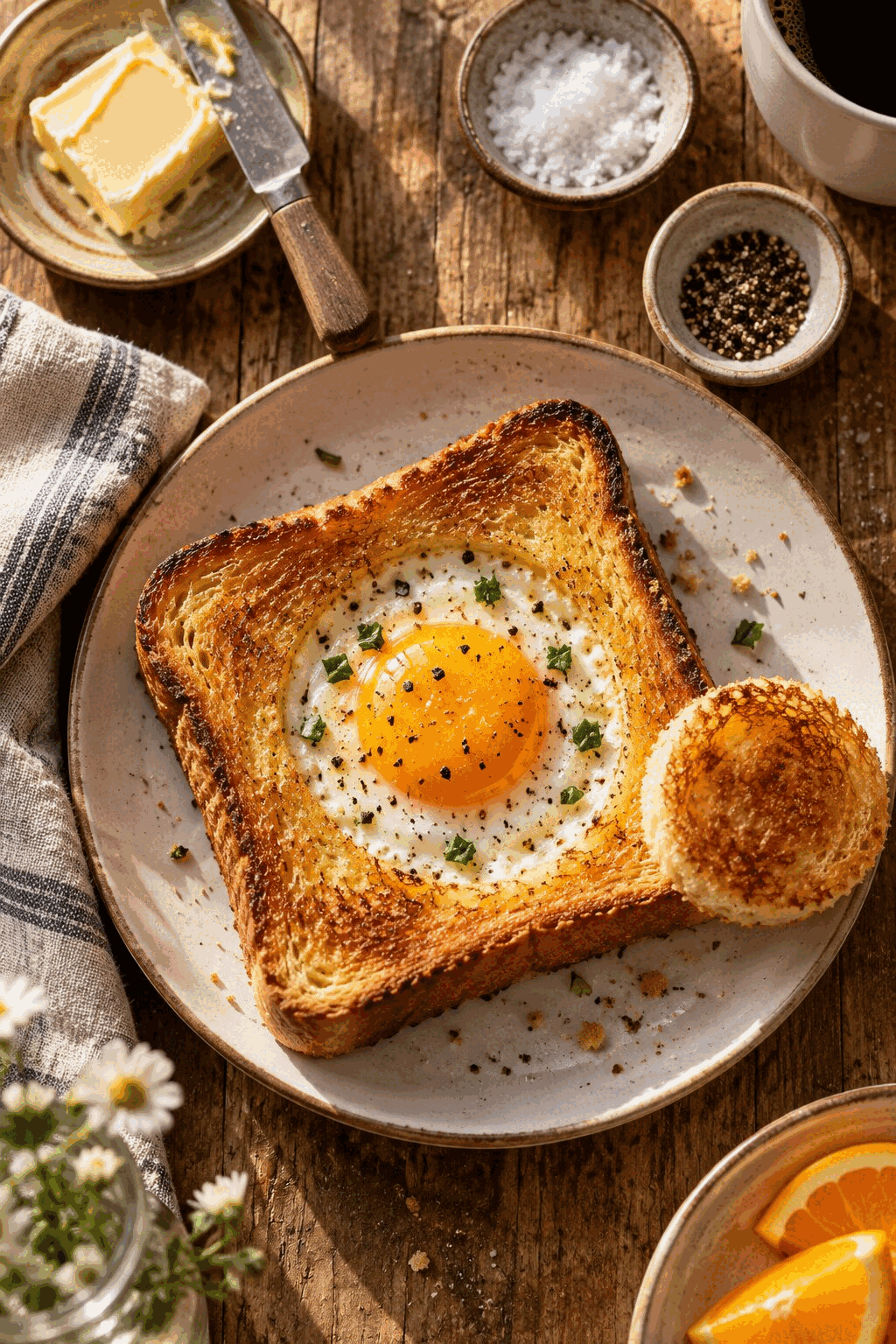
Egg in a hole is the kind of breakfast that makes one slice of bread feel like a complete meal. A buttery piece of Texas toast turns crisp around a tender egg cooked right in its center, while the cut-out piece becomes a built-in dipper for the yolk. This egg in a hole recipe takes about 10 minutes, uses four simple ingredients, and gives you an easy way to choose between a runny, jammy, or fully set egg.
What an egg in a hole is
The name describes the method: a hole is cut from the middle of bread, and an egg cooks in the opening while the bread fries in butter. The bread stays sturdy enough to turn in the skillet, and the center piece can toast alongside it. It is a single-serving breakfast with crisp edges, a soft middle, and very little cleanup.
Why this recipe works
Texas toast has enough surface area and structure to hold the egg without tearing when you flip it. Butter coats the pan and browns the bread, while medium heat gives the white time to set before the toast becomes too dark. Cooking the egg briefly before turning the bread also helps keep the yolk centered and intact.
How to make egg in a hole
Ingredients
- 2 tablespoons butter
- 1 slice Texas toast
- 1 large egg
- Salt and ground black pepper, to taste
Method
- Press a hole in the middle of the bread with a biscuit cutter or the rim of a glass.
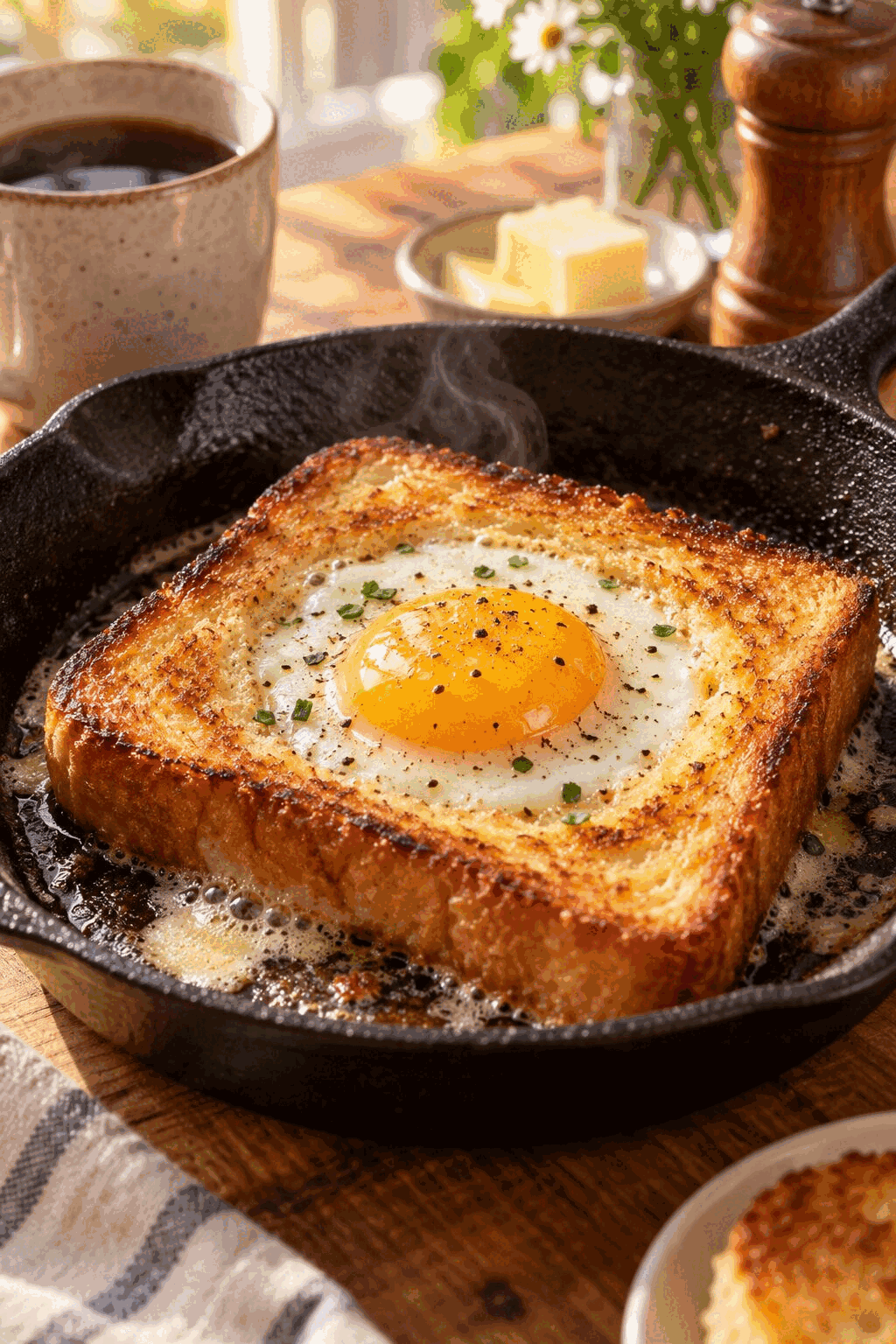
- Melt the butter in a skillet over medium heat. When the pan is coated, place in the bread and crack the egg into the hole. Add the bread center to the skillet if you want it toasted too.
- Cook until the egg begins to set on the bottom, about 30 to 45 seconds. Season with salt and pepper. After about 1 minute, flip the bread and season the other side.
- Continue cooking until the toast is golden and the egg reaches your preferred doneness. For a classic result, the whites should be set and pale while the yolk stays soft and unbroken.
- Serve immediately with the toasted bread center for dipping.
Serving ideas
Serve the egg in a hole on its own for a quick breakfast, or add fruit and yogurt for a more complete plate. It also fits neatly beside roasted tomatoes, sautéed greens, or crisp bacon. Cut into the yolk at the table so the toast can catch the sauce. For a brunch plate, cook several servings in batches and keep finished pieces warm on a sheet pan in a low oven.
Tips and optional variation
Use a cutter that leaves at least an inch of bread around the opening; a hole that is too large makes the slice fragile. Keep the heat at medium so the butter does not burn before the egg sets. If the white spreads beneath the bread, gently nudge it back toward the opening with a spatula.
Optional variation: Sprinkle a little shredded cheddar over the egg during the final minute and cover the skillet briefly so the cheese melts. This changes the flavor but not the core method.
A practical use case is a fast school-day breakfast: cut the bread and gather the egg the night before, then cook everything fresh in one skillet while coffee brews.
The small details matter here. Let the butter fully melt before the bread enters the skillet so the underside browns evenly. Crack the egg into a cup first if you want to catch a shell fragment or make centering it easier. A silicone or thin metal spatula slides under the toast cleanly, and lifting one edge lets you check the color without disturbing the yolk. If serving children, cook the egg until both the white and yolk are firm.
Storage and reheating
Egg in a hole is best immediately because the toast loses its crispness and a soft yolk continues setting as it cools. If you have leftovers, refrigerate them in a covered container for up to one day. Reheat in a lightly buttered skillet over low heat until warmed through; a microwave is quicker but makes the bread softer. Do not leave cooked egg at room temperature for extended periods.
For the cleanest shape, press the cutter straight down rather than twisting it, then lift the bread carefully. A glass with a narrow rim works well, but test it over the slice before cutting so the opening leaves a strong border. When cooking more than one serving, wipe out loose crumbs between batches because they can darken quickly in butter. Keep the finished toast uncovered for a minute so steam does not soften the crisp surface.
Search-query answers
How do you keep the egg in the bread?
Use thick toast, cut a moderate-size opening, and let the egg bottom set before flipping. Medium heat helps the white firm up without burning the bread.
What is another name for egg in a hole?
It is also called egg in toast, egg-in-a-basket, or toad in a hole in some households. The method is the same: bread cooks around an egg.
Can the yolk be fully cooked?
Yes. Cook the flipped bread a little longer, pressing gently near the yolk until it feels firm. The toast should remain golden rather than deeply brown.
This breakfast is also easy to adapt to the size of your appetite. Use one slice per person, or pair a smaller egg in a hole with fruit for a lighter plate. If the first side browns before the white is ready, lower the heat and cover the pan for a short moment; trapped heat cooks the top without forcing the toast darker. If the yolk breaks, the recipe is still useful: let it set, then serve the crisp bread with the egg as a simple skillet breakfast. The cut-out center can be seasoned with paprika, dried herbs, or a pinch of chili flakes, but keep additions light so the bread remains easy to dip. These small adjustments make the method dependable on different pans and with different bread thicknesses.
Because the ingredient list is short, technique does most of the work. Start with a room-temperature egg when possible; it begins cooking more predictably than a very cold egg. Use a pan that matches the bread so the butter is not spread too thinly. Watch the edges of the white: once they look opaque and the underside is no longer liquid, the slice is ready for a careful turn. A wide spatula supports both bread and egg at once. After flipping, avoid pressing down on the yolk. The toast needs contact with the pan, but the yolk should stay protected inside the opening.
For a softer center, remove the skillet from the heat for a few seconds if the toast is already golden. Residual heat will continue to cook the egg gently. For a firmer breakfast, leave the bread on the second side until the yolk feels springy when touched lightly with the spatula. Always season before serving so the salt clings to the warm egg. The result should have a crisp, browned bread border, a fully opaque white, and a yolk chosen to match the people at the table.
FAQs
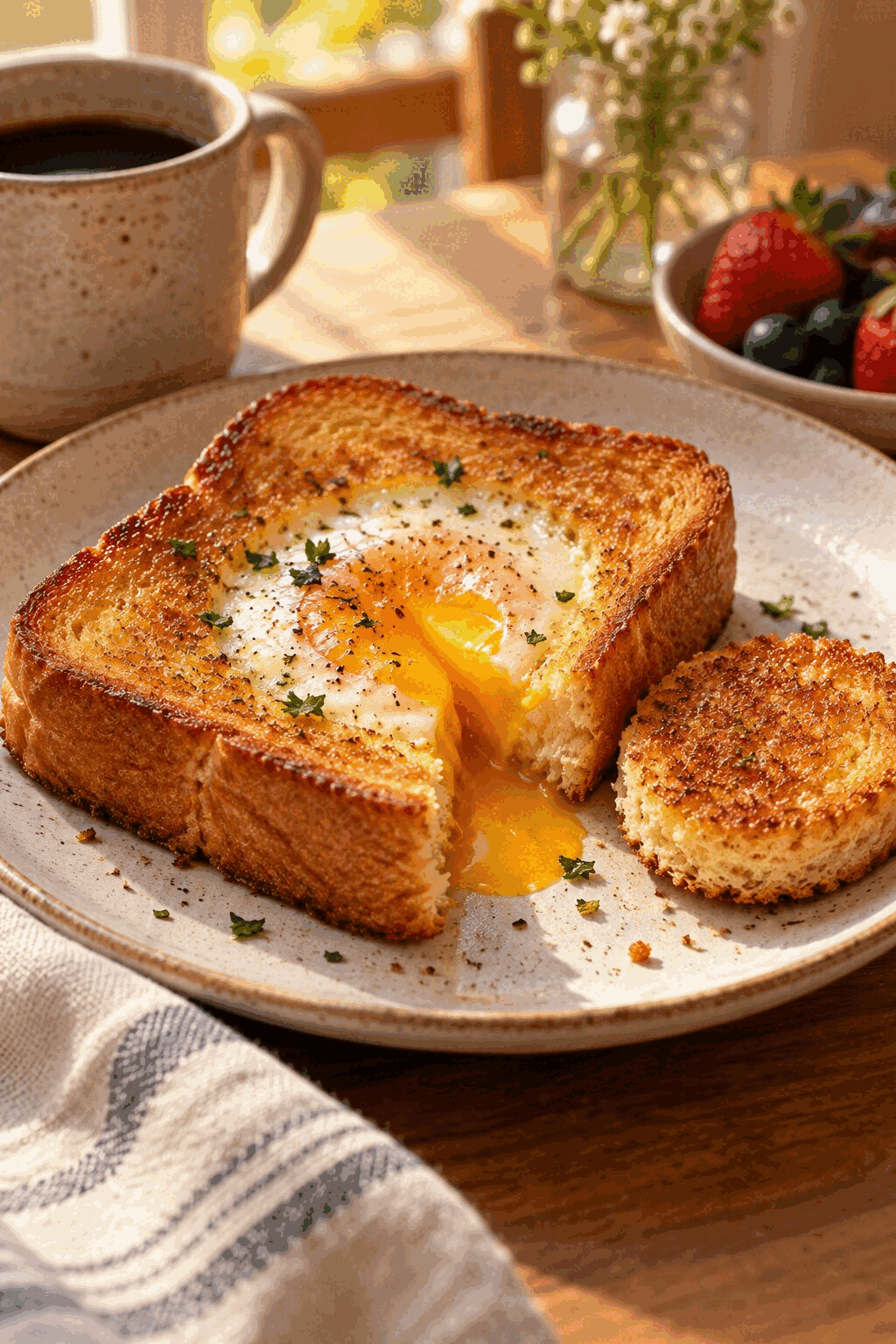
Egg in a hole is a small recipe with a satisfying payoff: crisp buttered toast, a tender egg, and a built-in bite for dipping. Adjust the final cooking time to your preferred yolk and serve it while the edges are still warm.
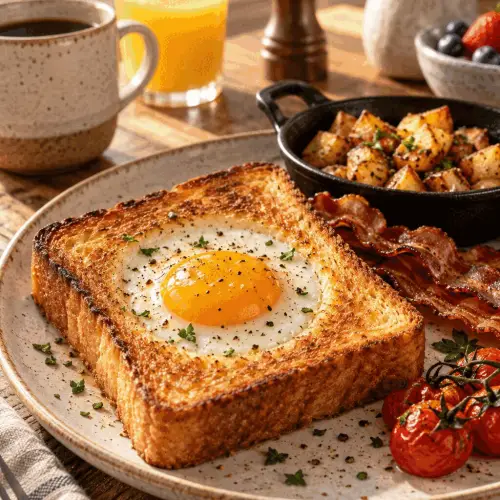
Egg in a Hole Recipe
Adjust the serving amount to scale the ingredient list. Written quantities in the steps refer to the original recipe; adjust them in the same proportion. Timing may vary with batch size.
Ingredients
Ingredients
- 2 tablespoons butter
- 1 slice Texas toast
- 1 large egg
- to taste salt and ground black pepper
Instructions
Instructions
- Press a hole in the middle of the bread with a biscuit cutter or the rim of a glass.
- Melt the butter in a skillet over medium heat. When the pan is coated, place in the bread and crack the egg into the hole. Add the bread center to the skillet if you want it toasted too.
- Cook until the egg begins to set on the bottom, about 30 to 45 seconds. Season with salt and pepper. After about 1 minute, flip the bread and season the other side.
- Continue cooking until the toast is golden and the egg reaches your preferred doneness. For a classic result, the whites should be set and pale while the yolk stays soft and unbroken.
- Serve immediately with the toasted bread center for dipping.