

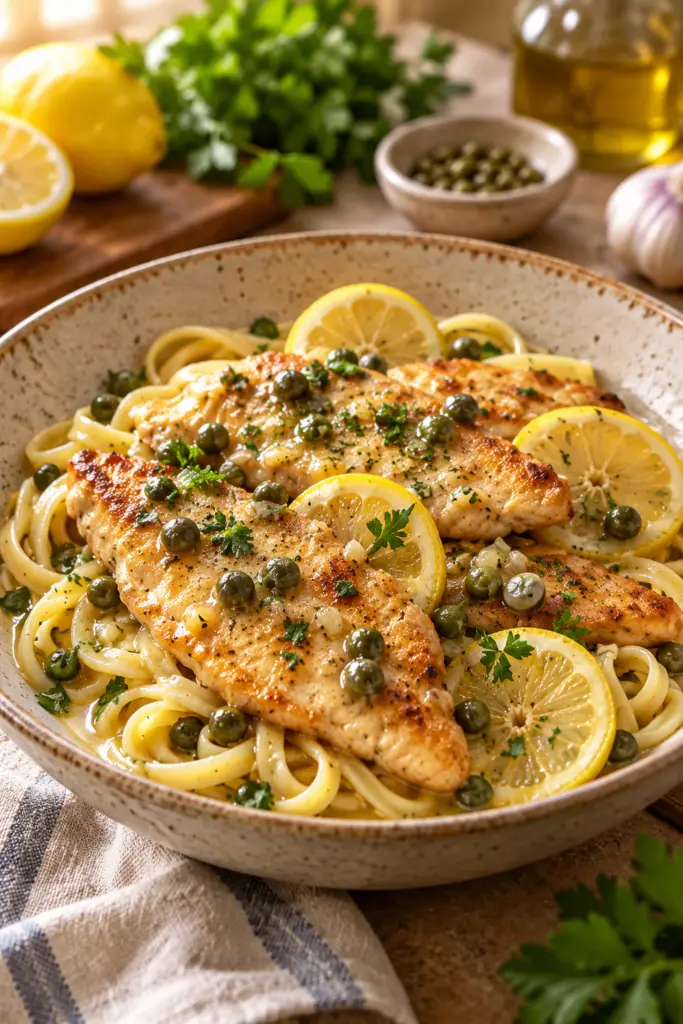
Chicken piccata pasta brings together tender, lightly browned chicken, silky noodles, bright lemon, and briny capers in one skillet. This chicken piccata pasta is a practical 35-minute dinner with enough richness from butter and Parmesan to balance its fresh, tangy finish. It suits a busy weeknight, yet the browned chicken and caper-studded sauce make it polished enough for guests. Everything stays focused on contrast: tender meat, springy noodles, creamy butter, sharp lemon, and salty capers.
What is chicken piccata pasta?
It is a pasta dinner built around the classic piccata balance of lemon, butter, broth, and capers. Thin chicken cooks quickly, then the same pan becomes the sauce base. The result is bright rather than heavy, with enough savory depth for a satisfying meal.
Why this chicken piccata pasta works
Flour gives the chicken a delicate crust and helps the pan sauce pick up savory browned bits. Lemon juice and broth loosen the skillet, while starchy pasta water turns butter, Parmesan, and cooking liquid into a sauce that coats every strand.
Ingredients
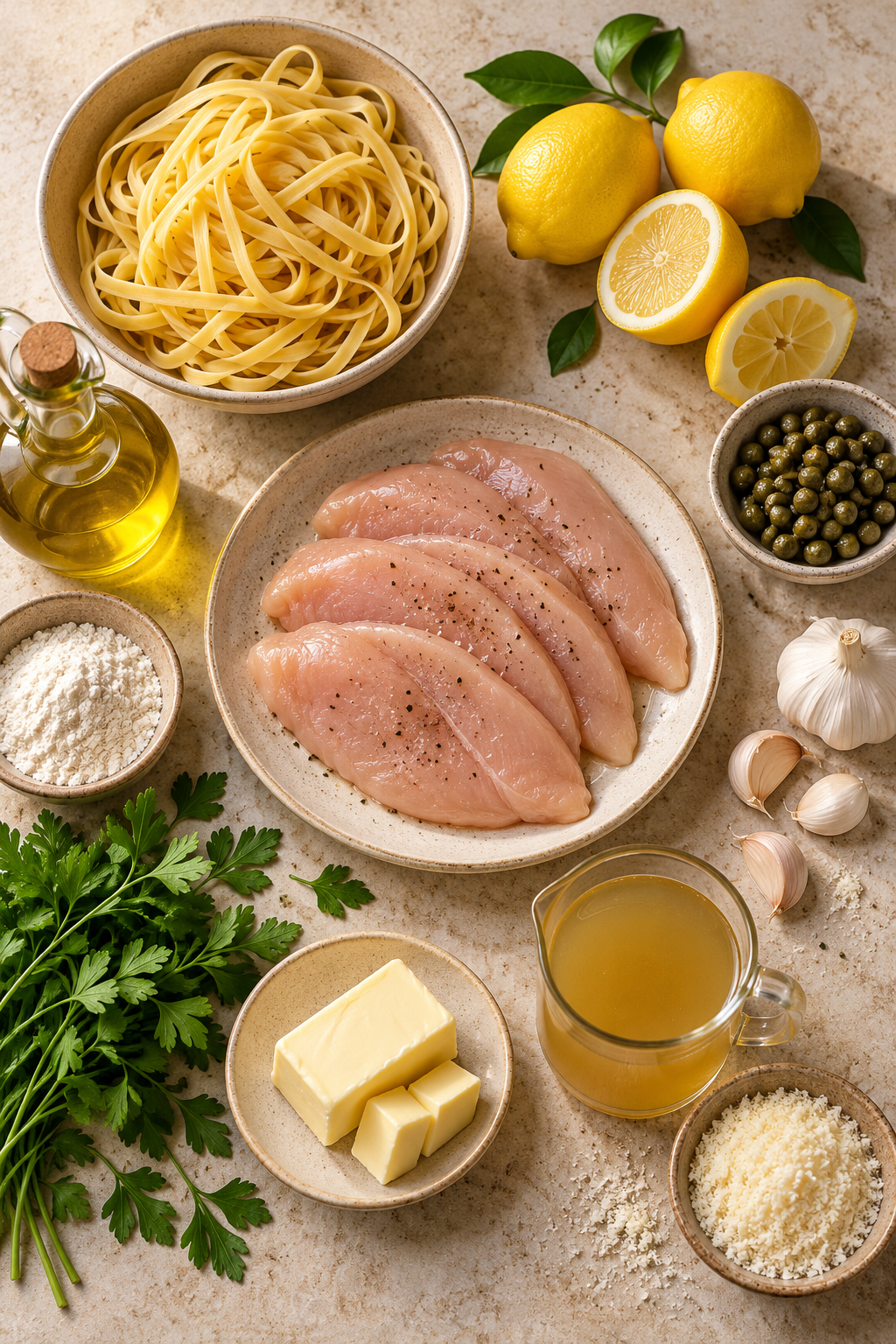
- 12 ounces linguine
- 1 pound boneless skinless chicken breasts
- 1 teaspoon salt
- 1/2 teaspoon black pepper
- 1/3 cup all-purpose flour
- 2 tablespoons olive oil
- 3 tablespoons unsalted butter
- 3 cloves garlic
- 1 cup chicken broth
- 1/3 cup fresh lemon juice
- 1/4 cup capers
- 1/2 cup grated Parmesan
- 2 tablespoons fresh parsley
How to make chicken piccata pasta
Start the pasta first, keeping it slightly firm because it will finish in the skillet.
- Cook linguine in salted water until just tender. Reserve 1/2 cup pasta water, then drain.
- Season chicken with salt and pepper, dredge lightly in flour, and shake off excess.
- Heat olive oil and 1 tablespoon butter in a large skillet. Cook chicken in batches until golden and cooked through, about 3 minutes per side; transfer to a plate.
- Add remaining butter and garlic. Stir for 30 seconds, then add broth and lemon juice, scraping up browned bits. Simmer for 3 minutes.
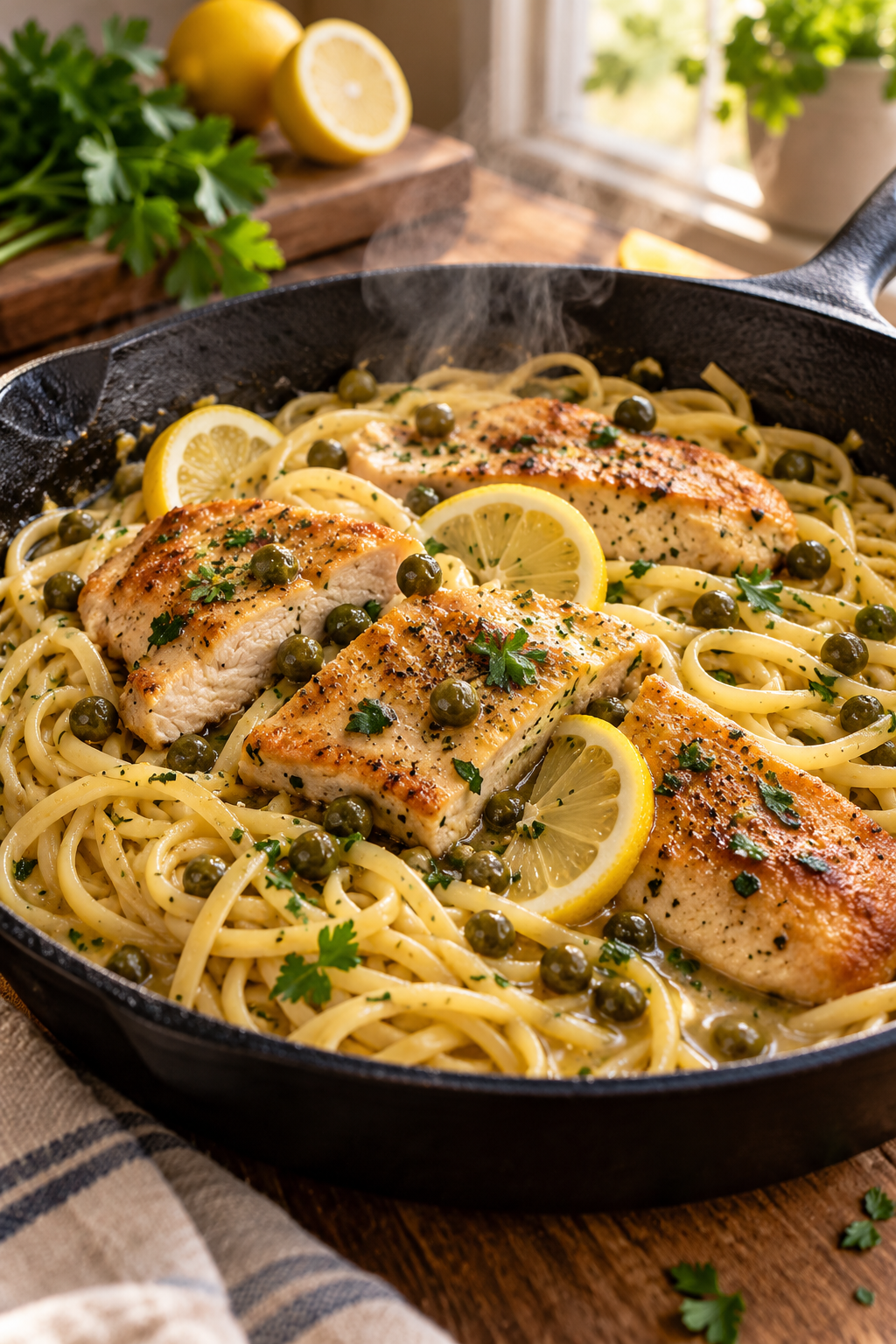
- Stir in capers and Parmesan. Add pasta and enough reserved water to make a glossy sauce, return chicken, toss gently, and finish with parsley.
How to time the meal
Put the pasta water on before preparing the chicken. While it heats, slice and season the chicken. The skillet sauce takes only a few minutes, so the pasta should be ready just as the chicken returns to the pan. This timing prevents the noodles from sitting dry and gives you warm pasta water for the emulsion.
Serving ideas
Serve immediately with Parmesan, parsley, and lemon wedges. A green salad, roasted asparagus, or broccoli makes a useful side.
Tips and optional variation
The key is to build flavor in layers: season the chicken, brown it without moving it too often, and scrape the browned bits into the lemon broth. Parmesan adds body, but the reserved pasta water is what helps the sauce stay fluid. Taste at the end before adding extra salt because both capers and cheese contribute seasoning.
The key is to build flavor in layers: season the chicken, brown it without moving it too often, and scrape the browned bits into the lemon broth. Parmesan adds body, but the reserved pasta water is what helps the sauce stay fluid. Taste at the end before adding extra salt because both capers and cheese contribute seasoning.
Keep chicken pieces similar in thickness and avoid crowding the skillet. For an optional variation, add baby spinach with the pasta during the final toss.
Texture and doneness cues
The chicken is ready when the center is opaque and the juices run clear. The sauce should look glossy and lightly coat the noodles; it will tighten as it cools. If it seems thick, add reserved water a tablespoon at a time. If it seems thin, toss over low heat for another minute rather than adding more flour.
For the best finish, taste the sauce after the pasta has tossed for a minute. Lemon intensity varies, and a small splash of pasta water can soften a sharp edge while keeping the sauce bright. The chicken should remain in bite-size pieces so each forkful gets pasta, sauce, and a little caper. Warm plates help the butter sauce stay fluid at the table.
For the best finish, taste the sauce after the pasta has tossed for a minute. Lemon intensity varies, and a small splash of pasta water can soften a sharp edge while keeping the sauce bright. The chicken should remain in bite-size pieces so each forkful gets pasta, sauce, and a little caper. Warm plates help the butter sauce stay fluid at the table.
For the best finish, taste the sauce after the pasta has tossed for a minute. Lemon intensity varies, and a small splash of pasta water can soften a sharp edge while keeping the sauce bright. The chicken should remain in bite-size pieces so each forkful gets pasta, sauce, and a little caper. Warm plates help the butter sauce stay fluid at the table.
For the best finish, taste the sauce after the pasta has tossed for a minute. Lemon intensity varies, and a small splash of pasta water can soften a sharp edge while keeping the sauce bright. The chicken should remain in bite-size pieces so each forkful gets pasta, sauce, and a little caper. Warm plates help the butter sauce stay fluid at the table.
For the best finish, taste the sauce after the pasta has tossed for a minute. Lemon intensity varies, and a small splash of pasta water can soften a sharp edge while keeping the sauce bright. The chicken should remain in bite-size pieces so each forkful gets pasta, sauce, and a little caper. Warm plates help the butter sauce stay fluid at the table.
For the best finish, taste the sauce after the pasta has tossed for a minute. Lemon intensity varies, and a small splash of pasta water can soften a sharp edge while keeping the sauce bright. The chicken should remain in bite-size pieces so each forkful gets pasta, sauce, and a little caper. Warm plates help the butter sauce stay fluid at the table.
Storage and reheating
Refrigerate leftovers for up to three days. Reheat gently with a splash of broth or water until hot.
Make-ahead and substitutions
For a smoother cooking session, measure the broth, lemon juice, capers, and Parmesan before heating the skillet. You can substitute chicken tenders for sliced breasts, though cooking time may vary. Fresh lemon gives the cleanest flavor, while bottled juice works in a pinch. If capers are very salty, rinse and drain them first.
FAQ: chicken piccata pasta questions
Can I use another pasta shape?
Yes. Spaghetti, fettuccine, or short shapes work; reserve pasta water.
How do I keep the lemon sauce smooth?
Add Parmesan off high heat and loosen gradually with warm pasta water.
What can I serve with it?
A crisp salad or roasted green vegetable balances the meal.
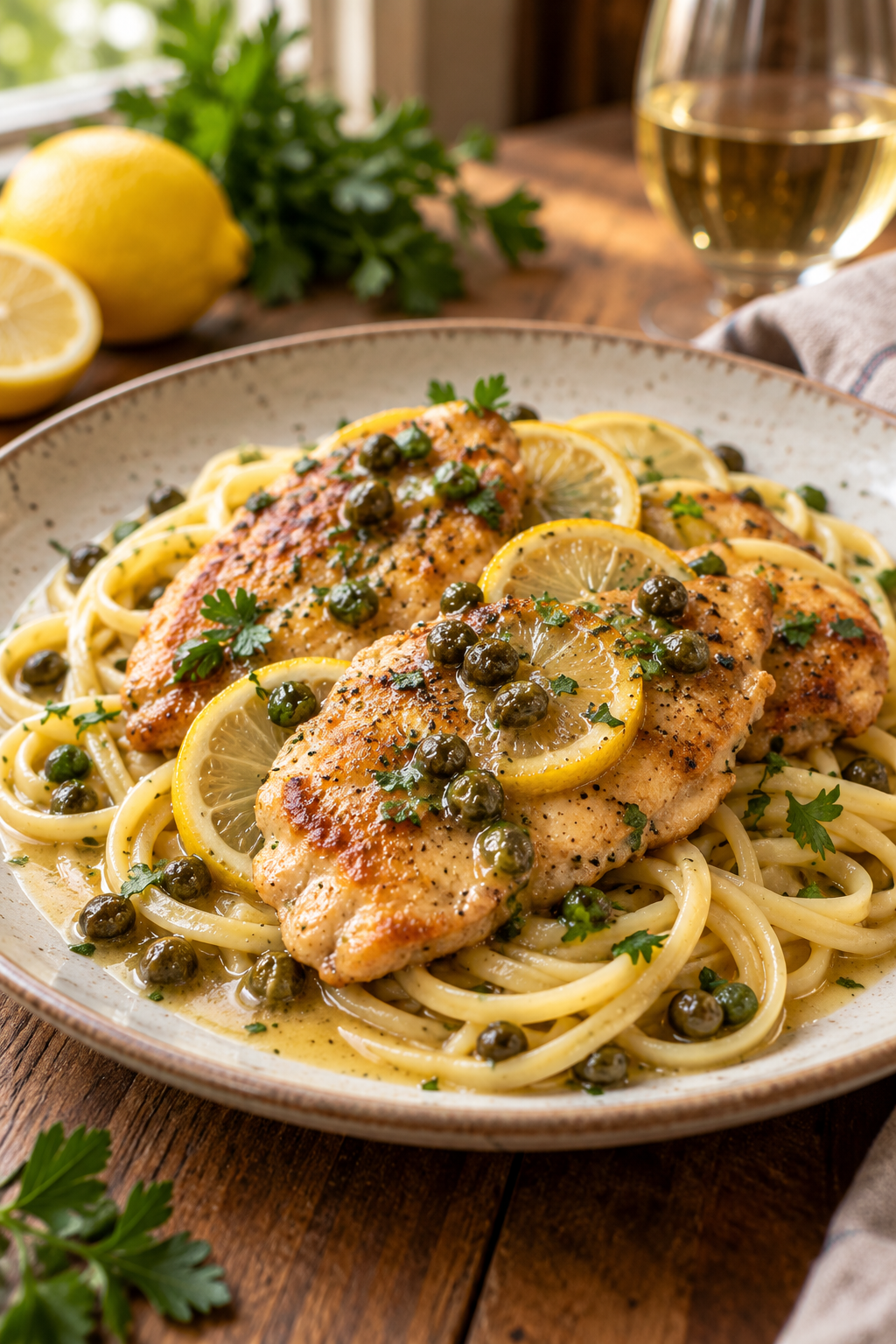
Bright lemon, savory capers, and a glossy Parmesan finish make this skillet pasta a dependable dinner.
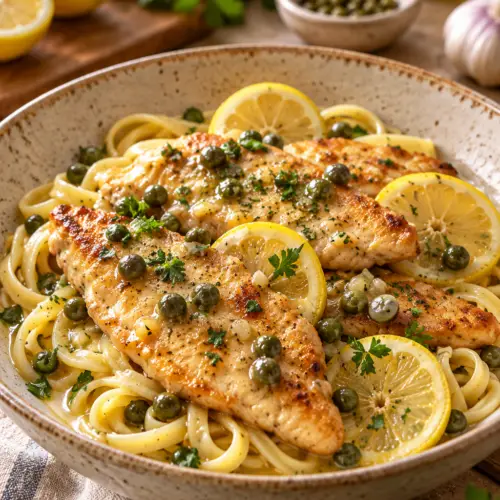
Chicken Piccata Pasta with Lemon and Capers
Adjust the serving amount to scale the ingredient list. Written quantities in the steps refer to the original recipe; adjust them in the same proportion. Timing may vary with batch size.
Ingredients
Ingredients
- 12 ounces linguine
- 1 pound boneless skinless chicken breasts thinly sliced
- 1 teaspoon salt
- 1/2 teaspoon black pepper
- 1/3 cup all-purpose flour
- 2 tablespoons olive oil
- 3 tablespoons unsalted butter divided
- 3 cloves garlic minced
- 1 cup chicken broth
- 1/3 cup fresh lemon juice
- 1/4 cup capers drained
- 1/2 cup grated Parmesan
- 2 tablespoons fresh parsley chopped
Instructions
Instructions
- Cook linguine in salted water until just tender. Reserve 1/2 cup pasta water, then drain.
- Season chicken with salt and pepper, dredge lightly in flour, and shake off excess.
- Heat olive oil and 1 tablespoon butter in a large skillet. Cook chicken in batches until golden and cooked through, about 3 minutes per side; transfer to a plate.
- Add remaining butter and garlic. Stir for 30 seconds, then add broth and lemon juice, scraping up browned bits. Simmer for 3 minutes.
- Stir in capers and Parmesan. Add pasta and enough reserved water to make a glossy sauce, return chicken, toss gently, and finish with parsley.