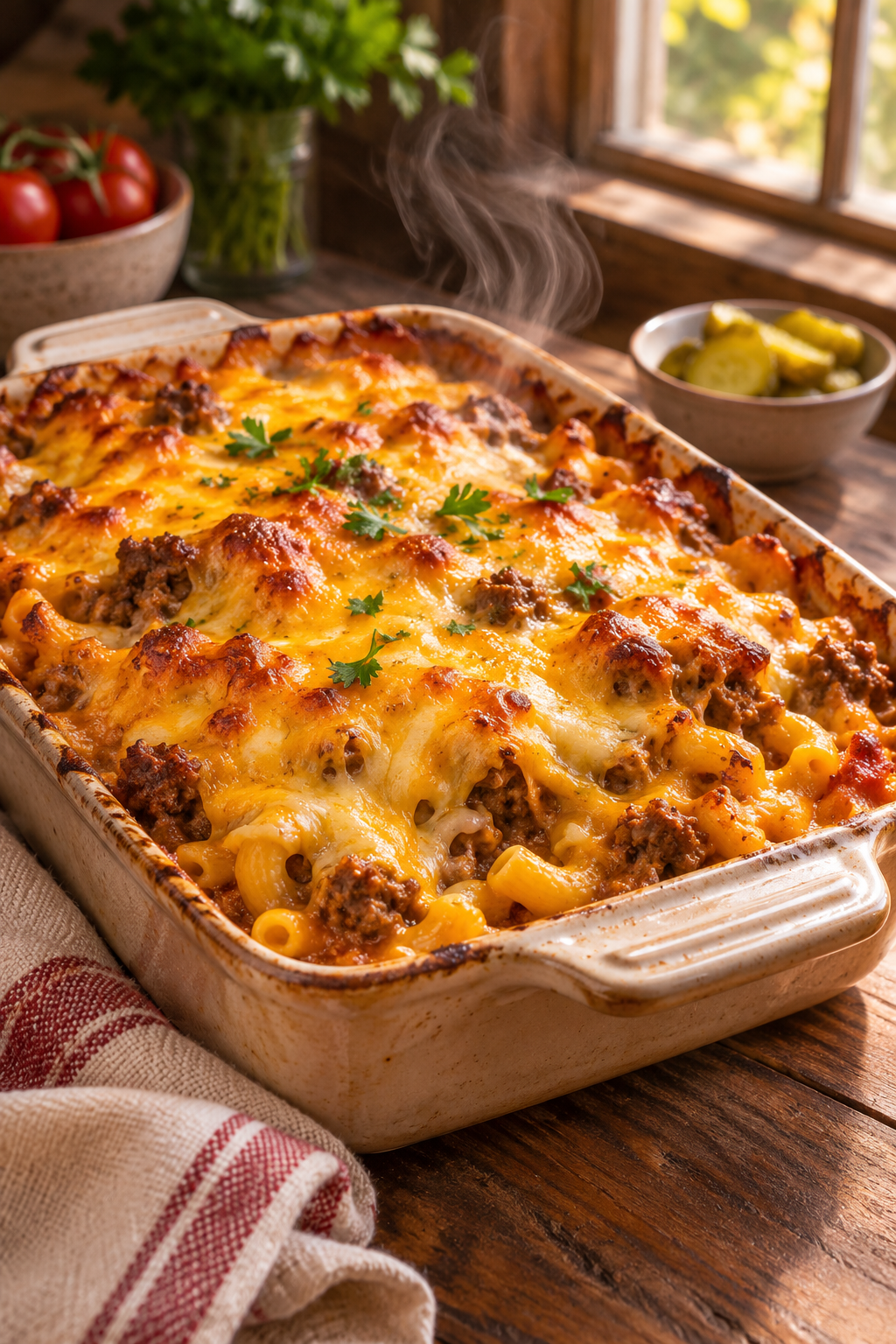



Beef cheek ragu pasta is a deeply savory dinner built around tender braised beef, a rich tomato and red-wine sauce, and pasta that catches every glossy spoonful. The long simmer is mostly hands-off, and the finished ragu can be made ahead so the final meal comes together quickly. Browning the beef, softening the vegetables, and reducing the sauce give this comforting dish a layered flavor that tastes special enough for a weekend but practical enough for a family table.
What is beef cheek ragu pasta?
Beef cheek ragu is a slow-cooked meat sauce made from beef cheeks, aromatic vegetables, tomatoes, wine, and stock. Beef cheeks contain connective tissue that melts during gentle cooking, creating meat that shreds easily and a sauce with natural body. Tossing that ragu with short pasta turns the braise into a complete meal. This version keeps the ingredient list familiar and lets time do most of the work.
Why this recipe works
High heat at the beginning develops browned flavor on the beef and vegetables. Wine loosens the flavorful bits from the pot, while tomatoes provide acidity and stock helps create a savory cooking liquid. The sauce is reduced after the beef is shredded, so it clings to pasta instead of pooling at the bottom of the bowl. Finishing with parmesan and parsley adds salty richness and freshness.
Ingredients for beef cheek ragu
- 2 lb trimmed beef cheeks
- 1 lb rigatoni or other short pasta
- 1 large diced yellow onion
- 2 diced carrots and 2 diced celery stalks
- 4 minced garlic cloves
- 2 cups crushed tomatoes
- 1 cup dry red wine
- 2 cups beef stock
- 2 tablespoons olive oil
- 1 teaspoon kosher salt and 1/2 teaspoon black pepper
- Finely grated parmesan and chopped parsley, optional for serving
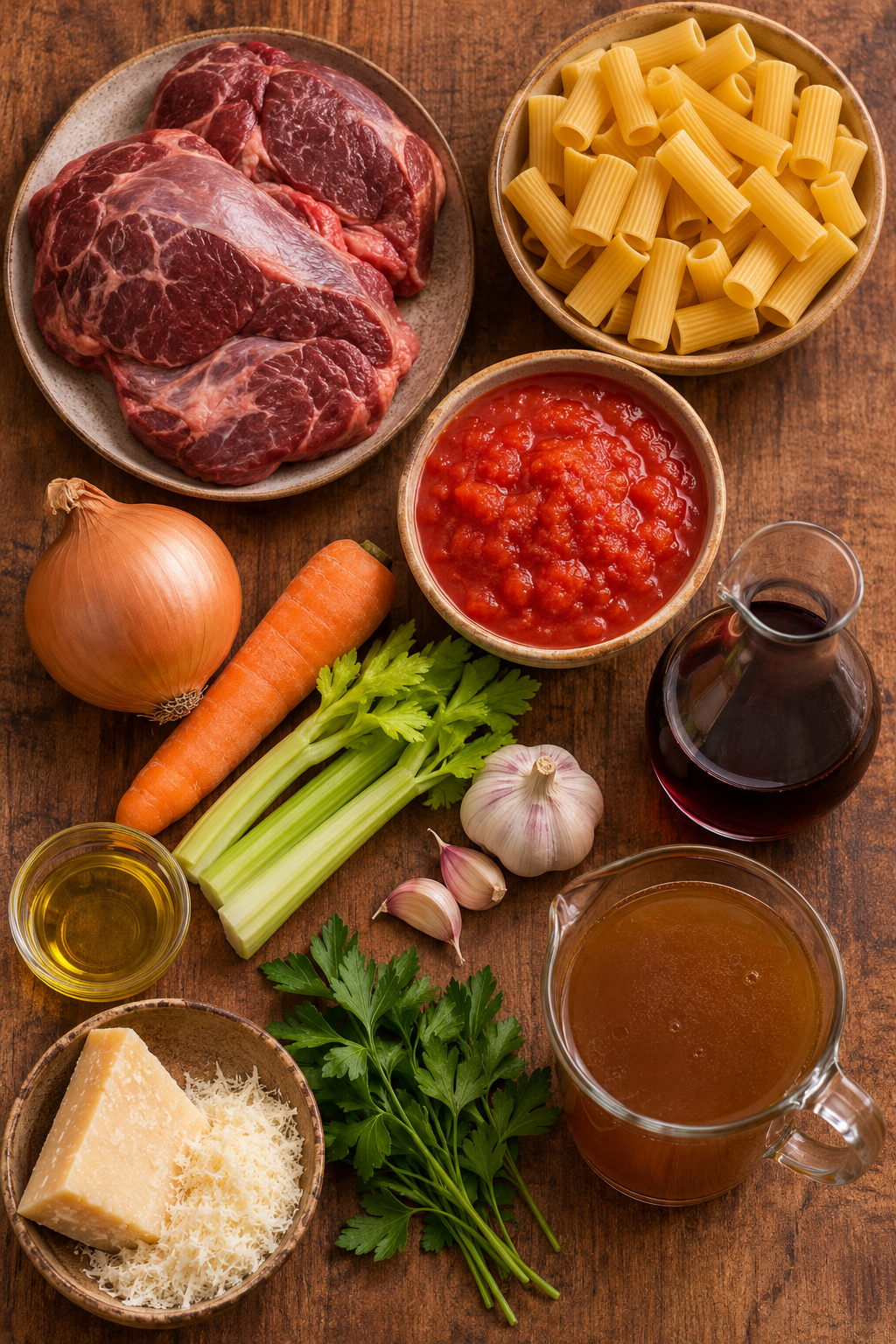
Use a wine you would enjoy drinking, but it does not need to be expensive. If your beef cheeks are very large, ask the butcher to trim them or divide them into similarly sized pieces so they cook evenly.
How to make the ragu
Heat the olive oil in a heavy Dutch oven. Season the beef cheeks with salt and pepper, then brown them well on all sides. Transfer to a plate. Add the onion, carrots, and celery to the pot and cook until softened. Stir in the garlic for 30 seconds.
Pour in the red wine and scrape up the browned bits. Simmer for 3 minutes, then add the tomatoes and beef stock. Return the beef cheeks to the pot. Cover and simmer very gently for about 3 hours, until the meat is fork-tender.
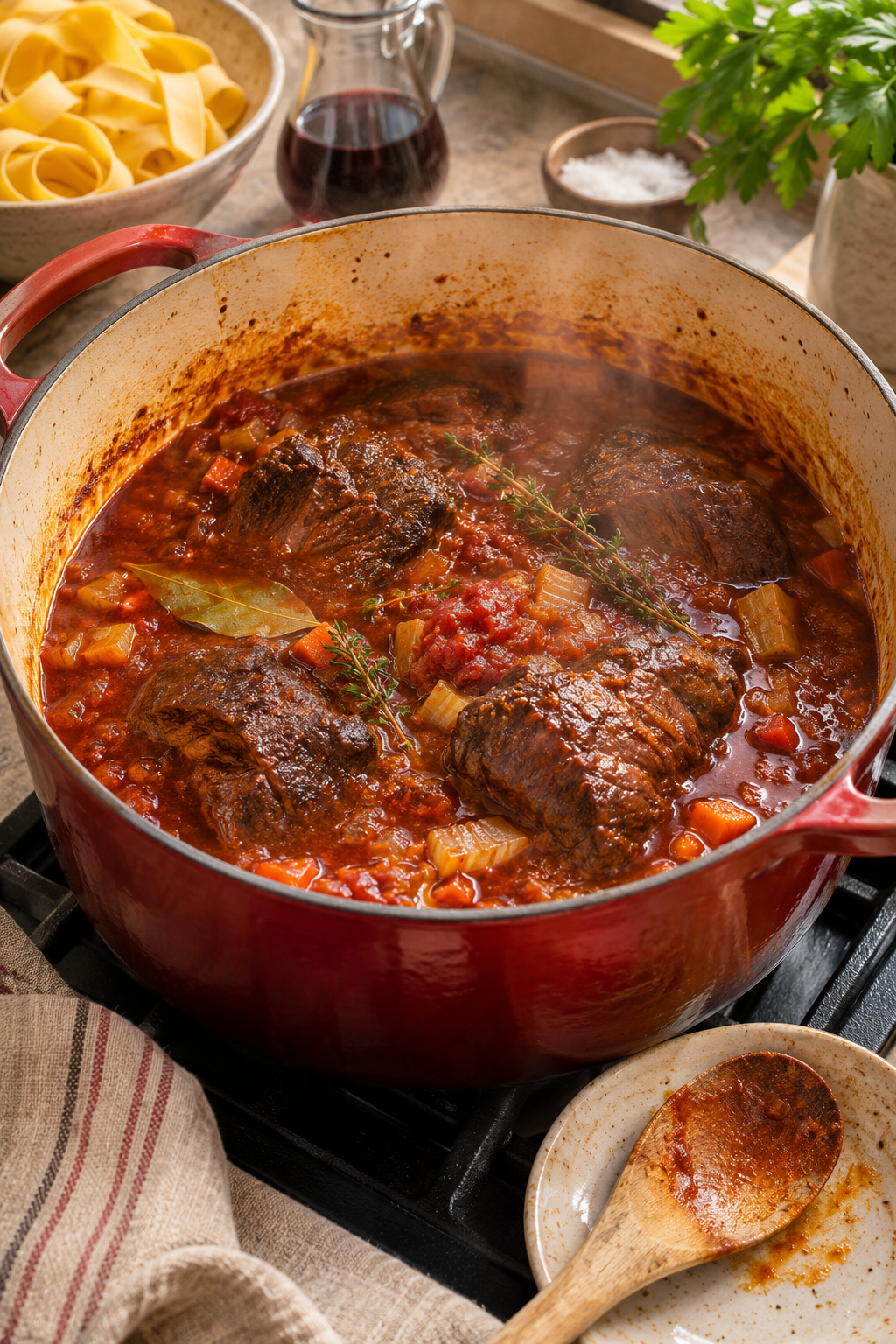
Transfer the beef to a bowl and shred it. Return the meat to the sauce and simmer uncovered until thick and glossy. Cook the pasta in well-salted water until just tender. Reserve a cup of pasta water, then drain. Toss the pasta with enough ragu to coat it, loosening with pasta water as needed. Serve with parmesan and parsley.
Cooking tips for tender beef
Keep the braise at a gentle simmer rather than a rolling boil. Vigorous bubbling can make the outside of the meat tighten before the connective tissue has time to soften. Check the pot after two and a half hours, but judge doneness by texture rather than the clock. A fork should slide into the beef easily and the meat should separate without force. If the sauce is still thin after shredding, leave the lid off and reduce it gradually.
Choosing and finishing the pasta
Rigatoni is a reliable choice because its ridges and hollow center hold the thick sauce. Fusilli, shells, pappardelle, or another sturdy shape can also work. Salt the pasta water well, and stop cooking when the pasta is just tender because it will receive more heat when tossed with the ragu. Reserve pasta water before draining; its starch helps loosen the sauce while keeping it glossy.
Optional variation and serving ideas
Optional variation: add a small rosemary sprig or a pinch of chili flakes to the braising liquid, then remove the rosemary before shredding the beef. This is an optional change, not part of the primary recipe. For serving, add parmesan, parsley, and a crack of black pepper. A crisp green salad or roasted vegetables make a fresh contrast to the rich sauce. Warm, crusty bread is useful for catching any sauce left in the bowl.
Make-ahead, storage, and reheating
The ragu can be cooked a day ahead. Cool it promptly, cover it, and refrigerate it separately from the pasta. The flavor often becomes even rounder after resting overnight. Reheat the sauce gently in a saucepan with a splash of stock or water, stirring until hot throughout. Cook fresh pasta for the best texture. Leftover sauce can be frozen in a well-sealed container; thaw it in the refrigerator and reheat gently rather than cooking it from frozen in a hot pan.
Beef cheek ragu questions answered
How do I know the beef is ready? It is ready when a fork enters easily and the meat shreds with little resistance. If it still feels firm, continue the gentle braise and check again after 20 to 30 minutes.
Can I use another cut? Yes. Beef chuck is a practical substitute, although the cooking time may vary with the size of the pieces. Keep the same low, slow approach and use texture as your guide.
Can I freeze the ragu? Yes. Freeze the sauce without pasta, cool it first, and store it in a labeled airtight container. Thaw in the refrigerator, then reheat until steaming hot.
Beef cheek ragu pasta FAQs
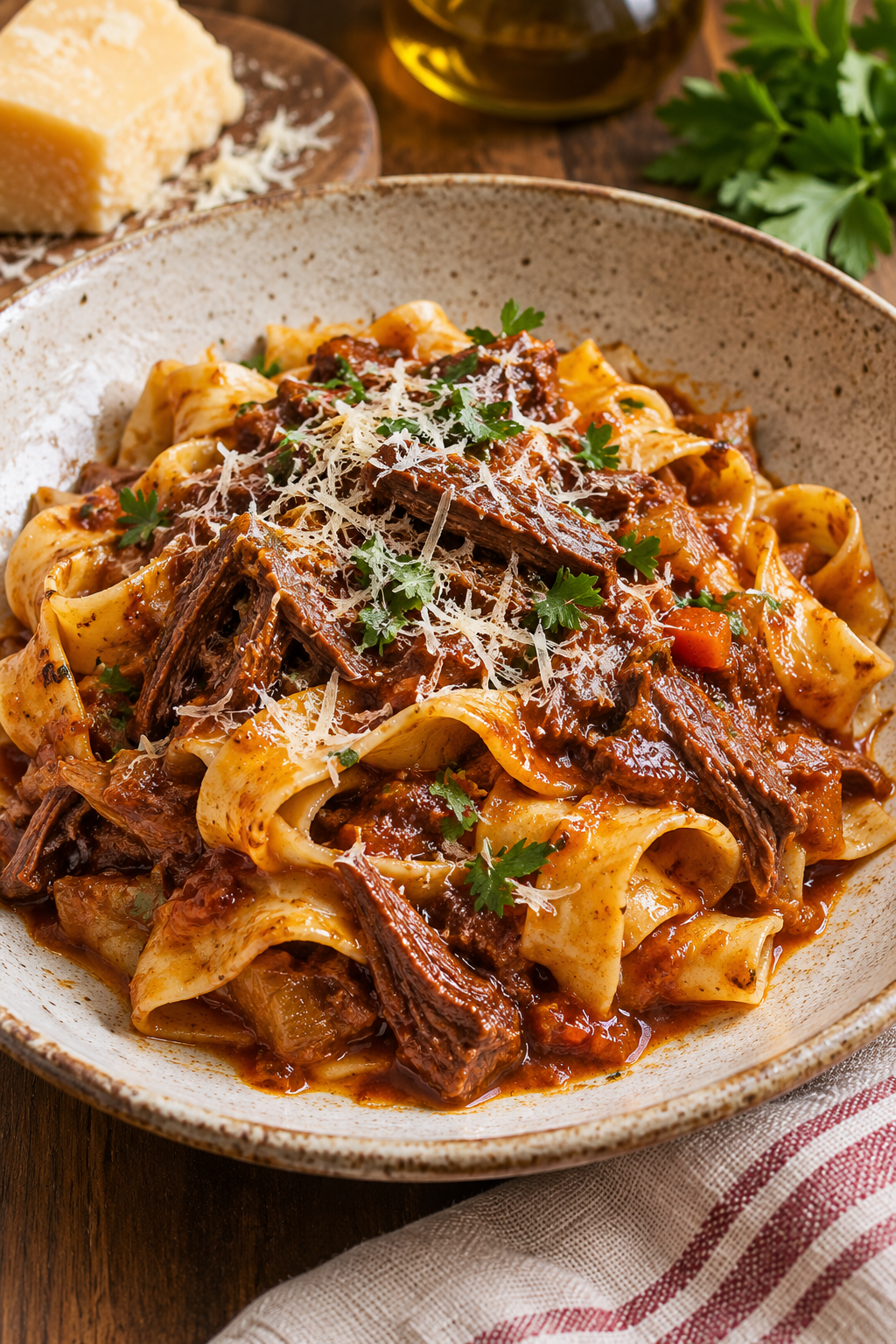
This beef cheek ragu pasta rewards a slow simmer with a rich, comforting texture. Brown the beef well, keep the cooking gentle, and finish by tossing the pasta directly through the sauce. Those small details turn a straightforward braise into a satisfying dinner with plenty of sauce in every bite.

Beef Cheek Ragu Pasta
Adjust the serving amount to scale the ingredient list. Written quantities in the steps refer to the original recipe; adjust them in the same proportion. Timing may vary with batch size.
Ingredients
Ingredients
- 2 lb beef cheeks trimmed
- 1 lb rigatoni or other short pasta
- 1 large yellow onion diced
- 2 medium carrots diced
- 2 stalks celery diced
- 4 cloves garlic minced
- 2 cups crushed tomatoes
- 1 cup dry red wine
- 2 cups beef stock
- 2 tablespoons olive oil
- 1 teaspoon kosher salt plus more for pasta water
- 1/2 teaspoon black pepper
- 1/2 cup finely grated parmesan for serving
- 2 tablespoons chopped parsley for serving
Instructions
Instructions
- Heat the olive oil in a heavy Dutch oven. Season the beef cheeks with salt and pepper, then brown them well on all sides. Transfer to a plate.
- Add the onion, carrots, and celery to the pot and cook until softened. Stir in the garlic for 30 seconds.
- Pour in the red wine and scrape up the browned bits. Simmer for 3 minutes, then add the tomatoes and beef stock.
- Return the beef cheeks to the pot. Cover and simmer very gently for about 3 hours, until the meat is fork-tender.
- Transfer the beef to a bowl and shred it. Return the meat to the sauce and simmer uncovered until thick and glossy.
- Cook the pasta in well-salted water until just tender. Reserve a cup of pasta water, then drain.
- Toss the pasta with enough ragu to coat it, loosening with pasta water as needed. Serve with parmesan and parsley.