

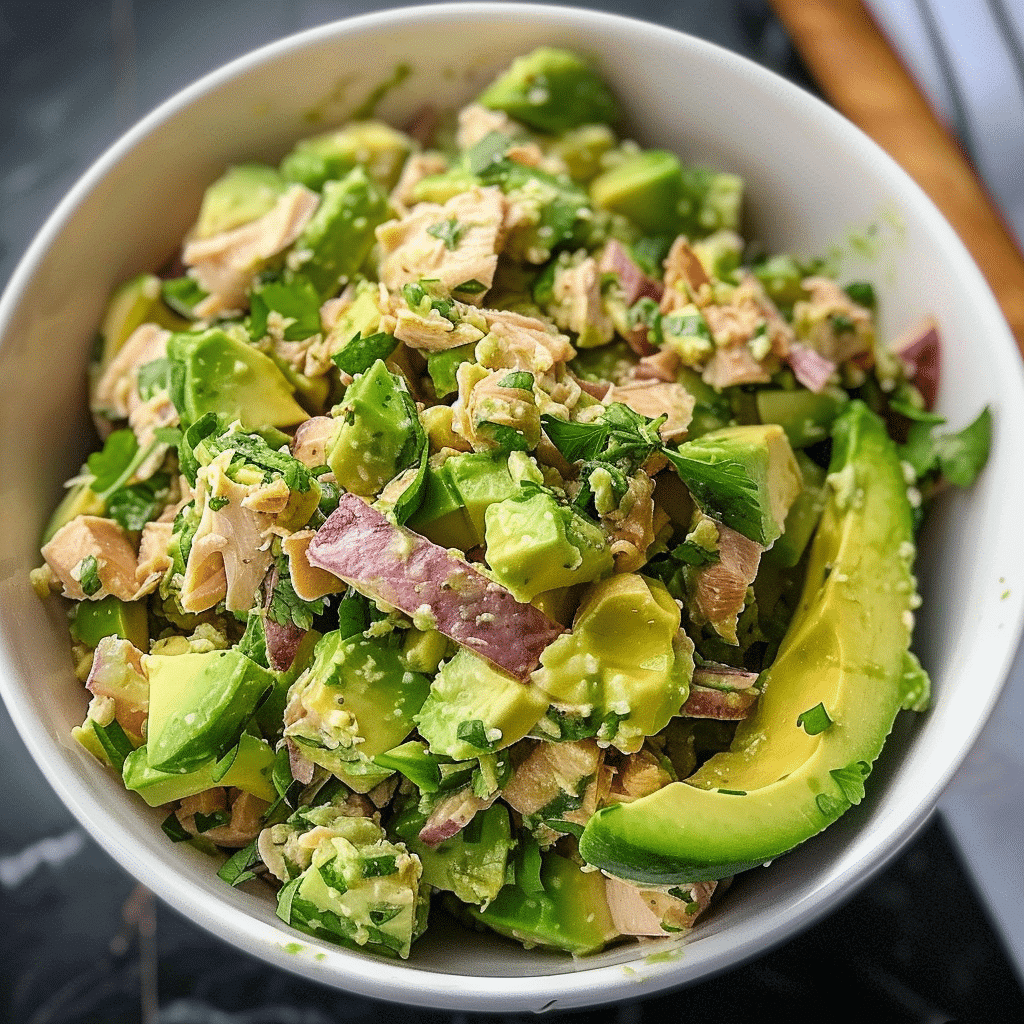
The first time I tasted seared tuna, it felt like a little vacation in a bite—bright, clean, and somehow comforting all at once. I’ll never forget the way the tuna sang against crisp greens and a zingy citrus dressing. This seared Tuna Salad became my go-to weeknight hero: fast, lighter than a heavy pasta dish, and endlessly adaptable. I always reach for this when I’m craving something salty and fresh, but I don’t want to cook for hours. It’s also a perfect dish to showcase a simple, gorgeous piece of tuna—the kind of meal that makes you feel like a cherished home cook, even if you’re juggling a million things. This is one of those recipes that disappears from the plate in minutes around my house, and the kids beg for seconds every time. It’s a little like tuna poke meets a vibrant greens salad—easy, vibrant, and incredibly satisfying.

What is a seared tuna salad?
Think of Seared Tuna Salad as a bright, flexible concept: a crisp, leafy base topped with perfectly seared tuna, then finished with a lively dressing and a handful of textures like avocado, cucumber, sesame, or radish. It’s essentially a clean, protein-forward salad that celebrates the tuna’s natural richness without overwhelming it with heavy sauces. The name comes from the star ingredient—tuna that’s quickly seared on high heat to form a bronzed crust while staying tender and almost sashimi-rare in the center—resting on greens that crackle with freshness. It’s a dish you can tailor to what you have on hand: a sesame-ginger twist one week, a lemon-dill breeze the next, or a spicy chili-lime version when you’re craving something with a little edge. I love that it’s “on the table” in under 20 minutes, so it’s perfect for busy weeknights or a relaxed weekend lunch with friends.
Why you’ll love this recipe?
What I love most about this seared tuna salad is how it balances textures and flavors in a single bowl. The tuna itself is a quick, almost instantaneous moment of cooking—season, sear, rest, slice. The greens stay crisp, the avocado smooth, and the dressing perks everything up with a bright kiss of acidity. This dish is incredibly forgiving: you can swap greens, add cherry tomatoes, or toss in a handful of roasted almonds for extra crunch. It’s also economical if you’re selective about your tuna and use a fresh, responsibly sourced piece. The simplicity is a relief—no long simmering, no heavy sauces—just good ingredients treated with a light, confident hand. I’ve served variations of this salad at countless family dinners, and what surprised me every time is how it feels celebratory without being fussy. My kids actually ask for seconds, which says everything about its approachable, bright flavor. If you’re cooking for guests, you’ll have a dish that looks and tastes clean, elegant, and comforting all at once.
How do I make a seared tuna salad?
Quick Overview
This is a “don’t overthink it” kind of recipe. Sear a firm-cut tuna steak just until it develops a bronzy crust on the outside while staying pink inside, slice it into elegant medallions, and nestle it on a bed of crisp greens. Whip together a zesty, citrusy dressing, drizzle it over the greens, and finish with avocado, cucumber, sesame, or pickled onions—whatever you crave. The beauty is in the contrast: seared, caramelized edges with a tender center, plus a bright dressing that keeps everything feeling fresh and alive.
Ingredients
For Seared Tuna: For the Seared Tuna: For the Seared Tuna: For the Seared Tuna: For the Seared
- 2 tuna steaks, about 6 oz each, fresh and sashimi-grade
- 1 tablespoon olive oil (neutral flavor)
- Salt and freshly ground Black Pepper
- Optional: a pinch of sesame seeds for crust and aroma
For the Salad Base:
- 5 cups mixed greens (baby arugula, spinach, and romaine all together are delicious)
- 1 avocado, sliced
- 1 small cucumber, thinly sliced
- 1/4 red onion, thinly sliced or shaved
- Radishes or cherry tomatoes for color (optional)
For the Dressing:
- 3 tablespoons fresh lemon juice or half lemon + half orange for a milder sweetness
- 1 tablespoon rice vinegar or APPLE CIDER vinegar
- 1 teaspoon Dijon mustard
- 1/2 teaspoon honey or a pinch of sugar (optional, to taste)
- 3 tablespoons olive oil
- Salt and pepper to taste
- Optional: a small drop of sesame oil for aroma
For the Garnish:
- Toasted sesame seeds (white or black)
- Fresh herbs (cilantro or chives) for brightness
Step-by-Step Instructions
Step 1: Preheat & Prep Pan
Heat a heavy skillet (cast iron is my favorite) over medium-high heat until it’s shimmering hot. You want that clean sizzle when the tuna hits the pan. Pat the tuna dry with paper towels—wet meat sticks to the pan and stops that crust from forming. Brush both sides with olive oil and season generously with salt and pepper. If you like a little sesame aroma, roll the edges in sesame seeds for a delicate crust.
Step 2: Sear the Tuna
When the pan is hot, lay the tuna down away from you to avoid splatter. Don’t move it for 45–60 seconds; you’re after a rich, caramelized crust. Flip carefully and sear the other side for 30–45 seconds for a center that’s nice and pink. The seconds matter here—you’re aiming for a tender, almost sashimi center with a crust that has real bite.
Step 3: Rest & Slice
Transfer the tuna to a cutting board and let it rest for about 5 minutes. Resting keeps the juices in and makes slicing easier. Slice the steaks into thick medallions or bite-sized strips, whichever you prefer for your salad arrangement.
Step 4: Make the Dressing
Whisk together lemon juice, vinegar, Dijon, and honey until emulsified. Slowly drizzle in olive oil while whisking to create a glossy, cohesive dressing. Season with salt and pepper to taste. If you’re feeling a little fancy, add a drop of sesame oil for a toasty finish.
Step 5: Prep the Salad Base
Wash and dry your greens thoroughly—any moisture will dampen the crispness. Slice avocado, cucumber, and red onion. If you like radishes for crunch and contrast, set them on standby. Toss greens lightly with a portion of the dressing so they’re lightly coated, not drenched.
Step 6: Layer & Build
Spread the dressed greens on a wide plate or shallow bowl. Neatly arrange the avocado slices and cucumber on top. Scatter red onion and radishes for color. Place the seared tuna medallions across the greens in a pleasing pattern—think restaurant-plating vibes at home.
Step 7: Add the Finishing Touches
Drizzle a touch more dressing over the tuna to keep it glossy, then sprinkle toasted sesame seeds and fresh herbs. The sesame seeds aren’t just flavor; they add a tiny crunch and aroma you’ll notice with each bite.
Step 8: Let It Talk
Give the salad a minute or two so the flavors mingle. The citrus from the dressing wakes up the greens, and the tuna’s richness softens without overpowering the dish. It’s all about balance—crisp greens, velvety avocado, and a tuna that’s perfectly seared.
Step 9: Slice & Serve
Slice the tuna once more across its grain for tenderness and serve immediately. This salad shines when the greens stay crisp and the tuna remains just warm enough to be inviting. If you’re sharing with friends, invite everyone to take a turn plating, so the presentation stays vibrant and personal.
What to Serve It With
This seared tuna salad is at home in so many settings, and I love thinking about it in different corners of the day. It’s a flexible, bright dish that can seamlessly become a lunch basket favorite, a light dinner, or even a fancy brunch plate.
For Breakfast: A playful brunch plate with a slice of Crusty Bread, a smear of creamy avocado, and a tiny dollop of chili-lime dressing. The brightness of lemon with a soft tuna bite can wake up a sleepy morning. I’ve served this with a hot mug of coffee or a sparkling citrus mocktail, and it feels like a sunny kitchen in the early hours.
For Brunch: A more polished version: arrange the tuna slices over a nest of greens, add grapefruit segments, and drizzle with a light zest vinaigrette. Pair with a cold-pressed juice or a crisp sparkling wine if you’re feeling festive. It looks and tastes like a celebration without the fuss.
As Dessert: Okay, not literal dessert, but think of this as a “save-your-sweet-tooth” plate. If you want a dessert-like finish, you can serve a citrusy sorbet on the side and a few orange segments to brighten the plate. It’s a refreshing finish after a fuller, savory course and leaves everyone satisfied without heaviness.
For Cozy Snacks: Set up a mini salad bar: bowls of greens, sliced tuna, avocado, cucumber, and a few bowls of different dressings. It’s a casual, comforting scenario—great for a movie night where you want something healthy but indulgent at the same time.
My family loves assembling this together. It feels interactive, and you get that “made with love” vibe even when you’re whipping it up after a long day. The dressing is always a standout—lightly tangy, with a kiss of sweetness, and the tuna crowns it with a rich, meaty center that makes everyone smile.
Top Tips for Perfecting Your Seared Tuna Salad
These little tweaks are what take this from good to “I’ll make this every week.” I’ve learned each one through trial and a few kitchen mishaps, so trust me on these.
Tuna Prep: Choose tuna steaks labeled sushi-grade or sashimi-grade if possible. Dry the surface thoroughly; moisture is the enemy of a good crust. If you’re pan-searing multiple steaks, pat them dry again after moisture releases from the surface as they rest on the counter. I learned early on that the crust forms best when the surface is dry, and the pan is hot enough to hiss on contact.
Dressing Emulsification: Start with the acid, then whisk in the oil slowly, drizzle-by-drizzle. If your dressing looks separated, whisk vigorously for a minute or two or shake it in a jar. A well-emulsified dressing clings to greens and coats each bite.
Searing Temperature: A smoking-hot pan is your best friend. If you see steam or a lot of splatter, your pan is hot enough. If it’s not sizzling, give it another minute. The goal is a crust that’s deeply colored with light pink inside, not a gray edge that’s tough.
Greens Prep: Dry greens truly matter. If you’re prepping ahead, wash, spin dry, and store in a bag with a paper towel to absorb excess moisture. It keeps the greens crisp the moment you dress them.
Ingredient Swaps: Don’t have arugula? A mix of romaine and baby spinach works beautifully. Avocado can be swapped for sliced mango for a touch of sweetness or pineapple for brightness. If you want more crunch, toss in chopped almonds or sunflower seeds. I’ve even used quinoa for extra heft on meals when I want more of a complete bowl.
Baking Tips: Not needed here, but I’ll share a tip: if you’re searing and want a slightly warmer center, give the tuna an extra 15–20 seconds per side. Do it in small increments and check the color inside with a quick press test. Don’t overdo it—the tuna should still be soft inside.
Glaze Variations: A quick glaze can change the mood of the dish. Try a sesame-soy glaze reduced with a touch of honey, or a citrus honey glaze with a splash of fish sauce for a salty-sweet finish. Brush it on the tuna just before serving for a glossy finish and extra aroma.
In the end, the simplest approach—great ingredients, quick sear, crisp greens, and a bright dressing—will deliver a dish that tastes like a little celebration. I’ve tested this with different greens, different citrus, and even a drizzle of chili oil, and the core of the idea remains the same: keep it fresh, keep it balanced, and keep it fast.
Storing and Reheating Tips
This salad is best enjoyed fresh, but with a little planning, you can make it work for leftovers too. Here’s how I handle it so the flavors stay vibrant.
Room Temperature: If you’re serving immediately, the greens should be at room temperature and the tuna warm from the pan. If you’ve cooked ahead, let the components come to a comfortable temperature separately before combining.
Refrigerator Storage: Store the seared tuna separately from the greens. Keep the greens in a tight container with a paper towel to wick up any moisture. The dressing can be kept in a small jar for a couple of days, but the salad will wilt if dressed in advance. I recommend dressing lightly or serving dressing on the side.
Freezer Instructions: This dish isn’t ideal for freezing as greens lose their crispness and the avocado texture can change. If you must prep components ahead, freeze tuna only if it’s already cooked and cooled, then thaw in the fridge before serving. The greens and dressing won’t re-freeze well.
Glaze Timing Advice: If you’re planning to add a glaze after storing, apply it just before serving to keep that glossy, fresh look and the bright flavor hitting your palate.
With these tips, you’ll keep every bite as bright and delicious as the first one you tasted right out of the pan.
Frequently Asked Questions
Final Thoughts
Seared Tuna Salad isn’t just a meal; it’s a tiny map to a moment when dinner feels effortless but still special. The combination of a hot, caramelized crust on the tuna with crisp greens and a citrusy dressing is like a quick vacation in your own kitchen. It’s bright, it’s nourishing, and it respects the fish enough to let its natural sweetness shine through. I’ve made this countless times for friends who drop by with empty stomachs and full hearts, and it never fails to bring a smile. If you’re looking for a flexible, crowd-pleasing dish that’s still light and sophisticated, this is your go-to. I encourage you to play with greens, add a handful of herbs you love, or swap in a little mango or grilled corn for sweetness. Most importantly, cook it with the confidence that comes from knowing you’ve got this in the bag. Happy cooking! And please, drop a comment with your own twist—I love hearing how you customize it. Can’t wait to hear how yours turns out!

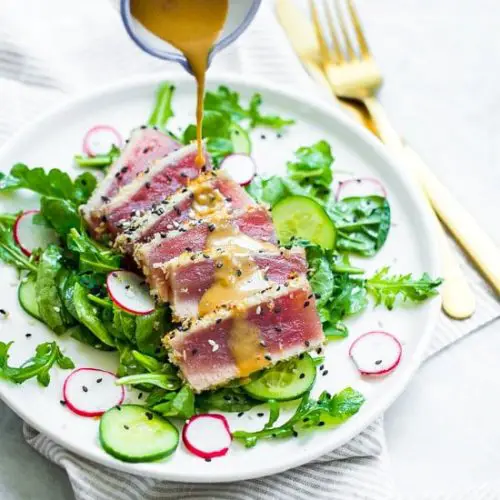
Seared Tuna Salad with Wasabi Butter Sauce
Ingredients
For the Tuna
- 0.5 cup panko bread crumbs
- 3 tablespoons black and white sesame seeds
- 4 5-ounce raw ahi or yellowfin tuna steaks I used Trader Joes frozen ahi tuna steaks
- 0.5 teaspoon kosher salt
- Freshly ground black pepper to taste
- Canola oil or cooking spray
For the Wasabi Butter Sauce
- 2 tablespoons reduced sodium or gluten-free soy sauce
- 1 teaspoon prepared wasabi paste
- 2 teaspoons minced shallots
- 0.25 cup dry white wine I used Sauvignon Blanc
- 2 tablespoons whole milk
- 2 tablespoons unsalted butter
For Serving
- 4 cups fresh baby arugula
- 4 cups fresh baby spinach
- Sliced radish for garnish (optional)
- Sliced cucumber for garnish (optional)
Instructions
Preparation Steps
- In a shallow bowl or on a plate, combine the panko bread crumbs and sesame seeds.
- Season the tuna steaks with salt and pepper. Gently press both sides of each tuna steak into the crumb mixture to coat.
- Heat a large skillet over medium-high heat and lightly coat with oil or cooking spray.
- Add two tuna steaks to the hot skillet. Sear for 2-3 minutes per side, or until the outer edge is opaque but the center is still rare. Repeat with the remaining tuna steaks.
- Remove the tuna from the skillet and let it rest on a cutting board.
- While the tuna rests, prepare the sauce. In a small bowl, whisk together the soy sauce and wasabi paste.
- In a small skillet over medium-low heat, add the shallots and white wine. Simmer until reduced by half (about 2-3 minutes).
- Add the milk to the skillet and whisk constantly until the sauce is slightly thickened and no longer looks separated (about 1 minute).
- Remove the sauce from the heat. Whisk in the soy sauce and wasabi mixture, then whisk in the butter until fully combined.
- To serve, divide the arugula and spinach evenly among four shallow bowls. Thinly slice the rested tuna steaks and place on top of the greens. Drizzle each serving with about 1.5 tablespoons of the wasabi butter sauce. Garnish with sliced radish and cucumber if desired. Serve immediately.