

There’s something about the sizzle and aroma of Korean pork bulgogi cooking on the stove that immediately transports me back to my first trip to Seoul. That sweet, savory, slightly smoky scent fills the kitchen like a warm hug — and I swear you can almost taste the layers of flavor in the air before it even hits your plate. It’s one of those recipes that’s deceptively simple but somehow manages to taste like a labor of love. If you’ve ever fallen for the classic beef bulgogi, wait ‘til you try pork — it’s a little juicier, a little heartier, and honestly, my kids ask for this one nearly every week. Korean pork bulgogi is like the best of home cooking meets vibrant street food magic. Plus, it’s surprisingly quick to whip up on busy nights when you just want something delicious without fussing.
What is Korean Pork Bulgogi?
Think of Korean pork bulgogi as the flavorful cousin to traditional beef bulgogi, but with pork as the star of the show. Bulgogi literally means “fire meat” in Korean, originally referring to marinated and grilled thin slices of meat cooked over an open flame. It’s essentially pork (usually shoulder or belly cuts) sliced thin and soaked in a luscious marinade made with soy sauce, garlic, sugar, and plenty of that glorious Korean chili paste called gochujang. The marinade infuses the meat with deep umami and a perfect balance of sweet and spicy flavors. It’s a dish that’s both familiar and exciting — and a beautiful example of Korean cooking’s knack for layering simple ingredients into something unforgettable.
Why you’ll love this recipe?
Okay, let me just say — this Korean pork bulgogi recipe is an absolute gem. What I love most is how it nails that complex umami flavor with just a handful of pantry staples you probably already have sitting around. The marinade blends salty, sweet, tangy, and a bit of heat in just the right way. It’s like a flavor party in your mouth every single time. I also can’t resist sharing how insanely easy this is to pull together: no crazy equipment or long marinating times are needed. Toss everything together, and you’re on your way. Plus, pork is usually more budget-friendly than beef, so making this for family dinners is downright wallet-friendly too.
Versatility? Absolutely. We’ve eaten Korean pork bulgogi straight from the pan, wrapped in crisp lettuce leaves with rice and kimchi, and even tucked into quick homemade tacos when friends come over unexpectedly. It also pairs wonderfully with simple sides like steamed rice, pickled veggies, or even stir-fried greens. Honestly, this recipe feels like a secret weapon for me — it’s something I reach for when I want genuine flavor but minimal fuss. And I’m not alone; whenever I bring it to potlucks or casual dinners, it disappears fast.
How do I make Korean Pork Bulgogi?
Quick Overview
This recipe is basically all about creating an irresistible marinade, thinly slicing your pork, letting those juicy flavors do their magic, and then cooking everything up quickly in a hot pan. I like to marinate the pork for at least 30 minutes, but if you’re like me and forget, even 15 minutes will do in a pinch. The secret is the combination of soy sauce, Brown Sugar, garlic, ginger, and that addictive gochujang sauce that gives it character. Stir-fry everything over medium-high heat till the edges caramelize and it’s all nicely coated in that glossy sauce. The smell alone is going to have you hovering.
Ingredients
For the Pork Bulgogi Marinade:
- 1 lb thinly sliced pork shoulder or pork belly (ask your butcher for ‘bulgogi cut’ if possible)
- 3 tbsp soy sauce (go for low sodium to manage salt levels)
- 2 tbsp gochujang (Korean red chili paste – adjust depending on your heat preference)
- 1 tbsp toasted sesame oil (adds amazing aroma)
- 1 tbsp brown sugar (balances out heat and salt)
- 4 cloves garlic, minced (totally non-negotiable here)
- 1-inch knob fresh ginger, grated
- 1 small onion, thinly sliced (optional, but I always add)
- 1 tsp freshly ground Black Pepper
- 1 tbsp rice vinegar or Mirin (for a little tang and depth)
- 2 green onions, sliced thinly (for garnish and some fresh bite)
Step-by-Step Instructions
Step 1: Preheat & Prep Pan
Get your skillet or heavy bottom pan heating over medium-high heat. I usually start this before assembling the marinade because the pan needs to be hot enough for a good sear without crowding the pork. If you have a cast iron skillet, this is the time to bring it in — it handles the heat like a champ and helps build that gorgeous caramelization.
Step 2: Mix Marinade Ingredients
In a bowl, whisk together the soy sauce, gochujang, sesame oil, brown sugar, garlic, ginger, Black Pepper, and rice vinegar. Give it a quick taste — it should have a balance of sweet, fiery, and salty that’ll wake your senses. This mix is the foundation of your magic.
Step 3: Marinate the Pork
Toss your thinly sliced pork and onion slices into the marinade. Make sure everything gets a good coating. Cover and let it sit at room temperature for 30 minutes, or pop it in the fridge if you prefer to marinate longer (overnight is fine too). The pork soaks up all those flavors and gets incredibly tender.
Step 4: Cook the Pork
Once your pan is hot, add the pork mixture in a single layer. You might need to do this in batches — overcrowding will steam your meat instead of giving it that lovely char. Let it cook undisturbed for a couple of minutes, then stir-fry until the pork is cooked through and caramelized on the edges, about 5-7 minutes total. The sauce will thicken and cling beautifully as it cooks down.
Step 5: Garnish & Serve
Once off the heat, scatter sliced green onions and a sprinkle of toasted sesame seeds on top. The fresh crunch from the green onions is a game-changer, trust me. Serve immediately while it’s at its juiciest and hottest.
What to Serve It With
For Lunch or Dinner: I’m a big fan of serving Korean pork bulgogi with fluffy steamed rice and a side of bright, crunchy kimchi. The contrast between the warm, sweet meat and the tangy fermented cabbage is heavenly. If you want to get fancy, quick Cucumber Salad or sautéed spinach with garlic make perfect companions.
For Lettuce Wraps: When my family gathers, we love wrapping spoonfuls of the pork bulgogi into fresh lettuce leaves, adding a dab of ssamjang (spicy dipping sauce), and topping with sliced garlic or chili slices — it’s interactive and so fun.
For Quick Weeknight Meals: Toss bulgogi into a bowl with rice, a fried egg on top, and some diced avocado for a creamy twist. My husband’s go-to late-night meal, honestly.
For Snack or Appetizer: Use bulgogi filling as a topping on crispy fried tofu or folded into savory pancakes (pajeon). My friends and I swear by these little party snacks.
Top Tips for Perfecting Your Korean Pork Bulgogi
Choosing the Pork: I always recommend using thinly sliced pork shoulder or thin belly. If your butcher can slice it for you, even better. Thicker cuts will need longer cooking times and won’t soak up the marinade as well.
Marinating Time: I’ve learned that while a quick 15-minute marinate does the trick in a pinch, letting it hang out for an hour or overnight really elevates the tenderness and flavor depth.
Adjusting Heat: Gochujang brings spicy-sweet notes, but if you want something milder, start with 1 tbsp and build up gradually. You can also mix in a little honey if you prefer extra sweetness to balance the heat.
Cooking Technique: Don’t move the pork around too much at first. Let it get that perfect seared edge — it adds texture and sweetness. Then stir and toss to cook evenly.
Adding Veggies: Throw in thinly sliced carrots or mushrooms to the pan for extra texture and nutrition. They soak up the sauce nicely.
Serving Ideas: I tested serving bulgogi cold in rice paper rolls — an unexpected but fantastic summer twist. It’s fresh and portable for picnics.
Storing and Reheating Tips
Room Temperature: If left out, make sure to cover and eat within 2 hours to keep things fresh and safe. The smell alone will have you tempted to dive in immediately!
Refrigerator Storage: Store in an airtight container for up to 3 days. Reheat gently on the stovetop or microwave, but avoid overheating — it can dry out the pork.
Freezer Instructions: Pops great in the freezer if you want to meal prep! Portion into freezer bags or containers, freeze for up to 2 months, and thaw overnight in the fridge. Reheat on low heat with a splash of water to revive the sauce.
Glaze Timing Advice: This recipe doesn’t require a separate glaze, but any extra sauce can be drizzled right before serving for an extra hit of flavor.
Frequently Asked Questions
Final Thoughts
I’m genuinely excited every time I make this Korean pork bulgogi because it never fails to bring smiles around the table. The way the pork soaks up that vibrant, slightly fiery marinade and caramelizes perfectly on the stove makes it feel special without being complicated—exactly what I look for on busy weeknights. Plus, it’s a fantastic intro to Korean flavors if you haven’t dived in yet, and a comforting staple once you do. This recipe has become a bit of a family tradition for us, from casual dinners to those spontaneous taco nights or lettuce wraps we throw together last minute. I’d love to hear how your bulgogi turns out—don’t be shy to tweak the heat or sweetness and make it your own. Drop a comment below, share your tips, or just say hi! Happy cooking, friend.

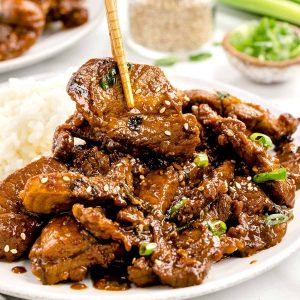
Korean pork bulgogi
Ingredients
Main Ingredients
- 2 pounds thinly sliced boneless pork butt
- 0.5 cup chopped yellow onion
- 0.75 cup chopped scallions divided into 0.5 cup for marinade and 0.25 cup for garnish
- 0.5 cup low-sodium soy sauce
- 0.25 cup grated apple 1 small Gala apple, peeled and shredded
- 3 tablespoons seasoned rice wine vinegar
- 3 tablespoons Gochujang Korean chili paste
- 3 tablespoons light brown sugar
- 1.5 tablespoons minced garlic
- 1 tablespoon grated ginger
- 2 teaspoons sesame oil
- 2 tablespoons peanut oil plus an additional 1 tablespoon if needed for extra cooking batches
- 0.25 teaspoon sesame seeds optional garnish
Instructions
Preparation Steps
- Add the thinly sliced pork butt, chopped yellow onion, and 0.5 cup chopped scallions in a large bowl. Set aside.
- Make the marinade in a small mixing bowl by whisking together the soy sauce, grated apple, seasoned rice wine vinegar, Gochujang Korean chili paste, light brown sugar, minced garlic, grated ginger, and sesame oil.
- Pour the marinade into the bowl of the pork and onions. Stir to fully coat all the pork with the marinade.
- Cover the bowl with plastic wrap and refrigerate for 1 hour or up to overnight to allow the pork to marinate and absorb the flavors.
- Add the peanut oil to a large, heavy-duty skillet on high heat. Once the oil is very hot, add half the marinated pork. Cook for 4-6 minutes. Remove the cooked pork to a serving plate and set aside.
- Add the remaining marinated pork to the skillet (add an additional 1 tablespoon of peanut oil if needed) and cook for another 4-6 minutes or until the pork is cooked through and the marinade thickens into a glaze.
- Add the second batch of cooked Korean BBQ pork to the serving plate and garnish with the remaining 0.25 cup of chopped scallions and optional sesame seeds.