


There are some dishes that just feel like a warm hug. You know, the kind that instantly transport you back to your grandma’s kitchen, the air thick with savory aromas and the promise of pure comfort. For me, that dish is a hearty beef vegetable stew. It’s not just food; it’s a memory, a feeling, and honestly, a lifesaver on those days when life feels a little too hectic. I’ve tried a gazillion stews over the years, from fancy French versions to quick weeknight concoctions, but this one, this classic, deeply satisfying beef vegetable stew, is the one that always, *always* hits the spot. It’s the kind of meal that makes everyone at the table stop talking and just savor each bite. My kids, who can be notoriously picky, will actually ask for seconds – and sometimes even thirds! It’s rich, it’s deeply flavorful, and packed with good-for-you veggies, making it a winner in my book and a staple in our family’s rotation. This is the stew I dream about when the weather turns chilly, or when I just need a little culinary comfort. Forget those bland, watery versions; this is the real deal, packed with so much goodness it’ll make your soul sing.
What is Beef Vegetable Stew?
So, what exactly *is* this magical beef vegetable stew that I’m raving about? Think of it as the ultimate one-pot wonder, a slow-cooked symphony of tender chunks of beef, robust root vegetables, and aromatic herbs simmered together in a rich, deeply savory broth. It’s essentially a culinary hug in a bowl, designed to warm you from the inside out. The “vegetable” part isn’t just an afterthought; it’s a crucial component, adding sweetness, texture, and a whole lot of goodness. We’re talking carrots, potatoes, celery, peas, and sometimes even a surprise veggie or two! The beauty of this dish lies in its simplicity and its ability to transform humble ingredients into something truly spectacular. It’s the kind of meal that feels incredibly nourishing and satisfying without being heavy or complicated. It’s Comfort Food at its finest, and it’s surprisingly accessible for even beginner cooks.
Why you’ll love this recipe?
Honestly, there are so many reasons why this beef vegetable stew has earned a permanent spot in my recipe repertoire. First and foremost, the FLAVOR. Oh my goodness, the flavor! It’s deep, savory, and complex, with a beautiful balance of richness from the beef and a touch of sweetness from the vegetables. The slow cooking process allows all those wonderful ingredients to meld together, creating a broth that’s simply irresistible. Then there’s the SIMPLICITY. While it takes a little time to simmer, the actual hands-on prep is minimal. You basically chop, brown, and then let it do its thing. It’s the perfect “set it and forget it” meal for busy weeknights, or a fantastic way to spend a lazy Sunday afternoon. And let’s talk COST-EFFICIENCY. This stew is incredibly budget-friendly. Using tougher cuts of beef that become wonderfully tender with slow cooking, along with staple vegetables, makes it an economical choice that doesn’t skimp on flavor. It’s proof that you don’t need fancy ingredients to make something truly delicious. Finally, the VERSATILITY is a huge plus. While I’ll share my favorite way to make it, you can easily customize it to your liking. Add different herbs, swap out vegetables based on what’s in season or what you have on hand, or even add a splash of Red Wine for an extra layer of depth. What I love most about this beef vegetable stew is that it feels both nourishing and incredibly comforting. It’s the kind of meal that makes you feel good, inside and out. It’s a far cry from a quick weeknight pasta, but it’s just as satisfying and infinitely more rewarding.
How do I make Beef Stew?
Quick Overview
Making this comforting beef vegetable stew is all about building layers of flavor and letting time do its magic. We start by browning the beef to lock in all those delicious juices, then sautéing some aromatics to create a fragrant base. Everything gets combined in a pot with broth and herbs, and then it simmers away until the beef is fork-tender and the vegetables are perfectly cooked. It’s a straightforward process that yields incredibly rewarding results, proving that sometimes, the simplest methods create the most unforgettable meals. Trust me, the aroma alone will have everyone gathering in the kitchen, eagerly awaiting their bowl.
Ingredients
For the Savory Base:
2 pounds beef chuck roast, cut into 1-inch cubes (This is my go-to cut – it becomes incredibly tender after slow cooking. Don’t shy away from a little marbling, it adds flavor! If you can find pre-cut stew meat, that works too, just make sure it’s a good quality cut.)
2 tablespoons olive oil (Or any neutral cooking oil you prefer)
1 large yellow onion, chopped (A good, sweet onion is key here)
3 carrots, peeled and chopped into ½-inch pieces (Look for firm carrots; they hold up well in the stew)
3 celery stalks, chopped into ½-inch pieces (Adds a lovely subtle flavor and texture)
3 cloves garlic, minced (You can never have too much garlic!)
2 tablespoons all-purpose flour (This helps to thicken the stew slightly)
For the Hearty Broth & Veggies:
4 cups beef broth (Good quality broth makes a big difference! You can also use a mix of beef and chicken broth)
1 tablespoon Worcestershire sauce (This is my secret ingredient for umami depth!)
1 teaspoon dried thyme (Or a couple of fresh sprigs)
½ teaspoon dried rosemary, crushed (Rosemary and beef are a match made in heaven)
1 bay leaf (Don’t skip this – it adds a subtle complexity)
2 large potatoes, peeled and cut into 1-inch cubes (Yukon Gold or Russet work beautifully)
1 cup frozen peas (Added towards the end so they stay bright green and tender)
Salt and freshly ground Black Pepper, to taste (Seasoning throughout is important!)
Step-by-Step Instructions
Step 1: Preheat & Prep Pan
Grab your favorite heavy-bottomed pot or Dutch Oven. A good Dutch oven is truly a kitchen workhorse for this kind of recipe. Heat 2 tablespoons of olive oil over medium-high heat. While the oil is heating, pat your beef cubes thoroughly dry with paper towels. This is a crucial step for getting a good sear, which means more flavor! Don’t overcrowd the pot; work in batches if necessary. You want a nice brown crust on all sides of the beef, not steam it.
Step 2: Brown the Beef
Add the beef cubes to the hot oil in a single layer. Sear for about 3-4 minutes per side, until deeply browned. This browning process is called the Maillard reaction, and it’s where all that rich, savory flavor comes from. Once browned, remove the beef from the pot and set it aside on a plate. Don’t worry if there are brown bits stuck to the bottom of the pot – that’s pure flavor gold!
Step 3: Sauté the Aromatics
Reduce the heat to medium. Add the chopped onion, carrots, and celery to the pot. Cook, stirring occasionally, for about 5-7 minutes, until the vegetables have softened slightly and the onion is translucent. Scrape up any browned bits from the bottom of the pot as you stir. This is called deglazing, and it really adds to the depth of the stew.
Step 4: Add Garlic and Flour
Add the minced garlic to the pot and cook for another minute until fragrant. Be careful not to burn the garlic! Sprinkle the 2 tablespoons of all-purpose flour over the vegetables and stir well to coat. Cook for about 1-2 minutes, stirring constantly. This cooks out the raw flour taste and helps thicken the stew later.
Step 5: Deglaze and Simmer
Pour in the beef broth, scraping the bottom of the pot to loosen any remaining browned bits. Stir in the Worcestershire sauce, dried thyme, dried rosemary, and bay leaf. Bring the mixture to a simmer. Return the browned beef (and any juices from the plate) to the pot. Season generously with salt and freshly ground black pepper.
Step 6: The Slow Cook
Reduce the heat to low, cover the pot tightly, and let the stew simmer gently for at least 1.5 to 2 hours, or until the beef is wonderfully tender. The longer it simmers, the more the flavors will meld and deepen. I often let mine go for even longer, up to 3 hours, if I have the time. Just make sure there’s a gentle simmer, not a rolling boil.
Step 7: Add Potatoes and Peas
After the initial simmering time, add the cubed potatoes to the pot. Stir to combine, cover again, and continue to simmer for another 30-45 minutes, or until the potatoes are tender when pierced with a fork. In the last 10 minutes of cooking, stir in the frozen peas. They just need a few minutes to heat through and retain their bright color.
Step 8: Final Seasoning and Resting
Remove the bay leaf. Taste the stew and adjust seasoning with salt and pepper as needed. This is a crucial step! Sometimes the broth needs a little extra salt to really bring out all the flavors. Let the stew rest, uncovered, for about 10-15 minutes before serving. This allows the flavors to settle and the stew to thicken slightly.
Step 9: Slice & Serve
Ladle generous portions of the hot beef vegetable stew into bowls. Serve immediately and watch the smiles spread around the table. This is pure comfort food perfection.
What to Serve It With
This beef vegetable stew is practically a meal in itself, but that doesn’t mean we can’t elevate it! For a truly hearty **Breakfast**, I love serving a smaller portion alongside some crusty toasted sourdough bread. The broth soaks beautifully into the toast, and it’s surprisingly satisfying to start the day with something so robust. For a delightful **Brunch**, I like to serve it in small, elegant ramekins. A sprinkle of fresh parsley or chives on top makes it look extra special. Pair it with a crisp salad or some fluffy biscuits, and you’ve got a winner. As a comforting **Dessert** (yes, I’m serious!), a tiny bowl of this stew can be surprisingly satisfying after a lighter meal, especially when you crave something warm and savory. It’s an unexpected but delicious way to end a meal. And for those **Cozy Snacks**, it’s just perfect. A big, steaming bowl, maybe with a dollop of sour cream or a sprinkle of sharp cheddar cheese, enjoyed on a rainy afternoon is pure bliss. My family also loves to have this with some fluffy mashed potatoes on the side to soak up all that incredible broth. It’s incredibly versatile!
Top Tips for Perfecting Your Beef Vegetable Stew
Over the years, I’ve picked up a few tricks for making this beef vegetable stew absolutely sing. It all starts with the BEEF PREP. Make sure to cut your beef into uniform 1-inch cubes. This ensures even cooking. And, as I mentioned, patting the beef *very* dry before searing is non-negotiable for that perfect crust. For MIXING ADVICE, don’t be afraid to let those veggies soften a bit before adding the broth. This builds a better flavor foundation. When you add the flour, ensure it’s evenly distributed and cooked for a minute or two to get rid of that raw flour taste. This is key to a smooth, thickened stew, not a lumpy one. For SLOW COOKING, patience is your friend. While 1.5 hours is good, 2-3 hours will yield unbelievably tender beef. Low and slow is the mantra here. If your stew seems a little too thin after cooking, don’t panic! You can always make a slurry of 1 tablespoon cornstarch mixed with 2 tablespoons cold water, whisk it into the simmering stew, and cook for a few more minutes until thickened. For VEGETABLE CHOICES, feel free to experiment! Besides the classics, I’ve had success with parsnips, sweet potatoes, or even a handful of chopped mushrooms added with the onions. Just be mindful of cooking times; softer veggies like mushrooms will cook faster. If you’re feeling adventurous, a splash of red wine or a tablespoon of tomato paste added after the flour can add another amazing layer of flavor. And my biggest tip for BEEF VEGETABLE STEW? Taste and adjust seasoning at every stage. Salt and pepper are your best friends in bringing out the full potential of those ingredients.
Storing and Reheating Tips
One of the best things about this beef vegetable stew is how well it stores and reheats. If you have any leftovers (which is rare in my house!), they’re just as delicious, if not more so, the next day. For ROOM TEMPERATURE storage, it’s best to let the stew cool down considerably before covering it. Once cooled, it can sit out for about an hour before refrigeration. REFRIGERATOR STORAGE is where it really shines. Store the cooled stew in an airtight container in the fridge for up to 3-4 days. The flavors actually meld and deepen overnight! To reheat, you can do it on the stovetop over low heat, stirring occasionally, until heated through. Alternatively, you can reheat individual portions in the microwave. For FREEZER INSTRUCTIONS, this stew freezes beautifully. Let it cool completely, then transfer it to freezer-safe containers or heavy-duty freezer bags. It will keep well in the freezer for up to 3 months. Thaw it overnight in the refrigerator before reheating. If you plan on freezing it, I sometimes add the peas *after* reheating, as they can get a little mushy after thawing and refreezing. The GLASING TIMING ADVICE is simple: if you’re storing it for later, hold off on adding any extra garnishes until just before serving.
Frequently Asked Questions
Final Thoughts
There you have it – my absolute favorite, go-to beef vegetable stew. It’s more than just a recipe; it’s a culinary tradition, a source of comfort, and proof that simple, wholesome ingredients can create something truly extraordinary. I truly hope you give this a try, especially on those days when you need a little extra warmth and comfort. It’s the kind of meal that brings people together and makes even the most ordinary weeknight feel special. If you love this recipe, you might also enjoy my Slow Cooker Pot Roast or my Creamy Chicken Noodle Soup for more comforting classics. I can’t wait to hear how yours turns out! Please leave a comment below and let me know what you think, or share any of your own favorite variations. Happy cooking!

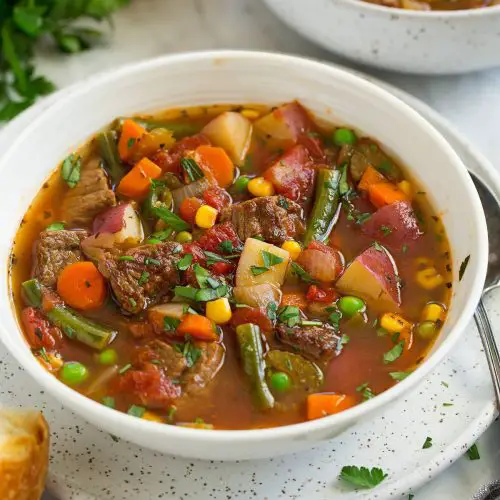
Beef Vegetable Stew
Ingredients
Main Ingredients
- 1.5 lbs beef stew meat
- 2.5 Tbsp olive oil (divided)
- Salt and freshly ground black pepper
- 1.75 cups chopped yellow onion (1 large)
- 1.25 cups peeled and chopped carrots (3 medium)
- 1 cup chopped celery (3 medium)
- 1.5 Tbsp minced garlic (4 cloves)
- 8 cups low-sodium beef broth or chicken broth
- 2 (14 oz.) cans diced tomatoes
- 1.5 tsp dried basil
- 1 tsp dried oregano
- 0.5 tsp dried thyme
- 1 lb red or yellow potatoes chopped into 0.75-inch cubes
- 1.5 cups chopped green beans trim ends first
- 1.5 cups frozen corn
- 1 cup frozen peas
- 0.33 cup chopped fresh parsley
Instructions
Preparation Steps
- Heat 1 Tbsp olive oil in a large pot over medium-high heat.
- Dab beef dry with paper towels, season with salt and pepper then add half of the beef to pot and brown about 4 minutes, turning halfway through.
- Transfer to a plate add another 0.5 Tbsp oil to pot and repeat process with remaining half of beef.
- Add another 1 Tbsp oil to now empty pot then add onions, carrots, and celery then saute 3 minutes, add garlic saute 1 minute longer.
- Pour in broth, tomatoes, browned beef, basil, oregano, thyme and season with salt and pepper. Bring to a boil then reduce heat to low, cover and simmer, stirring once or twice throughout, for 30 minutes.
- Add potatoes then continue to simmer, covered, 20 minutes.
- Stir in green beans and simmer 15 minutes longer, or until all of the veggies and beef are tender.
- Pour in corn and peas and simmer until heated through, about 5 minutes. Stir in parsley and serve warm.